









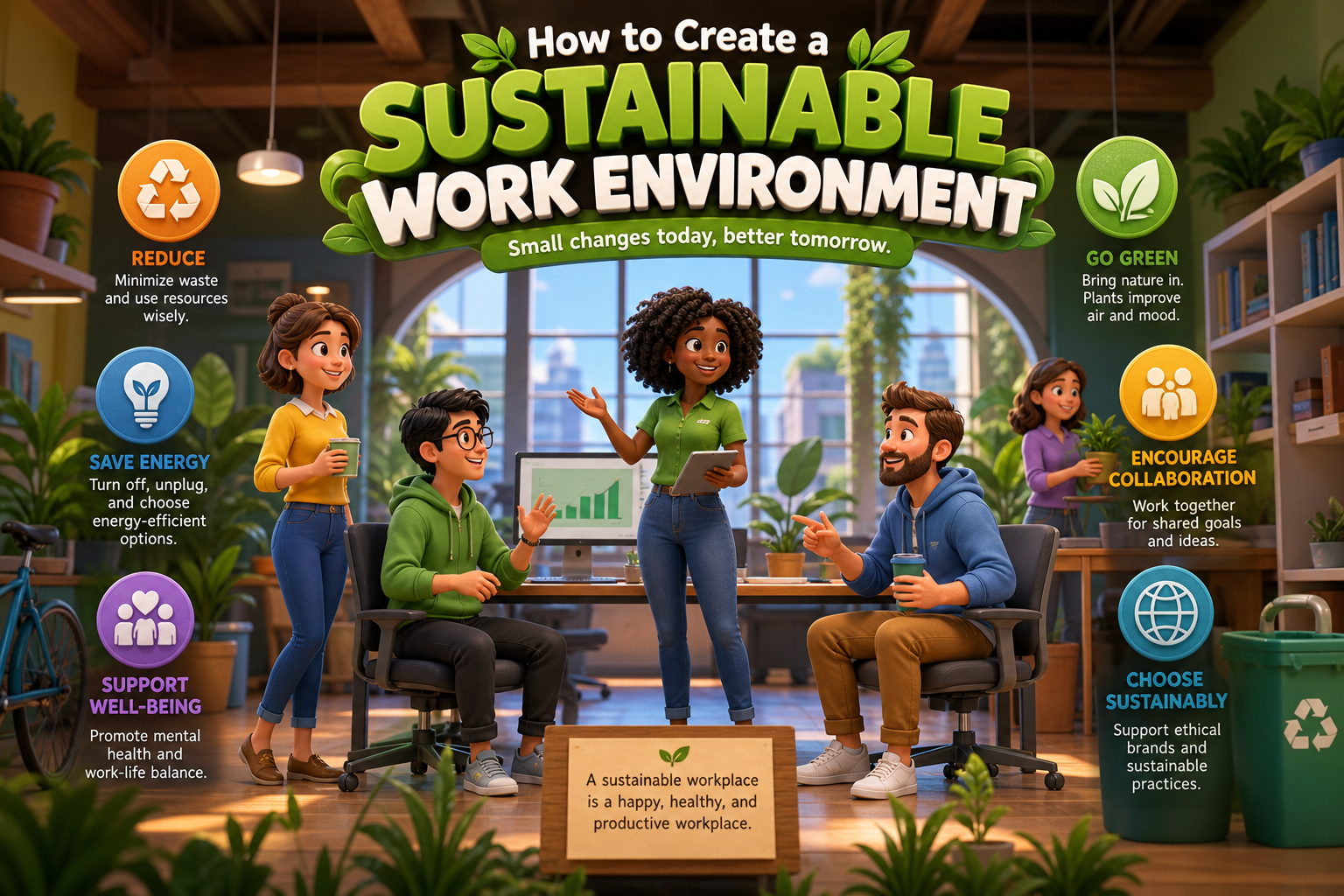
Understanding a Sustainable Work Environment
A sustainable work environment refers to a workplace that minimizes its impact on the planet while promoting the well-being of employees. This concept has gained popularity as businesses recognize their role in environmental conservation. A sustainable work environment involves using eco-friendly materials, efficient energy sources, and practices that support mental and physical health. By creating such an environment, companies can not only reduce their carbon footprint but also attract and retain talent. Employees today prefer to work for organizations that prioritize sustainability. This article will explore various strategies and tips for creating a sustainable work environment.
Assessing Your Current Workplace Practices
The first step to creating a sustainable work environment is assessing existing practices. Begin by evaluating energy use, waste management, and resource consumption. Conduct surveys to gather employee feedback on current policies and practices. Identify areas where improvements can be made. For example, if your office uses a lot of paper, consider implementing digital document management systems. Look at your supply chain as well. Are your suppliers committed to sustainable practices? This assessment will serve as a baseline, helping you set measurable goals for sustainability initiatives.
Implementing Energy Efficiency Measures
Energy efficiency is a vital component of a sustainable work environment. Start by replacing traditional light bulbs with LED lights, which consume less energy and last longer. Encourage employees to turn off lights and equipment when not in use. Consider installing motion sensors in less-used areas like restrooms or storage rooms. Another effective strategy is to invest in energy-efficient appliances and equipment. For instance, Energy Star-rated computers and printers use significantly less energy. Additionally, explore options for renewable energy sources like solar panels to further reduce reliance on fossil fuels.
Promoting Sustainable Transportation Options
Transportation contributes significantly to carbon emissions. By promoting sustainable transportation options, businesses can reduce their environmental impact. Encourage employees to use public transportation, carpool, or bike to work. You can provide incentives such as subsidies for public transport passes or secure bike storage. Organize “walk or bike to work” days to foster community and raise awareness about sustainable commuting. Additionally, consider offering flexible working arrangements, such as remote work options, to reduce the need for commuting altogether.
Encouraging Waste Reduction and Recycling
Waste reduction is essential in creating a sustainable work environment. Begin by introducing a recycling program in your office. Provide clearly labeled bins for different types of recyclable materials, like paper, plastics, and metals. Educate employees about the importance of recycling and how to do it correctly. Implement a policy to reduce single-use plastics in the workplace, such as encouraging the use of reusable containers and utensils. Additionally, consider a composting program for organic waste. This can significantly reduce landfill contributions and promote environmental responsibility among employees.
Fostering a Green Office Design
Office design plays a significant role in sustainability. When designing or renovating your workspace, choose sustainable materials, such as bamboo flooring or recycled steel. Incorporate plenty of natural light to reduce the need for artificial lighting. Indoor plants can improve air quality and enhance employee wellness. They also provide a calming atmosphere. Ensure that your office layout promotes collaboration and communication, which can improve employee satisfaction and productivity. A well-designed, green office can be both functional and aesthetically pleasing while supporting sustainability goals.
Integrating Technology for Sustainability
Technology can greatly enhance sustainability efforts in the workplace. Use smart thermostats to regulate heating and cooling efficiently. These devices learn your office’s occupancy patterns and adjust temperatures accordingly, which can lead to significant energy savings. Implement cloud-based tools for project management and communication, reducing the need for paper. Encourage remote collaboration through virtual conferencing tools, which can cut down on travel-related emissions. By leveraging technology, you can streamline operations and make your work environment more sustainable.
Creating a Culture of Sustainability
Creating a culture of sustainability requires active participation from all employees. Start by communicating your sustainability goals clearly and regularly. Conduct workshops and training sessions on eco-friendly practices. Encourage employees to share their ideas for promoting sustainability in the workplace. Recognize and reward those who actively contribute to your sustainability initiatives. This could be through an employee of the month program focused on green practices or small incentives for eco-friendly behavior. When employees feel involved in sustainability efforts, they are more likely to embrace and support them.
Measuring and Reporting Progress
Once you implement various sustainability initiatives, it is essential to measure and report your progress. Set clear metrics to track energy use, waste reduction, and employee engagement in sustainability programs. Regularly review these metrics to identify areas needing improvement. Consider conducting an annual sustainability report to share your achievements with employees and stakeholders. Transparency fosters trust and encourages further participation in sustainability initiatives. This accountability can motivate your team and inspire them to continue working towards a greener workplace.
Conclusion: The Future of Work Environments
Creating a sustainable work environment is not just a trend; it is a necessity for the future. Businesses that prioritize sustainability can improve their reputation, attract top talent, and reduce operational costs. The steps outlined in this article provide a comprehensive approach to fostering a green workplace. From assessing current practices to promoting a culture of sustainability, every action counts. As we move forward into a more environmentally conscious world, organizations must lead by example. Embracing sustainability today will ensure a better future for employees, communities, and the planet.