









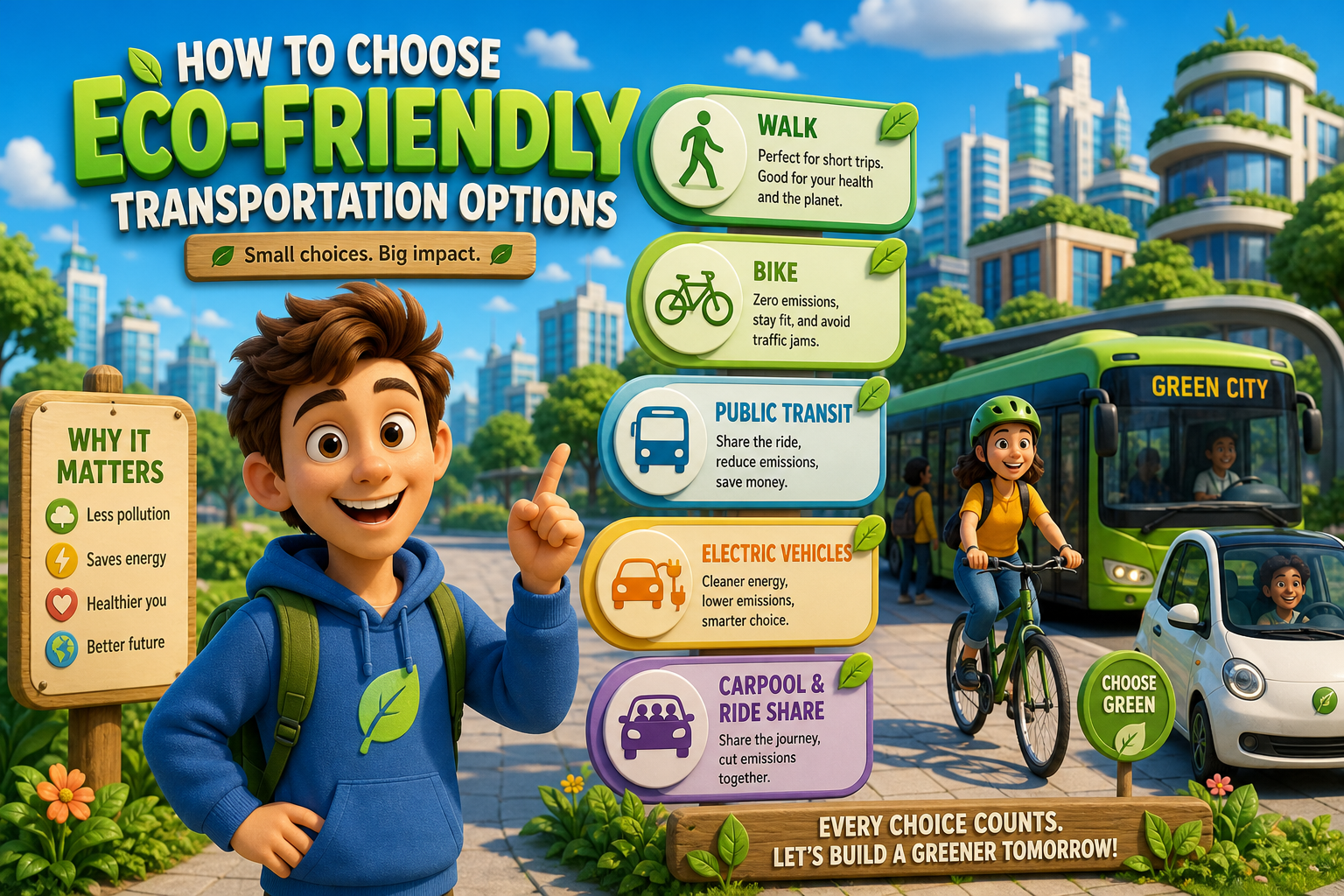
Introduction to Eco-Friendly Transportation
As we face climate change and environmental issues, many people are looking for ways to reduce their carbon footprint. Eco-friendly transportation is an important part of this effort. Choosing eco-friendly transportation options can help lower greenhouse gas emissions, reduce air pollution, and conserve energy. In 2026, there are more options than ever to make sustainable choices. From electric vehicles to public transportation, understanding these options is important for making informed decisions.
In this article, we will explore various eco-friendly transportation methods, their advantages, and how to choose the best options for your lifestyle. By the end, you will have a clearer understanding of how to travel sustainably in 2026.
Understanding Eco-Friendly Transportation
Eco-friendly transportation refers to any method of transport that is less harmful to the environment compared to traditional vehicles. This includes public transport, biking, walking, and using electric or hybrid vehicles. The goal is to reduce pollution and reliance on fossil fuels. Because transportation is a significant source of carbon emissions, making eco-friendly choices can have a substantial impact.
In 2026, many cities are investing in infrastructure to support these eco-friendly options. For example, bike lanes are becoming common, and electric vehicle charging stations are popping up everywhere. Understanding the different options available will help you make better travel choices.
Benefits of Eco-Friendly Transportation
Choosing eco-friendly transportation offers several benefits. First, it helps reduce greenhouse gas emissions. This is vital for combating climate change and improving air quality. Second, using public transportation or biking can be cost-effective. You save money on gas and maintenance. Third, eco-friendly transport often promotes healthier lifestyles. Walking and biking provide physical exercise.
Moreover, adopting these transportation methods can enhance your community. When more people use public transport, it reduces traffic congestion, making roads safer and less stressful. Communities that prioritize eco-friendly transport often see an increase in local business, creating a win-win situation for everyone.
Public Transportation: Buses and Trains
Public transportation is one of the most effective eco-friendly options available. In 2026, cities worldwide are expanding their bus and train systems to encourage people to leave their cars at home. Buses and trains can carry many passengers at once, which reduces the number of individual vehicles on the road.
Using public transport can significantly decrease your carbon footprint. For example, a full bus can replace over 30 cars. Additionally, many public transport systems are now incorporating electric or hybrid vehicles, making them even more environmentally friendly. To find the best public transport options in your area, check local transit websites or apps that provide real-time updates.
Electric and Hybrid Vehicles
Electric and hybrid vehicles are becoming increasingly popular as eco-friendly transportation options. These vehicles run on electricity or a combination of electricity and gasoline, which means they produce fewer emissions than traditional cars. In 2026, advancements in battery technology have made electric vehicles more efficient and accessible.
When considering an electric or hybrid vehicle, think about your driving habits. If you drive long distances, a hybrid might be a better option since it can switch to gasoline when the battery is low. However, if you mainly drive short distances, an electric vehicle could be perfect for you. Check for government incentives or rebates for purchasing these vehicles, as many countries offer financial support for eco-friendly choices.
Carpooling and Ride-Sharing
Carpooling and ride-sharing are excellent ways to reduce the number of vehicles on the road. By sharing rides, you lower individual emissions and save money on fuel costs. In 2026, many apps facilitate carpooling and ride-sharing, making it easier to connect with others traveling in the same direction.
To effectively use carpooling or ride-sharing services, look for local groups or platforms that match drivers with passengers. Always consider safety and ensure that you feel comfortable with your ride-sharing partner. Additionally, carpooling can help reduce traffic, making commutes faster for everyone involved.
Biking: A Sustainable Choice
Biking is one of the most eco-friendly transportation options available. It produces no emissions and provides an excellent form of exercise. In 2026, many cities are becoming more bike-friendly by adding bike lanes and bike-sharing programs. This makes it easier and safer for people to choose biking over driving.
When choosing to bike, invest in a good quality bike and safety gear. Look for local bike rental services if you do not own a bike. Always wear a helmet and follow traffic rules. Biking not only benefits the environment but also improves your health and well-being.
Walking: The Greenest Transport
Walking is the most straightforward and eco-friendly transportation method. It requires no fuel and produces no emissions. In urban areas, many people are finding that walking is faster and more enjoyable than driving. In 2026, cities are making efforts to enhance walkability by improving sidewalks and street designs.
To incorporate more walking into your daily routine, consider walking to nearby stores or workplaces instead of driving. If your destination is too far, try parking your car further away and walking the rest. Walking not only reduces your carbon footprint but also promotes a healthier lifestyle.
Alternative Fuels and Technologies
In 2026, various alternative fuels and technologies are emerging as eco-friendly transportation options. Biofuels, hydrogen fuel cells, and even solar-powered vehicles are gaining traction. These technologies are designed to reduce reliance on fossil fuels and minimize harmful emissions.
If you are considering alternative fuel vehicles, research the availability of charging stations or refueling options in your area. Many automakers are now producing vehicles that run on alternative fuels, so check out the latest models that fit your needs. Understanding these technologies will help you make informed decisions as you consider eco-friendly transportation options.
Choosing the Right Option for You
Choosing the right eco-friendly transportation option depends on your lifestyle, budget, and location. Start by assessing your daily travel needs. Do you commute to work? How far do you travel? Understanding these factors will help you determine the most suitable options.
Once you know your needs, consider the advantages and disadvantages of each method. For instance, if you live in a city with a robust public transport system, it might be the best choice. However, if you enjoy biking, that could be more suitable for you. Take your time to explore different options, and don’t hesitate to combine several methods for the best results.
Conclusion: A Sustainable Future Awaits
In 2026, choosing eco-friendly transportation options is not only possible but also practical. With numerous alternatives available, individuals can make choices that benefit both their wallets and the environment. By using public transport, biking, walking, or opting for electric vehicles, we can all contribute to a sustainable future.
As you consider your transportation options, remember that every small change counts. Whether you choose to walk to the store or use public transport for your daily commute, you are making a difference. Let’s embrace eco-friendly transportation and work together for a cleaner, healthier planet.