








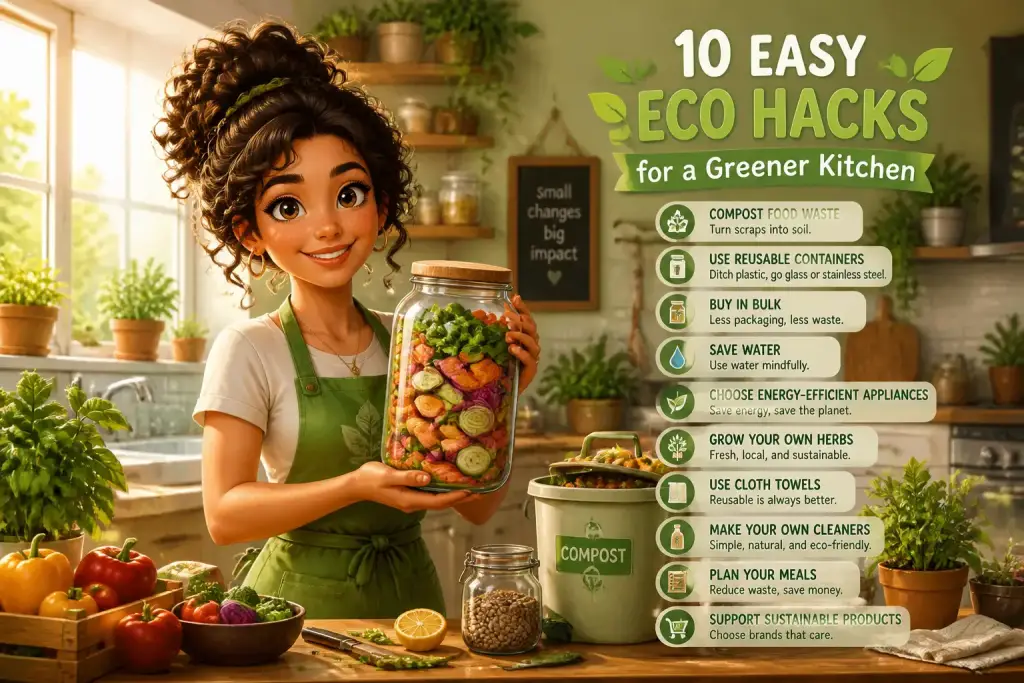
Making small changes in your kitchen can lead to significant positive impacts on the environment. Eco hacks are simple strategies that help reduce waste, conserve energy, and promote sustainability. Today, we will explore ten easy eco hacks for a greener kitchen. These hacks are practical and can be easily integrated into your daily routine. Whether you’re an experienced cook or just getting started, these tips will help you create a more eco-friendly kitchen.
- Use reusable bags and containers to cut down on plastic waste.
- Start composting kitchen scraps to enrich your garden soil.
- Choose energy-efficient appliances to save power and reduce bills.
Table of Contents
Switch to Reusable Items
Using disposable items creates a lot of waste. Instead, consider switching to reusable products. Start with shopping bags, water bottles, and food containers. These items help cut down on plastic waste significantly. For instance, bring your own bags when grocery shopping and store them in your car so you never forget them. This small action can have a big impact on reducing plastic usage.
Investing in cloth napkins instead of paper ones is another easy change. Cloth napkins are washable, durable, and can add a nice touch to your dining table. You can also use beeswax wraps instead of plastic wrap for food storage. Beeswax wraps are reusable and biodegradable, making them a better choice for the environment.
Benefits of Reusable Items
- Less waste in landfills and oceans.
- Long-term cost savings on disposable products.
- Better for your health, as they are often made from safer materials.
Start Composting
Composting is an effective way to reduce kitchen waste and create nutrient-rich soil for your plants. Instead of throwing away vegetable scraps, coffee grounds, and eggshells, collect them in a compost bin. This process not only reduces landfill waste but also enriches the soil in your garden. Composting is easy and can be done even in small spaces.
To start composting, choose a bin that fits your kitchen space. You can purchase a compost bin or make one from a plastic container. Keep your compost bin near your kitchen for easy access. Add a mix of green materials, such as fruit and vegetable scraps, and brown materials, like dry leaves and paper. Stir the mixture occasionally to speed up the decomposition process.
Steps to Begin Composting
- Choose a compost bin that fits your kitchen space.
- Collect kitchen scraps like vegetable peels and coffee grounds.
- Add dry materials such as newspaper or leaves to balance moisture.
- Stir the compost regularly to aerate it.
- Use the finished compost in your garden or potted plants.
Choose Energy-Efficient Appliances
Energy-efficient appliances can help reduce your energy consumption and lower your utility bills. When buying new appliances, look for the Energy Star label. This label indicates that the appliance meets energy efficiency guidelines set by the U.S. Environmental Protection Agency. Using energy-efficient appliances can significantly reduce your kitchen’s carbon footprint.
For example, an energy-efficient refrigerator uses less electricity than a standard model, saving you money while also being better for the environment. Additionally, consider using a microwave or toaster oven for smaller meals instead of heating up a full-sized oven. This can save energy and keep your kitchen cooler.
Benefits of Energy-Efficient Appliances
- Lower energy bills each month.
- Reduced greenhouse gas emissions.
- Better performance and reliability over time.
Keep a small compost bin on your kitchen counter to make composting easy and convenient.
Implement Water-Saving Techniques
Water conservation is essential in creating a greener kitchen. Simple changes can help reduce your water usage. For instance, install a low-flow faucet aerator to reduce water flow without sacrificing pressure. This simple device can cut water usage significantly while washing dishes or preparing food.
Another effective water-saving technique is to collect rainwater for watering plants. You can use a rain barrel to catch rainwater from your roof. This water can be used to irrigate your garden, reducing the need for tap water. Additionally, running your dishwasher only with a full load can save a lot of water compared to washing dishes by hand.
Water-Saving Tips
- Install low-flow faucet aerators.
- Use a rain barrel to collect rainwater for irrigation.
- Run dishwashers and washing machines only with full loads.
Buy Local and Organic
Purchasing local and organic food is another eco hack that supports sustainability. Organic farming practices help reduce the use of harmful chemicals and pesticides, which is better for the environment. Buying local food means your groceries do not have to travel far, reducing carbon emissions from transportation.
Visit local farmers’ markets to find fresh, seasonal produce. Not only does this support local farmers, but it also ensures you are eating the freshest ingredients available. When shopping at grocery stores, look for products with minimal packaging or those that use recyclable materials. This helps reduce waste and promotes a cleaner environment.
Benefits of Buying Local
- Supports local economies and farmers.
- Reduces carbon footprint from transportation.
- Encourages seasonal eating, which is often healthier.
Reduce Food Waste
Food waste is a significant issue in many kitchens. Reducing food waste not only saves money but also helps the environment. Start by planning your meals for the week. Make a shopping list based on your meal plan to buy only what you need. This can help prevent impulse purchases that often lead to wasted food.
Another effective method is to store food properly to extend its shelf life. For instance, keep fruits and vegetables in the right conditions to prevent spoilage. Use clear containers so you can see what you have and avoid forgetting about older items. When you have leftovers, use them creatively in new meals to minimize waste.
Strategies to Reduce Food Waste
- Plan meals weekly and create a shopping list.
- Store food in clear containers to track freshness.
- Use leftovers creatively in new dishes.
Use Eco-Friendly Cleaning Products
Switching to eco-friendly cleaning products is a simple yet effective way to green your kitchen. Many commercial cleaners contain harsh chemicals that can harm the environment and your health. Instead, consider using natural cleaners made from vinegar, baking soda, and lemon. These ingredients are effective and safe for both your family and the planet.
Making your cleaning products at home is easy. For example, mix equal parts of vinegar and water in a spray bottle to create an all-purpose cleaner. Baking soda can be used to scrub surfaces and eliminate odors. Using these natural ingredients not only helps reduce chemical waste but also saves money on cleaning supplies.
Benefits of Eco-Friendly Cleaners
- Safer for your family and pets.
- Less harmful to the environment.
- Cost-effective and easy to make at home.
Next Steps for Better Creating a Greener Kitchen
Implementing these eco hacks can transform your kitchen into a more sustainable space. Each small change contributes to a larger goal of protecting the environment. By using reusable items, composting, and making conscious purchasing decisions, you can reduce your carbon footprint and waste. Start today and enjoy the benefits of a greener kitchen while making a positive impact on the planet.

Virginia De Angelis
Founder & Lead EditorVirginia De Angelis is the founder and lead editor of Eco Zoned in Italy, where she guides readers towards practical innovative eco-tech solutions for everyday life.