









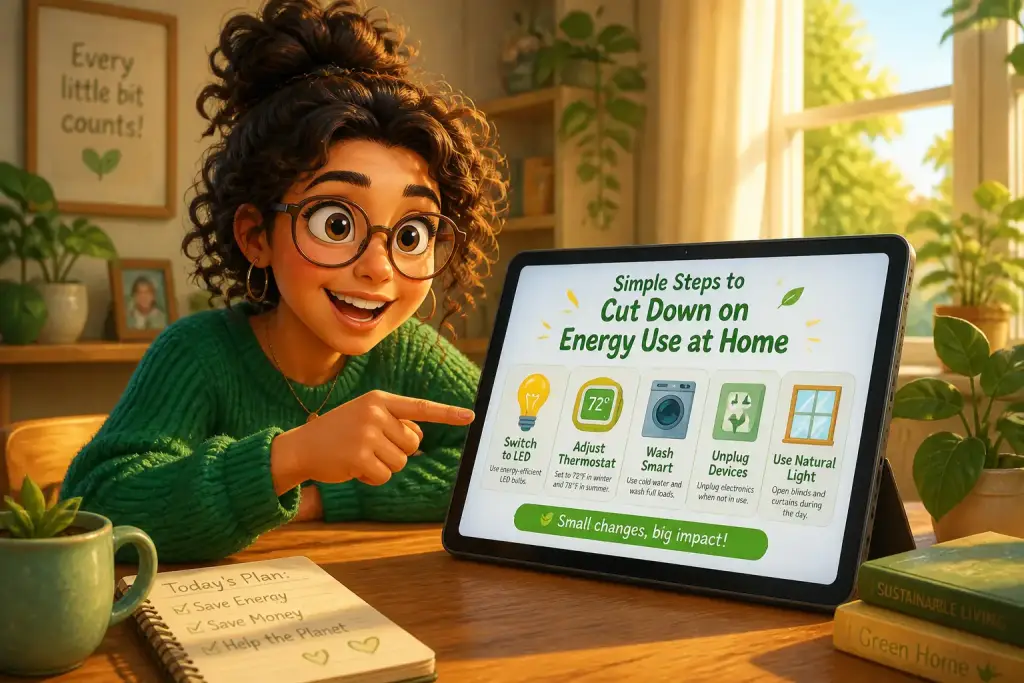
Reducing energy use at home not only lowers your utility bills but also contributes to a healthier planet. As energy prices continue to rise, taking simple steps to cut down on energy use becomes more important for families everywhere. These changes can be as easy as switching out light bulbs or adjusting a thermostat. By making these adjustments, you can create a positive impact on your environment and your wallet.
- Adjust your thermostat seasonally to save on heating and cooling costs.
- Switch to LED bulbs for a lasting reduction in electricity usage.
- Use energy-efficient appliances to lower overall energy consumption.
Table of Contents
Assess Your Current Energy Consumption
Before making changes, start by understanding your current energy consumption. This assessment will help you identify areas where improvements can be made. Begin by reviewing your utility bills from the past few months. Look at how much energy you use during different times of the year. This will give you a clear picture of your average usage and highlight any peaks that may indicate excessive consumption.
Next, consider conducting an energy audit. You can do this on your own or hire a professional. An audit typically involves checking for air leaks, inspecting insulation, and evaluating your heating and cooling systems. Many utility companies offer incentives for customers who complete energy audits, which can save you money in the long run. By identifying problem areas, you can prioritize which upgrades or changes will have the most significant impact.
After understanding your usage, create a simple spreadsheet to track your energy consumption. Include categories such as heating, cooling, lighting, and appliances. This will help you see where you can cut back. For instance, if you notice high energy usage during the summer months, it may be time to evaluate your air conditioning system.
Upgrade to Energy-Efficient Appliances
Older appliances often consume more energy than newer, energy-efficient models. Upgrading to appliances that have the Energy Star label can significantly reduce your energy use. Energy Star-rated products meet strict energy efficiency guidelines set by the U.S. Environmental Protection Agency. These appliances may have a higher upfront cost but will usually save you money over time through lower energy bills.
When shopping for new appliances, consider the following:
- Refrigerators: Look for models with top freezers, which use less energy than side-by-side models.
- Washing Machines: Choose front-loading washers that use less water and electricity than traditional top loaders.
- Dishwashers: Select dishwashers that have energy-saving settings and use less water per cycle.
Also, be mindful of the size of the appliances you choose. Selecting an appliance that is the right size for your household can prevent wasted energy. For example, a large refrigerator is unnecessary for a small family, and a smaller model will use less energy.
Switch to LED Lighting
Lighting accounts for a significant portion of energy use in homes. Traditional incandescent bulbs consume a lot of energy and have a shorter lifespan. Switching to LED lights can be one of the most effective ways to reduce electricity consumption. LED bulbs use up to 80% less energy than incandescent bulbs and can last up to 25 times longer.
When replacing your lights, consider these tips:
- Start with high-use areas: Replace bulbs in rooms where lights are frequently used, such as kitchens and living rooms.
- Use dimmer switches: Installing dimmer switches can help reduce energy use by allowing you to adjust the brightness according to your needs.
- Consider smart lighting: Smart bulbs can be controlled remotely and programmed to turn off when not needed.
Make a habit of turning off lights when leaving a room. This simple action can lead to substantial energy savings over time. For outdoor lighting, consider solar-powered lights to further reduce energy use.
Optimize Heating and Cooling Systems
Heating and cooling systems are often the largest contributors to energy consumption in homes. Optimizing these systems can lead to significant savings. Start by changing the filters in your heating and cooling systems regularly. Dirty filters restrict airflow, making systems work harder and consume more energy.
Next, adjust your thermostat settings. In the winter, set the thermostat to 68 degrees Fahrenheit when you are home and lower it when you are away. During the summer, aim for 78 degrees Fahrenheit when at home. Each degree you adjust can lead to noticeable savings on your energy bill.
Consider Programmable and Smart Thermostats
Investing in a programmable thermostat can help manage your home’s temperature more efficiently. These devices can be set to automatically adjust the temperature based on your schedule. You can program them to lower the temperature at night or when you leave the house. Smart thermostats can learn your habits and adjust accordingly, offering even more convenience and energy savings.
Finally, ensure your home is well-insulated. Check for drafts around windows and doors, and seal any leaks. Proper insulation keeps the warm or cool air inside, reducing the demand on your heating and cooling systems.
Be Mindful of Water Heating
Water heating is another major energy expense in most homes. Reducing the temperature on your water heater to 120 degrees Fahrenheit can save energy and prevent scalding. Insulating your water heater and the first six feet of hot and cold water pipes can also help retain heat, reducing energy use.
When using hot water, be mindful of your habits. Simple changes can lead to significant savings:
- Take shorter showers: Reducing shower time can cut water heating costs significantly.
- Wash clothes in cold water: Most detergents work effectively in cold water, which saves energy.
- Run the dishwasher only when full: This maximizes efficiency and minimizes water heating.
Consider also investing in a tankless water heater. These systems heat water on demand, which avoids the energy losses associated with traditional storage water heaters.
Consider using a programmable thermostat to automatically adjust temperatures when you are not home, ensuring comfort and energy savings.
Implement Smart Home Technology
Integrating smart home technology can greatly assist in reducing energy use. Smart home devices allow you to monitor and control energy consumption from your smartphone or tablet. For instance, smart plugs can turn off appliances when not in use, while smart power strips can cut standby power consumption.
Smart thermostats, as mentioned earlier, learn your habits and optimize your home’s heating and cooling. Additionally, consider smart lighting systems that can be programmed or controlled remotely. You can set schedules, adjust brightness, and even change colors to save energy.
Energy Monitoring Systems
Energy monitoring systems provide real-time data on how much energy your home is using. These systems can identify which appliances consume the most energy, allowing you to make informed decisions about usage. Some systems even provide alerts when energy consumption spikes, helping you adjust your habits proactively.
Incorporating these technologies may require an initial investment but can result in long-term savings and a more sustainable lifestyle. By leveraging smart home solutions, you can easily track and reduce energy consumption across your home.
Practice Mindful Energy Use
Developing mindful energy use habits is essential for long-term energy savings. It is important to encourage all family members to participate in energy-saving efforts. Simple practices can make a big difference. For instance, turning off lights, unplugging chargers, and using natural light whenever possible can help reduce consumption.
Another effective approach is to create a family energy challenge. Set goals for reducing energy use for a month. Track progress and reward the family for achieving milestones. This not only raises awareness but also makes energy savings a fun activity.
Educate yourself and your family about the importance of energy conservation. Understanding the impact of energy use on the environment can motivate everyone to make conscious choices. Resources like mindfulness practices for a greener lifestyle can provide tips and inspiration.
Embrace Renewable Energy Options
Investing in renewable energy sources, such as solar panels, can significantly reduce your dependence on traditional energy and lower your bills. Although the initial cost can be high, many programs and incentives exist to help offset these expenses. In some areas, local governments provide tax credits or rebates for installing solar panels.
Solar panels work by converting sunlight into electricity. This energy can be used to power your home, and any excess can often be sold back to the grid. Additionally, consider solar water heaters, which can efficiently heat water using solar energy.
Explore community solar projects if installing panels on your home is not feasible. These programs allow multiple households to benefit from a single solar installation, promoting renewable energy use without the need for individual installations.
Taking steps to cut down on energy use at home not only saves money but also supports a cleaner environment. Every small change contributes to a larger impact. By assessing your energy consumption, upgrading appliances, optimizing systems, and embracing renewable energy, you can create a more sustainable and efficient home. Start today, and you will notice the difference in your bills and the environment.

Virginia De Angelis
Founder & Lead EditorVirginia De Angelis is the founder and lead editor of Eco Zoned in Italy, where she guides readers towards practical innovative eco-tech solutions for everyday life.