









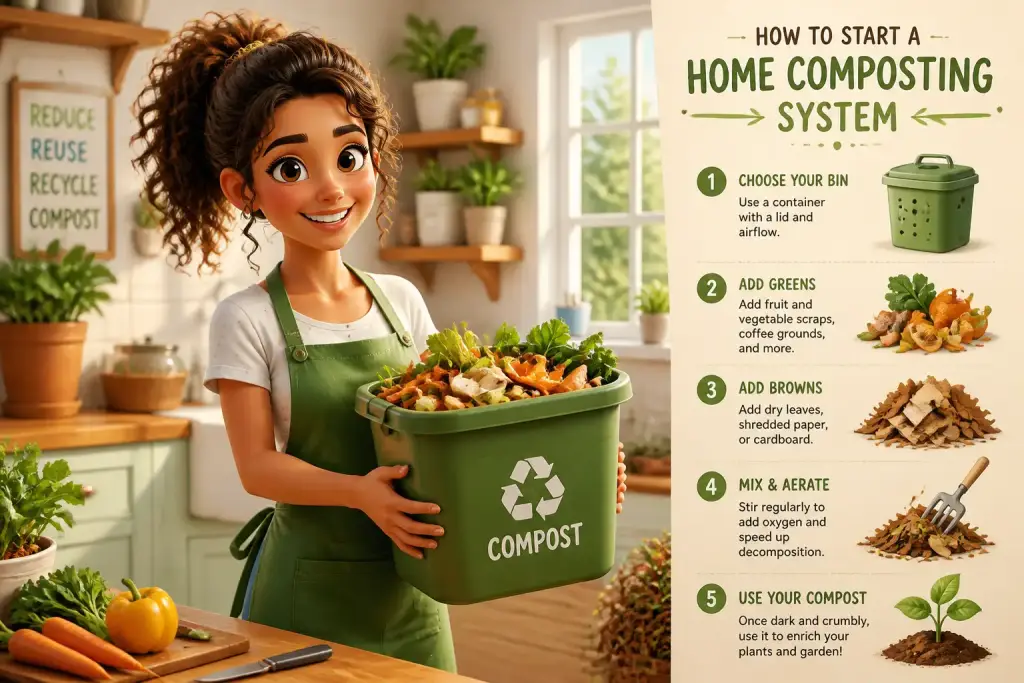
Starting a home composting system can seem daunting, but it is a straightforward process that can greatly benefit your garden and the environment. Composting allows you to recycle organic waste into valuable soil amendments, which can enhance the growth of plants while reducing your household waste. With the right approach and a bit of effort, anyone can set up a successful composting system at home. This guide will explore various aspects of home composting, including methods, materials, and maintenance tips to ensure your composting journey is both effective and rewarding.
- Choose the right composting method for your space.
- Balance green and brown materials for effective composting.
- Maintain the compost regularly for optimal results.
Table of Contents
Choosing the Right Composting Method
Before diving into the specifics of composting, it is essential to choose a method that fits your lifestyle and available space. There are several methods for home composting, each with its own advantages. The most common methods include traditional compost bins, vermicomposting, and bokashi composting. Each type has unique benefits that may suit different needs and environments.
Traditional Compost Bins
Using a traditional compost bin is one of the most popular methods for composting at home. This approach typically involves a designated outdoor bin where you can layer organic materials. These bins come in various designs, from simple piles to enclosed systems. A compost bin allows for easy aeration and moisture control, which are crucial for the decomposition process. To create a traditional compost bin, consider placing it in a well-drained area with good sunlight. This will help maintain the heat necessary for effective composting.
Vermicomposting
Vermicomposting utilizes worms, typically red wigglers, to break down organic matter. This method is ideal for those with limited outdoor space or those living in apartments. A vermicomposting system can be set up indoors in a bin or a specialized worm farm. The worms consume kitchen scraps and produce worm castings, a nutrient-rich fertilizer. To start, ensure you have a suitable container, bedding material like shredded newspaper, and food scraps. It’s important to keep the bin moist but not overly wet for the worms to thrive.
Bokashi Composting
Bokashi composting is a method that involves fermenting food waste using a special mix of microorganisms. This technique is highly effective for breaking down food scraps, including meat and dairy, which are typically not suitable for traditional composting. The bokashi method requires minimal space and can be done indoors, making it ideal for urban settings. You will need a bokashi bucket, which is a sealed container that allows for anaerobic fermentation. After the fermentation process is complete, the contents can be buried in soil to decompose further.
Gathering Compostable Materials
After choosing your composting method, the next step is gathering materials. Compostable materials fall into two main categories: greens and browns. Greens are nitrogen-rich items, while browns provide carbon. Balancing these materials is critical for a healthy compost pile, as it promotes efficient decomposition and minimizes odors.
Green Materials
- Vegetable scraps and peels
- Fruit scraps and cores
- Coffee grounds and filters
- Grass clippings
- Fresh leaves
These green materials provide essential nitrogen, which helps speed up the decomposition process. It’s important to chop larger items into smaller pieces to promote faster breakdown. For example, cutting up fruit peels or shredding grass clippings can significantly enhance the composting process.
Brown Materials
- Dried leaves
- Straw or hay
- Shredded newspaper or cardboard
- Wood chips or sawdust
- Eggshells
Brown materials are crucial for adding carbon to your compost. These components help create the right balance of nutrients and improve aeration. Mixing these materials evenly with greens allows for proper airflow and moisture retention, both of which are essential for effective composting.
Maintaining Your Compost Pile
Regular maintenance of your compost pile is essential for producing high-quality compost. Keeping an eye on the moisture level, temperature, and aeration will help ensure that decomposition occurs efficiently. Depending on the size of your compost pile and the materials used, maintenance tasks may vary.
Monitoring Moisture and Temperature
The moisture level within your compost pile is vital. Too much moisture can lead to a smelly pile, while too little can slow down the decomposition process. Aim for a moisture level similar to that of a damp sponge. If the compost appears dry, add some water or moist materials like vegetable scraps. Conversely, if it is too wet, add more brown materials to absorb excess moisture.
Temperature is another key factor. A well-maintained compost pile generates heat as the materials break down. Ideally, the temperature should be between 130°F and 160°F. This heat helps kill pathogens and weed seeds. You can monitor the temperature by inserting a compost thermometer into the pile. If the temperature drops too low, consider turning the pile to aerate it and encourage microbial activity.
Aerating the Pile
Aeration is crucial for a healthy compost pile. Turning the pile regularly allows oxygen to circulate, promoting the growth of aerobic bacteria responsible for decomposition. Aim to turn the pile every few weeks, especially if you notice a drop in temperature. When turning, mix the materials well to ensure even decomposition. You can use a pitchfork or shovel to turn the pile effectively.
Chop or shred larger items to speed up the decomposition process and improve airflow within your compost pile.
Harvesting and Using Compost
After several months, your compost will be ready to use. Harvesting compost involves checking for a dark, crumbly texture with an earthy smell. This indicates that the materials have broken down and are now a nutrient-rich soil amendment. Properly aged compost can enhance soil structure, improve moisture retention, and provide essential nutrients to plants.
How to Harvest Compost
To harvest, simply remove the top layer of your compost pile. You can use a shovel or pitchfork to scoop out the finished compost from the bottom. Sifting through the compost can help separate any remaining large pieces that have not fully decomposed. These can be returned to the compost pile for further breakdown.
Using Compost Effectively
Once harvested, you can use compost in various ways. Here are some common applications:
- Mixing compost into garden soil to improve fertility
- Using it as a top dressing for lawns and flower beds
- Creating potting mixes for container plants
- Applying it as a mulch around plants to retain moisture
Utilizing compost not only benefits your garden but also contributes to reducing waste in landfills. By transforming kitchen scraps and yard waste into valuable resources, you support a more sustainable lifestyle.
Tips for Successful Composting
To ensure your composting journey is smooth and effective, consider these additional tips. Composting can be a rewarding process, but it does require attention and care. Adopting best practices will help you achieve the best results.
Know What to Avoid
Some materials should never be added to your compost pile. Avoid including meats, dairy, and oily foods, as these can attract pests and create unpleasant odors. Additionally, avoid adding diseased plants or weeds that have gone to seed, as they can survive the composting process and spread in your garden. Keeping a list of acceptable and non-acceptable materials can help you stay on track.
Be Patient
Composting is a natural process that takes time. Depending on the method and materials, it can take anywhere from several weeks to several months for your compost to fully decompose. Be patient and monitor the pile regularly. If you notice issues such as bad smells or slow decomposition, assess the moisture and aeration levels to make necessary adjustments.
By starting a home composting system, you can significantly reduce waste while creating nutrient-rich soil for your garden. Whether you choose a traditional compost bin or opt for vermicomposting, the benefits extend far beyond your backyard. You contribute to a healthier planet while enjoying the fruits of your labor. For those interested in living sustainably, integrating smart home devices that help you live sustainably can also enhance your efforts. Consider simple steps to cut down on energy use at home and create a sustainable morning routine to complement your composting journey.

Virginia De Angelis
Founder & Lead EditorVirginia De Angelis is the founder and lead editor of Eco Zoned in Italy, where she guides readers towards practical innovative eco-tech solutions for everyday life.