







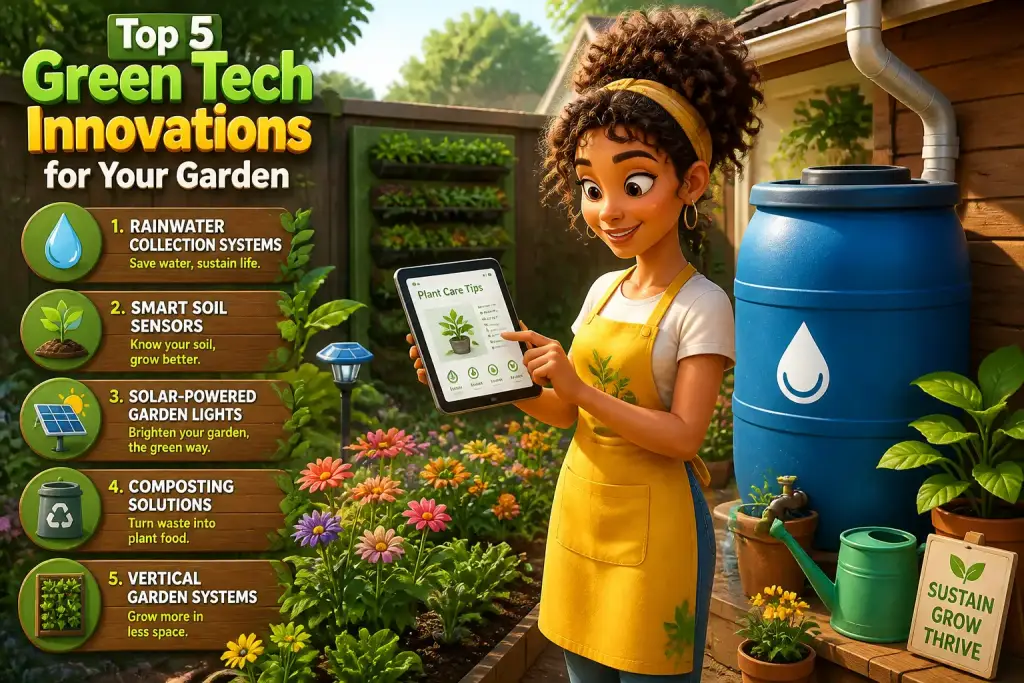
Gardening has evolved dramatically with the introduction of modern technology. Green tech innovations are making it easier for gardeners to cultivate their spaces while being environmentally conscious. These advancements not only enhance the health of your plants but also contribute to a sustainable future. From smart irrigation systems to solar-powered lights, the options available today are quite impressive. Let’s explore the top five green tech innovations that can transform your garden into a thriving eco-friendly oasis.
- Explore smart irrigation systems to save water and promote healthy plant growth.
- Invest in solar-powered garden lights for energy-efficient outdoor spaces.
- Use composting solutions to enrich soil and reduce waste effectively.
Table of Contents
1. Smart Irrigation Systems
Water is a precious resource, and smart irrigation systems help gardeners use it more efficiently. These systems utilize technology to automate the watering process based on various factors such as soil moisture, weather conditions, and plant needs. By using sensors and timers, smart irrigation can significantly reduce water waste and ensure optimal hydration for plants.
Many smart irrigation kits are now available for both small gardens and larger landscapes. For instance, drip irrigation systems deliver water directly to the roots of the plants, minimizing evaporation and runoff. This method not only conserves water but also promotes healthier plant growth. Homeowners can control these systems via apps on their smartphones, allowing for easy adjustments and monitoring from anywhere.
Steps to Implement Smart Irrigation:
- Choose the right smart irrigation system based on your garden size and type of plants.
- Install soil moisture sensors to monitor the moisture levels in your garden.
- Set up a timer or connect to a smart home system for automated scheduling.
- Regularly check data and adjust settings to optimize water usage.
By adopting smart irrigation systems, gardeners can enjoy lush landscapes while contributing to water conservation efforts. This technology not only simplifies garden maintenance but also aligns with eco-conscious living.
2. Solar-Powered Garden Lights
Adding lighting to your garden enhances its beauty while extending the time you can enjoy it. Solar-powered garden lights are an excellent green tech innovation that makes outdoor spaces more inviting. These lights harness solar energy during the day and illuminate your garden at night without adding to your electricity bill.
Modern solar lights come in various designs and styles, from fairy lights to lanterns, making it easy to find options that suit your garden aesthetic. Installation is typically straightforward, as they require no wiring; simply place them in sunny spots. With advancements in solar technology, many of these lights now provide bright illumination for several hours after sunset.
Benefits of Solar-Powered Lights:
- Energy-efficient: Solar lights reduce energy consumption and promote sustainability.
- Low maintenance: They require minimal upkeep, as they run on solar power.
- Variety: Available in many styles to match your garden’s design.
Investing in solar-powered garden lights not only beautifies your outdoor area but also encourages a greener lifestyle. These lights are a simple yet effective way to enhance your garden experience.
3. Composting Solutions
Composting is a sustainable practice that enriches soil and reduces waste. Modern composting solutions make it easier than ever to recycle organic materials from your kitchen and garden. Traditional compost bins can require a lot of space and effort, but today’s innovations include compact systems that fit into smaller areas.
For example, countertop composters can handle kitchen scraps like fruit peels, coffee grounds, and vegetable waste. These devices often use technology to speed up the decomposition process, turning waste into nutrient-rich compost in just a few weeks. Additionally, outdoor compost bins with aeration systems help facilitate faster breakdown and odor control.
Steps to Start Composting at Home:
- Choose a composting system that fits your space and needs.
- Gather kitchen scraps and garden waste, avoiding meat and dairy.
- Mix green (nitrogen-rich) and brown (carbon-rich) materials for balance.
- Monitor moisture and aeration to promote decomposition.
Composting not only reduces landfill waste but also produces high-quality soil that can nourish your plants. Embracing this practice contributes to a more sustainable gardening approach.
4. Hydroponic Gardening
Hydroponic gardening is a method of growing plants without soil, using nutrient-rich water instead. This innovative approach allows for efficient use of space, making it ideal for urban gardening. Hydroponic systems can produce food faster than traditional gardening, as plants receive direct access to all necessary nutrients.
There are several types of hydroponic systems, including nutrient film technique, deep water culture, and aeroponics. Each system has its unique advantages, such as reduced water usage and increased plant growth rates. Many gardeners have found success growing herbs, vegetables, and even fruits using hydroponics.
How to Get Started with Hydroponics:
- Choose a hydroponic system that fits your space and budget.
- Select appropriate plants for hydroponic growth, such as lettuce or basil.
- Set up the system with proper lighting and nutrient solutions.
- Monitor water levels, pH, and nutrient concentrations regularly.
This method not only maximizes yield but also reduces the need for pesticides, making it a safe choice for growing food. Hydroponics represents a leap forward in sustainable gardening practices.
5. Vertical Gardening Systems
Vertical gardening has gained popularity as a method to maximize space while growing a variety of plants, especially in urban environments. These systems allow gardeners to grow upward rather than outward, making them suitable for small backyards or balconies. Vertical gardens can be created with various materials, including pallets, trellises, or modular planters.
To saving space, vertical gardens can improve air quality and provide insulation for buildings. They can also serve as beautiful living walls, showcasing a diverse range of plants while enhancing the aesthetic appeal of any area.
Steps to Create a Vertical Garden:
- Choose a wall or structure that receives adequate sunlight.
- Select plants that thrive in vertical conditions, like herbs, succulents, or flowers.
- Install a suitable structure or use vertical planters to hold the plants.
- Water regularly and monitor plant health for optimal growth.
Vertical gardening is an effective way to cultivate plants while conserving space and resources. It allows gardeners to enjoy the benefits of greenery even in limited areas.
Regularly monitor moisture levels in your soil to adjust watering schedules and implement efficient irrigation practices for optimal plant health.
Embracing Green Innovations for a Sustainable Future
Adopting green tech innovations in your gardening practices can lead to a more sustainable and rewarding experience. By incorporating smart irrigation systems, solar-powered lighting, composting solutions, hydroponics, and vertical gardening, you can enhance both your garden’s health and its environmental impact. These technologies not only make gardening easier but also align with the growing trend towards eco-friendly living.
As gardeners become more mindful of their environmental footprint, investing in green tech is a proactive step towards sustainability. Each of these advancements contributes to water conservation, waste reduction, and healthier plant growth. Engaging with these innovations today can lead to a flourishing garden and a happier planet for tomorrow.
For those interested in further enhancing their eco-conscious lifestyle, consider exploring the connection between eco-friendly practices and mental health through resources like Finding Balance: Eco-Conscious Living and Mental Health or practicing mindfulness in your daily choices with insights from Simple Mindfulness Exercises for Everyday Eco Choices. Transforming your garden is just one part of a larger journey towards sustainability.

Virginia De Angelis
Founder & Lead EditorVirginia De Angelis is the founder and lead editor of Eco Zoned in Italy, where she guides readers towards practical innovative eco-tech solutions for everyday life.