








A hot patio can feel empty by mid-afternoon, even when the chairs are comfortable. Plant layers give you a practical way to shade paving, cool the air around seating, block harsh low sun, and make the space feel softer without building a large solid roof.
- Track sun on the patio for one full day before choosing tree, shrub, and vine positions.
- Use tall trees for high shade, shrubs for side shade, and low plants to cool bare soil near seating.
- Keep roots healthy with mulch, grouped watering, and enough space between plants and paving.
Table of Contents
- Mark the hottest patio zones before planting
- How do plant layers make a patio cooler?
- Build plant layers around the seating area step by step
- Which plants work best for cool patio shade?
- Set up soil, mulch, and water for healthy shade
- Fix shade gaps, hot paving, and wet roots early
- How can you check if your patio is truly cooler?
Mark the hottest patio zones before planting
Start by marking where sun reaches your patio during the morning, noon, and late afternoon. This simple map tells you where plant shade will matter most, so you do not spend money on plants that leave your main chairs and table in full heat.
Use a notebook, phone photo, or simple patio sketch. Draw the patio shape, house wall, fence, doors, paths, chairs, and table. Then check it three times on a clear day. A check at 9 a.m., 1 p.m., and 5 p.m. is often enough. If you use the patio mostly for dinner, the 4 p.m. to 7 p.m. sun path matters more than early morning shade.
Look at the hard surfaces too. Concrete, stone, dark pavers, and brick can store heat for hours. A sunny wall can also send heat back toward the seating area. Place a hand near the paving in late afternoon, but do not touch very hot surfaces. You may notice that one small section of patio feels much warmer than the rest.
When we tested this setup at home, the table looked like the hot spot at noon. By 5 p.m., the real problem was low sun coming around the west fence. That small detail changed the whole plan. A tree for noon shade helped, but a shrub and vine layer on the west side made evening meals much more pleasant.
Mark places where roots cannot go. These include underground pipes, a shallow drain, a small patio edge, and spots close to a house base. Check local rules before planting near utility lines. Keep large tree trunks well away from paving so roots have room to grow without pushing up slabs later.
How do plant layers make a patio cooler?
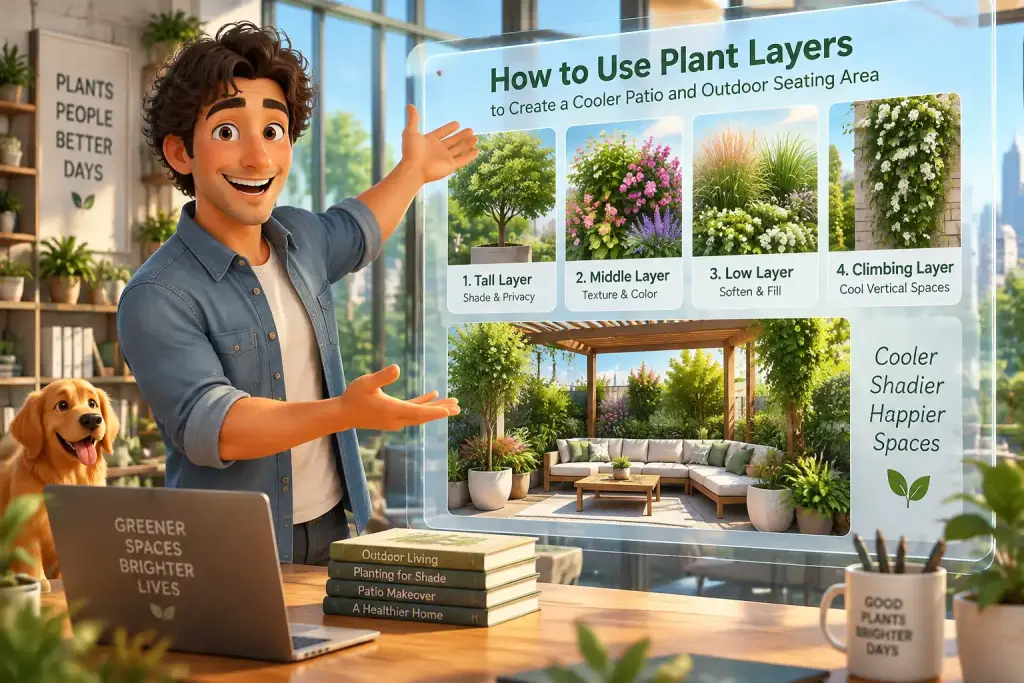
Plant layers cool a patio by stopping sunlight before it reaches hot paving and seating. Tall plants shade from above, middle plants block side sun, and low plants cover bare ground that would otherwise heat the air around your feet.
Look at it this way: a patio needs more than one type of shade. A canopy tree can shade a table at noon, yet low evening sun may still hit your face. A small tree, mixed shrub border, climbing vine, and groundcover can work together because each one handles a different angle of sun.
The top layer is usually a small canopy tree or large multi-stem shrub. It gives high shade while leaving room for air to move. The middle layer often includes shrubs between 2 and 6 feet tall. These help stop glare and hot sun from a fence line or open side of the yard. The lowest layer includes groundcover, low grasses, and mulch that keep soil cooler and reduce heat coming off bare dirt.
Leaves also release water into the air during normal growth. This can make the area near plants feel less dry, especially when the soil has enough water. You should not expect plants to cool an entire yard like an air conditioner. Still, shade over a chair, a table, or a short walking path can make daily use far more comfortable.
Use open planting, not a solid green wall around every edge. Dense plants can trap damp air near a house and may block a nice breeze. Leave gaps where summer wind enters the patio. Place denser layers where glare and low sun are strongest, usually on the west, south-west, or sun-facing side.
Build plant layers around the seating area step by step
Build plant layers from the outside edge toward the seating area, placing the tallest shade plants first. Keep clear walking space, give roots enough room, and use lower plants near chairs so the patio feels cool without feeling closed in.
Step 1: Place the tall shade layer
Choose one main shade point before buying plants. For a small patio, this may be a small deciduous tree set 8 to 15 feet from the seating area. Deciduous trees lose leaves in winter, which can let more sun reach the patio during colder months. A tree with a mature spread of 12 to 20 feet can shade a good part of a small table zone.
Check the plant label for mature height and width, not its current pot size. A young tree may look small and harmless, but it needs space for roots and branches. Keep large trees farther from house walls, roof edges, and overhead wires. If ground space is tight, a large container with a small tree may help, though container roots need more regular watering.
Step 2: Add shrubs for side shade
Put shrubs where the sun enters below the tree canopy. A group of three to five shrubs often works better than one lonely shrub. Use plants with different heights, such as one 5-foot shrub behind several 2-foot shrubs. This gives useful shade while keeping a softer view from the chairs.
If the patio has a fence on the west side, plant the taller shrubs about 3 to 5 feet from the fence when space allows. This gives roots room and lets air move behind the plants. Readers planning a screen without making the area dark can use our guide to privacy plant layers for spacing ideas.
Step 3: Finish with low cooling plants
Use low plants around outer patio edges, not in the main walking route. Groundcover, low native grasses, flowering plants, and a 2 to 3 inch mulch layer can cover soil that would otherwise bake in the sun. Leave a clear strip beside the patio for sweeping and for moving chairs.
- Mark the table, chairs, and walking paths with string or chalk.
- Set tall plants on the hottest sun side before digging holes.
- Place shrubs where low sun hits seated people.
- Fill open soil with low plants and mulch.
- Water deeply after planting, then check soil each week.
Do not plant everything in one straight line. Small groups create patches of shade and open air. From there, you can move chairs a little as shade changes through the seasons.
Put your strongest shade layer on the west or south-west side first, where late-day sun often makes outdoor seating feel hottest.
Which plants work best for cool patio shade?
The best patio plants match your local climate, sun hours, soil, and available root space. Choose plants with a useful mature size, healthy leaf cover, and water needs that fit together, rather than picking only by flower color.
A small deciduous tree is often a good top layer for a sunny patio. Look for a type that grows well in your area and has a broad but not huge crown. Local native plant groups, botanic gardens, and county garden offices can help you choose a safe type. Native plants may also support local birds and insects once established.
For the middle layer, use shrubs that stay leafy through the warm season. Shrubs with medium-size leaves can soften strong light without making the patio too dark. If you want winter screening, add one or two evergreen shrubs, but avoid placing a tall solid row directly where you want winter sun.
Vines can provide fast shade on a trellis, pergola, or strong wire frame. Use a trellis that stands on its own, rather than letting a heavy vine climb a weak fence. Keep vines away from gutters, roof tiles, and wall vents. A climbing plant can shade a west-facing side very well, but it needs yearly trimming to stay tidy.
Low plants do quiet but useful work. Creeping groundcover, low grasses, and flowering plants can cool soil and protect it from heavy rain. Avoid thorny plants close to chair legs or child play areas. Keep plants with strong scent away from the exact dining spot if bees are likely to gather there during meals.
Day to day, it also helps to group plants by their water needs. A thirsty shade tree beside drought-tough herbs can make watering hard to manage. Our guide to grouping water needs can help you build planting groups that are easier to care for.
Set up soil, mulch, and water for healthy shade
Healthy roots are what keep patio shade plants full and leafy through hot weather. Prepare wider planting areas, add mulch over bare soil, and water deeply at the root zone instead of giving every plant a quick daily splash.
Dig planting holes about two to three times wider than the root ball, but no deeper than the root ball itself. The top of the root ball should sit level with, or slightly above, the nearby soil. Planting too deep is a common reason young trees and shrubs struggle. Break apart circling roots gently if they are tightly wrapped.
Use mulch as the low shade layer
Spread mulch 2 to 3 inches deep over open soil after planting. Wood chips, leaf mold, and untreated bark can reduce water loss and help keep roots cooler. Keep mulch about 3 inches away from trunks and shrub stems. A mulch pile pressed against bark can hold too much dampness and attract pests.
Do not use plastic sheet under mulch where you want roots and soil life to grow well. It can stop water from reaching the soil evenly. Cardboard can work for short-term weed control under mulch, but cut holes wide enough for new plants and check that water is soaking through.
Water slowly and check the soil
A drip irrigation line or slow hose soak usually wastes less water than spraying leaves. Water early in the day when possible. In warm dry weather, new plants may need checks two or three times each week. Established plants often need less frequent but deeper watering, depending on rain, soil, and plant type.
Use the finger test before watering. Push a finger 2 inches into the soil near the plant, not right beside the stem. If it feels dry at that depth, water slowly. If it feels cool and damp, wait. In everyday use, this step takes about five minutes for a small patio border.
- Use a rain gauge or small straight-sided cup to check rainfall.
- Water tree roots across the full root area, not only at the trunk.
- Check containers more often because they dry out quickly.
- Move drip lines as shrubs grow wider.
Fix shade gaps, hot paving, and wet roots early
Fix patio cooling problems by checking the sun angle, plant spacing, and soil moisture before replacing plants. Most weak results come from shade falling in the wrong place, plants drying out, or dense growth blocking air near the seating area.
Use this quick table when the patio still feels too hot or new plants look unhealthy. Make one change at a time, then watch the space for one or two weeks. This helps you see which change made the real difference.
| Problem | Likely cause | Simple fix |
|---|---|---|
| Table stays hot at 5 p.m. | Low west sun passes under tree branches | Add a 3 to 5 foot shrub group or vine trellis on the west side |
| Patio feels closed and still | Shrubs form a solid wall near chairs | Remove one plant or prune small gaps for air flow |
| Tree leaves look pale or dry | Root zone dries under paving heat | Add 2 to 3 inches of mulch and water deeply |
| Pavers stay very warm after sunset | Too much bare hard surface catches sun | Shade the edge, add planting beds, and use movable pots |
Hot paving is often the hardest problem because it stores heat. If you cannot remove or cover a large paved area, focus on shading it earlier in the day. A tree that starts shading pavers at 2 p.m. can help more than one that only shades the chair backs at 6 p.m. A light outdoor rug can also make the area more comfortable underfoot, though it does not solve stored heat by itself.
Watch for wet roots too. Yellow leaves, slow growth, and soil that stays soggy can mean the plant gets too much water or the soil drains poorly. Stop automatic watering for a few days and check the soil below the surface. If water sits after rain, use a raised planting bed or choose plants that handle damp soil better.
Prune with care. Removing a few low branches can improve air flow, but cutting too much leaf cover removes the very shade you need. Make small cuts after checking where the sun falls. A simple chair test works well: sit outside at the time you usually use the patio, then note where glare reaches your eyes and arms.
How can you check if your patio is truly cooler?
Check patio comfort at the same time of day for at least one week before and after planting changes. Compare shade on the seating area, paving heat, glare, and how long you can sit outside comfortably, not only the air temperature.
The short answer is simple: comfort is the best test. A weather app may show the same air temperature across your yard, but shade can change how your skin feels. A shaded chair, cooler paving, and less glare can turn a short five-minute stop outside into a relaxed half-hour meal.
Take photos from the same spot at 1 p.m., 4 p.m., and 6 p.m. This creates a useful shade record. Mark where the chair legs, table edge, and main path sit in each photo. Over several months, you will see how tree leaves, vine growth, and the changing season affect the patio.
Use a simple outdoor thermometer if you have one, but keep it out of direct sun. You can also compare surface heat carefully by holding your hand a few inches above pavers, soil, and mulch. The difference is often easy to feel. Never rely on one very hot or unusually cloudy day. Check across several normal days.
Keep a short comfort note with four points: direct sun on chairs, glare level, paving warmth, and breeze. Rate each point from 1 to 5. If your score improves after plants settle in, the plan is working. Young trees and shrubs may need two to three growing seasons before they give their full shade.
Plants change over time, so adjust your seating area too. Move a chair a few feet into new shade, trim a vine that blocks a breeze, or add one low planter where paving still gets hot. A cooler patio is not made in one weekend. It grows into place, season by season, and soon it becomes the part of the home where people want to sit longer.

Matteo Mariani
Founder & Lead Landscape EditorBorn and based in Italy, Matteo Mariani is the founder and lead editor of Eco Zoned. He helps readers make thoughtful outdoor planning choices with practical advice on lower-impact gardens, functional spaces, and landscape zones for everyday homes.