









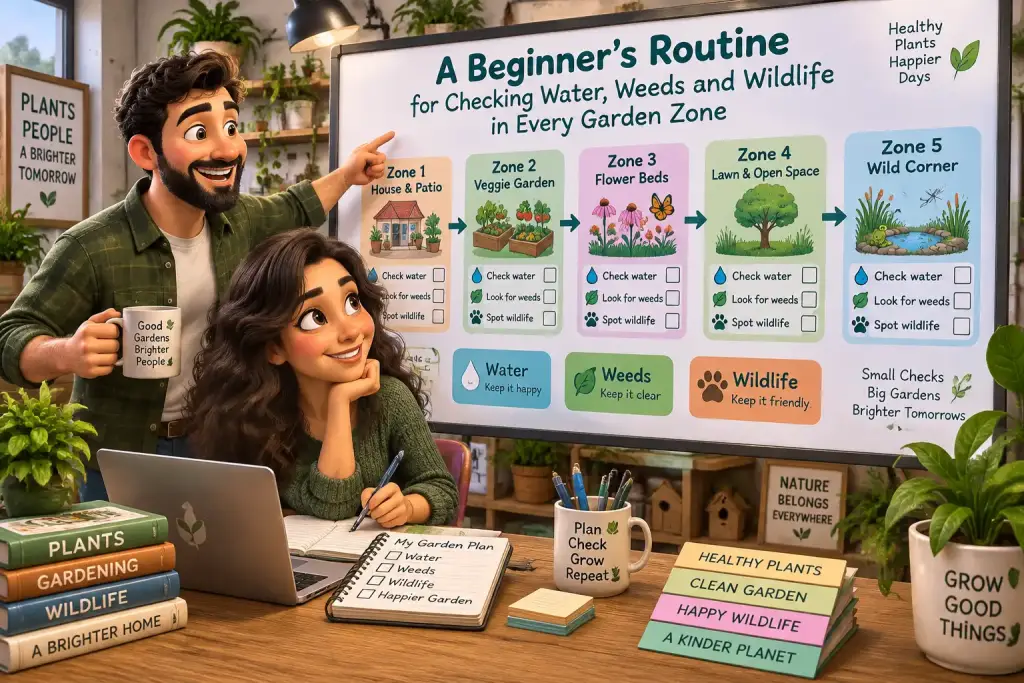
A steady routine for garden zones helps beginners catch dry soil, young weeds, and wildlife needs before they become bigger jobs. You do not need special skills or an hour of free time. A five-minute walk with a small notebook can show where water is needed, where mulch has moved, and which plants are feeding insects.
- Check soil moisture before watering, using a finger test or a simple soil probe 5 cm below the surface.
- Pull or cover small weeds before they flower, then add mulch to slow new weed growth.
- Watch wildlife from a distance and keep water dishes, pollinator plants, and shelter areas free from chemicals.
Table of Contents
Start a five-minute garden zones walk
Walk through your garden zones at the same time each day or every few days, and look for only three things: dry soil, new weeds, and animal activity. Keep the first check short so it becomes a habit instead of a task you keep putting off.
Begin near the house, then move outward. This order works well because the closest beds often get more care, while edges near fences, paths, and sheds can be forgotten. Look at each zone for about one minute. You are not trying to fix everything during this first walk. You are looking for clear signs that tell you what needs work later.
Carry a small bucket or bag for weeds, a hand trowel, and your phone or notebook. Write down simple notes such as “back bed dry,” “grass in herb bed,” or “bird bath low.” Short notes are enough. After two or three weeks, you will notice patterns, such as one sunny corner drying faster than the rest.
Use the same walking order
A repeat route makes the job easier. Start at the entry path, check food beds or flower beds, look at lawn edges, then finish near shrubs, trees, or a wildlife corner. If your garden is small, split it into only three areas. A larger yard may have six or more zones.
- Zone 1: pots, window boxes, and plants near the home.
- Zone 2: sunny beds, food plants, or low-water plants.
- Zone 3: lawn edges, paths, and hard surfaces.
- Zone 4: shrubs, trees, compost, and wildlife shelter.
When we tested this setup for two weeks, the daily walk took less than five minutes. The main benefit was not doing more work. It was seeing a dry pot and tiny weeds before either caused a bigger problem. For most people, that is the easiest way to stay on top of garden care.
How should you check water in each zone?
Check water by feeling the soil below the dry top layer, not by judging the surface alone. Water only when the root area feels dry, then water slowly enough for moisture to move down into the soil.
Push a finger about 5 cm into loose soil near the plant, but not right against its stem. If soil feels cool and sticks together, wait before watering. If it feels dry and falls apart, that zone may need water. A basic soil moisture meter can help in deep beds, but your finger works well in most home gardens.
Here is the catch: pots dry much faster than in-ground beds. A pot in full sun may need checking every day during warm weather, while a mulched shrub bed may only need checking twice a week. New plants also need closer checks for their first growing season because their roots are still shallow.
Water the root area, not the whole bed
Place water near the base of plants and let it soak in slowly. A watering can works for pots and small beds. A drip line or soaker hose works well for longer rows because it sends water close to the ground. This limits water loss from wind and helps keep leaves drier.
- Check soil 5 cm down in two or three places in the zone.
- Water slowly if the root area feels dry.
- Wait ten minutes, then check if water has soaked in.
- Make a note if water runs off or forms puddles.
Puddles can mean compact soil, too much water at once, or a low spot. Dry patches beside a wall may need extra mulch or a different plant choice. Our guide to water-wise planting can help when one sunny zone needs regular extra water.
Use a rain gauge if you want clearer records. Empty it after each rain and note the amount. Rain does not always mean every zone received enough water. Thick tree cover, roof edges, and tall plants can keep rain from reaching soil below.
Pull small weeds before they set seed
Remove weeds when they are small and before they flower, because young roots come out faster and fewer seeds reach the soil. Spend two minutes per zone, focusing on the weeds nearest your wanted plants first.
Look closely around plant stems, along path edges, and where mulch is thin. These spots often show weeds first. Pull after rain or watering when soil is soft. Hold the weed close to the soil and pull slowly, aiming to remove the root. A hand fork helps with tap roots that snap easily.
Do not panic when you see a few weeds. A clean, bare bed often creates more work because light reaches open soil and wakes more weed seeds. A 5 to 8 cm layer of leaf mulch, wood chips, or other clean plant mulch can block light and keep the soil cooler.
| Zone check | Quick habit | What to note |
|---|---|---|
| Sunny bed | Feel soil 5 cm down | Dry spots or water runoff |
| Plant edges | Pull young weeds | Weeds with flowers or seeds |
| Pots | Check soil each morning | Fast drying or wilted leaves |
| Wildlife area | Refill clean water dish | Bees, birds, or frog activity |
| Mulched bed | Spread moved mulch back | Thin areas and bare soil |
Put weeds without flowers or seeds into a home compost pile if it gets hot enough to break them down. Keep seeding weeds out of a simple cool pile. They may survive and return when you spread compost later. Good composting habits can turn safe plant waste into useful soil cover.
Skip weed killers near drains, ponds, edible plants, and wildlife areas. Pulling, mulching, and cutting weeds before seed forms takes more small visits, but it avoids a larger clean-up later. That said, tough weeds may need several pulls before they stop returning.
What wildlife signs should beginners watch for?
Watch for wildlife signs without touching nests, young animals, or insects, and keep a clean water source nearby. Bees, birds, worms, frogs, and other small animals can show that a zone has food, cover, and safer soil.
During your walk, pause for ten seconds in each zone. Listen for birds. Look at flowers for bees and hoverflies. Check under leaves for holes or eggs, but do not assume every insect is harmful. Caterpillars may feed birds, and small spiders can catch plant pests.
A shallow water dish can help during dry periods. Add a few flat stones so insects can land and climb out. Change the water every one or two days, especially in warm weather. This keeps the dish cleaner and lowers the chance of mosquito larvae growing there.
Keep a small quiet corner
Leave one part of the garden less tidy. A few dry stems, leaf litter under shrubs, and a small brush pile can give shelter to insects and other small animals. Keep this material away from the house and do not block paths. A quiet corner does not need to look messy. It only needs some cover.
Check for hazards while you watch wildlife. Remove loose netting, deep buckets of water, sticky traps, and broken plastic. Cover rain barrels with a lid or fine screen. If you see a nest, give it space and change your work route for a while.
Avoid spraying broad bug killers when bees are active. If one plant has a pest problem, first try hand removal, a strong spray of plain water, or cutting off the worst leaves. The EPA pesticide guidance explains why label directions and careful use matter when products are needed.
Write one short note for each zone after every check, such as “dry near fence” or “bees on mint,” so repeat problems become easy to spot.
Build a simple weekly record that shows patterns
Use one page each week to record water, weeds, and wildlife in every zone, because short records show repeat problems better than memory. Write the date, weather, and one useful note for each area.
Your record can be a paper chart, a phone note, or a whiteboard near the back door. Keep it simple enough to use outside with dirty hands. Write “W” for water, “WD” for weeds, and “WL” for wildlife if you prefer short marks. Add a number from one to three for urgency.
For example, a sunny flower bed may get “W2, WD1, WL3.” That could mean it is dry but not urgent, has a few weeds, and is busy with bees. A shady corner may get “W1, WD3, WL1” after wet weather. That tells you to pull weeds there soon, while leaving water alone.
Check the page at the end of each week. If the same bed is dry every time, add mulch, change the watering method, or move thirsty plants. If the same path edge is full of weeds, mow before seed heads form and keep a clear mulch line. Better mowing and mulching can also reduce grass spread into nearby beds.
Once you set this up, the notebook becomes a guide for the next season. You may see that one plant always wilts in July, or that birds visit a certain shrub when berries ripen. These notes are more useful than trying to remember every detail months later.
Turn small checks into seasonal garden care
Keep daily checks short, then use one longer visit each week and one seasonal review each month. This approach keeps garden work calm and helps you make changes before dry soil, weeds, or wildlife hazards build up.
Use the weekly visit for jobs that take longer than five minutes. Refill mulch, clear weeds along a whole path, wash water dishes, and look at drip lines for leaks. Check plant ties and supports too. A loose tie can rub a young tree, while a blocked drip line can leave one plant dry for days.
At the start of a new season, walk each zone with your notes. Ask three plain questions. Which zone needed the most water? Which place grew weeds fastest? Where did you see the most useful wildlife? Your answers can shape small changes that save effort later.
- Add more mulch where soil dried fastest.
- Place a water dish near busy pollinator plants.
- Plant ground cover where bare soil keeps growing weeds.
- Move thirsty pots closer to a tap or water barrel.
- Leave seed heads in a quiet zone until late winter.
Do not change everything at once. Try one change in one zone, then watch it for two or three weeks. For example, add 5 cm of mulch to a dry bed and compare its soil with an unmulched bed nearby. Small tests make it easier to see what actually works in your own space.
The best routine is the one you repeat. Check the soil, pull a few weeds, watch the living things around you, and write one note. Those small actions build a garden that uses water with care, has fewer weed surprises, and gives wildlife a safer place to visit.

Matteo Mariani
Founder & Lead Landscape EditorBorn and based in Italy, Matteo Mariani is the founder and lead editor of Eco Zoned. He helps readers make thoughtful outdoor planning choices with practical advice on lower-impact gardens, functional spaces, and landscape zones for everyday homes.