








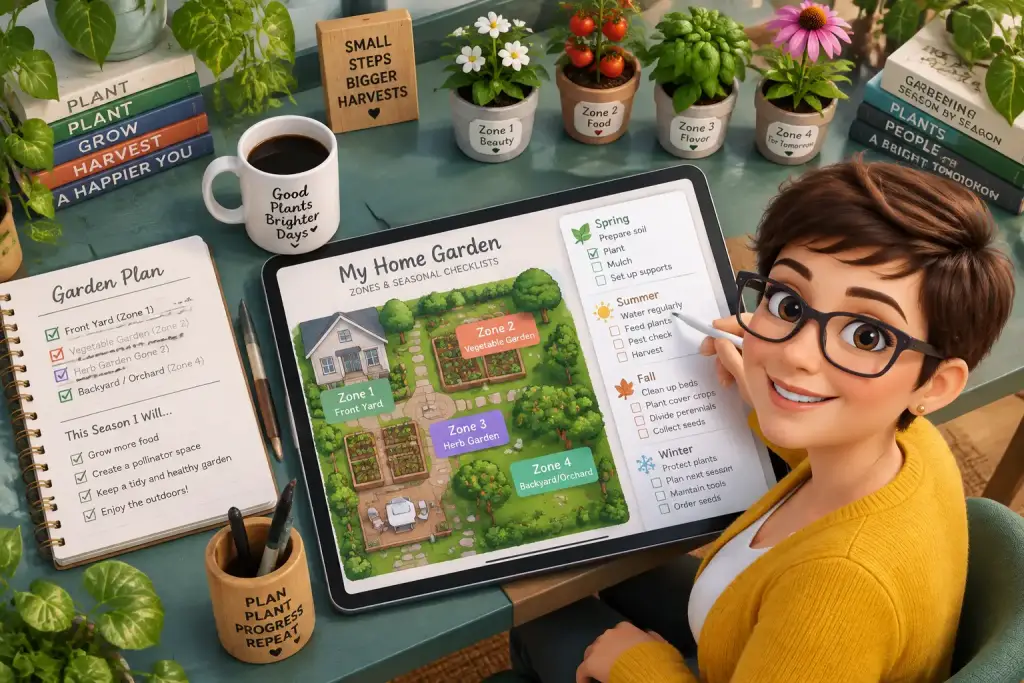
A good seasonal checklist helps you care for each part of your home garden at the right time. Instead of facing one huge weekend job list, you can look at your food bed, shady border, rain garden, patio pots, and wildlife corner as separate small areas with clear needs.
- Divide the yard into clear zones based on sun, water needs, soil, and daily use before listing seasonal jobs.
- Give each zone only a few timed tasks per season, such as mulch checks, pruning, planting, or drip line checks.
- Review your checklist once a week and move unfinished jobs forward instead of trying to catch up in one day.
Table of Contents
Build your seasonal checklist around real garden zones
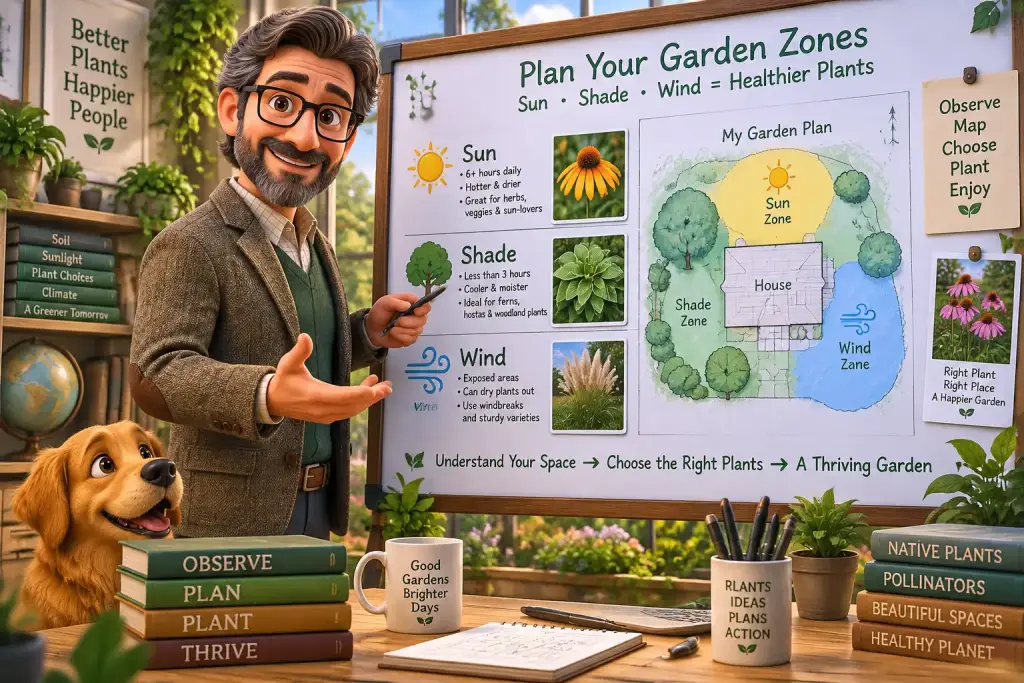
Start by splitting your yard into zones that need similar care. Give every zone a short name, note its sun and water level, and write down what grows there before you add seasonal jobs.
Look at it this way: a sunny vegetable bed and a damp rain garden should not have the same task list. One may need compost, seed sowing, and regular harvest checks. The other may need leaf clearing, mulch checks, and a close look at water flow after heavy rain. When you group jobs by zone, your list becomes easier to use on a busy Tuesday evening.
Walk outside with a notebook or use a simple phone note. Stand in each area for a few minutes. Notice how long it gets direct sun, where water collects, and which paths people use most. Mark any spot that dries quickly, stays wet, or has weak soil. These notes will shape the jobs you write later.
Name each zone clearly
Use names that make sense to you at a glance. “Front native bed,” “herb pots by door,” and “back compost corner” are better than “Zone 1” or “Area B.” Clear names save time when you are holding a hose or carrying a bag of mulch.
- Food growing zone: raised beds, fruit bushes, herbs, and salad crops.
- Native plant zone: local flowers, grasses, and small shrubs for birds and insects.
- Water zone: rain garden, downpipe area, rain barrel, or damp ground.
- Home use zone: patio pots, paths, doorways, and play areas.
- Compost and storage zone: compost bin, leaf pile, tool area, and spare pots.
Keep the first map basic. You do not need perfect drawing skills. A rough sketch with house walls, paths, trees, and beds is enough. If your yard is small, our guide to small yard zones can help you set useful borders without making the space feel crowded.
How do you match jobs to each garden zone?
Match each job to the sun, soil, water, and purpose of that garden area. Put short tasks in the season when they matter most, then give each task a loose date range.
The short answer is simple: plants and soil tell you what belongs on the list. A sunny food bed needs work before planting, during growth, and after harvest. A shady native bed may need less watering but more leaf management. Your checklist should not copy a neighbor’s garden plan if their soil and light are different from yours.
Write spring tasks first
Spring is often the busiest season because new growth starts quickly. For food beds, add compost about 2 to 5 cm deep before planting. Check drip irrigation lines, wash rain barrels, pull small weeds before they seed, and cover bare soil with mulch. In a native plant zone, wait until daytime temperatures are steady before cutting old stems, since insects may still be using them.
Write jobs as actions you can finish in 10 to 30 minutes. “Fix garden” is too big. “Check two drip line joins” is clear and easy. “Add mulch around berry bushes” tells you what to do and where to do it. This keeps the list kind to your time and energy.
Give summer, autumn, and winter different jobs
Summer lists should focus on water, harvest, and quick checks. Look for dry soil 5 cm below the surface before watering. Harvest beans, herbs, tomatoes, or berries often so plants keep producing. Autumn is the time to collect leaves, protect bare soil, plant some native plants, and empty rain barrels if freezing weather is common where you live.
Winter tasks are usually lighter. Check tree ties after wind, plan crop changes, clean hand tools, and add kitchen scraps to an active compost bin. Do not force yourself to fill every week. Some zones need rest. A short winter list helps you notice problems without turning gardening into a chore.
- Write the zone name at the top of a page.
- List what grows there and how much sun it gets.
- Add three to five jobs for each season.
- Give each job a month or weather sign.
- Leave space for notes about rain, pests, and plant changes.
Set up one working page for every season
Use one page per zone and season, with no more than five main jobs at one time. A short page is easier to check, change, and finish than a packed calendar full of jobs.
Paper planners work well if you enjoy writing by hand. A digital note or spreadsheet works well if more than one person helps in the yard. Day to day, the best format is the one you will actually open. Put it near the back door, on a shared phone list, or beside your garden gloves.
When we tested this setup in a small home garden, the paper sheet by the tool hook got used more than the detailed file on a laptop. The sheet took about five minutes to update each Sunday. We wrote rainfall, one finished job, and one task for the coming week. That was enough to keep the plan useful.
| Garden zone | Seasonal check | Useful tool or note |
|---|---|---|
| Vegetable bed | Spring compost, summer harvest, autumn cover crop | Hand fork, seed list, 2 to 5 cm compost note |
| Native flower bed | Spring stem check, summer weed pull, autumn leaf layer | Hand pruners, plant labels, pollinator notes |
| Rain garden | Check water flow after storms and clear blocked entry points | Small rake, rain note, path check |
| Patio containers | Check moisture twice weekly in warm weather | Watering can, saucer check, liquid feed note |
Give tasks a weather sign as well as a date. “Plant after last frost” is better than only writing “April,” because local weather can change. “Check mulch after two days of heavy rain” is more useful than “check mulch monthly.” This small change makes your list fit real life.
Place rainwater tasks on the same page as the zone that receives the water. A downpipe may feed a barrel, a rain garden, or a low planting bed. Use our rainwater zone guide if you need help tracking where roof water goes after a storm.
Fix checklist mistakes before they waste your time
Remove vague, repeated, or too large jobs from your list before the season gets busy. If a task does not name a zone, action, and time, rewrite it until you can finish it in one visit.
A common problem is putting every garden task on one page. That makes the list look heavy, so it gets ignored. Split jobs by place instead. You may only have ten minutes after work, but ten minutes is enough to check patio pots or pull weeds from one bed. Small wins keep the plan moving.
Watch for these easy slip-ups
Do not set the same watering task for every zone. A rain garden may not need extra water after rainfall, while a pot near a hot wall may dry out in one day. Check the soil first. Push a finger about 5 cm into the soil, then water only if it feels dry at that depth.
Do not add too many seasonal jobs either. A garden list is not a test you can fail. Aim for three main tasks in a quiet zone and five tasks in a busy zone. If you miss a task, move it forward and write why. Maybe there was rain, family plans, or a late frost. That note helps you improve next year.
- Problem: weeds keep returning. Fix: add a 10-minute weed check every two weeks.
- Problem: soil dries too fast. Fix: check mulch depth and add a 5 cm layer around plants.
- Problem: plants look crowded. Fix: add a spring divide or move task for that zone.
- Problem: rainwater overflows. Fix: check gutter outlets and clear the water path.
Avoid using plant care jobs that do not fit your area. Native plants often need less feeding than heavy-feeding vegetables. A compost-rich food bed may need fresh compost each growing season, while a mature shrub bed may only need a light mulch layer. Keep notes on what worked, because your own garden is the best guide.
Labels can also prevent mix-ups. Add a small weatherproof label to each zone, especially if children, partners, or friends help outside. Write the zone name and one care rule, such as “leave seed heads until spring” or “water only when soil is dry.”
Write the last rainfall date at the top of your checklist. This quick note helps you avoid watering plants that already have enough moisture.
How can you check that your list works?
Check your list once a week by looking at plants, soil, and water instead of only ticking boxes. A useful checklist changes when weather, pests, or plant growth shows that a zone needs different care.
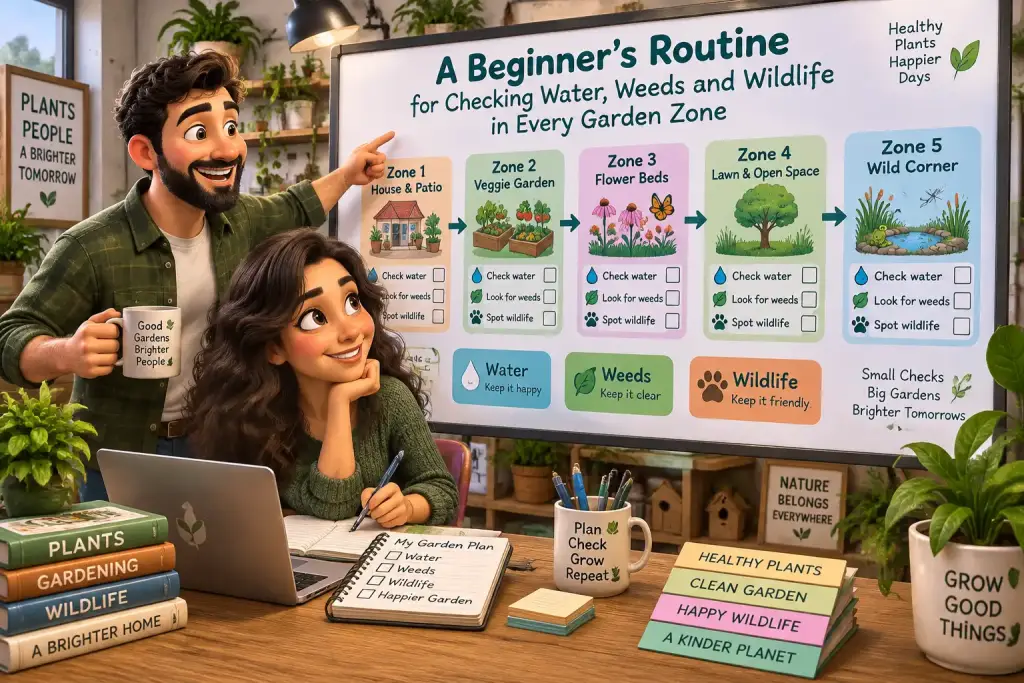
From there, make a five-minute garden walk part of your normal routine. Walk the same route each time, perhaps from the back door to the food bed, then to the rain garden, then past the compost bin. Look for drooping leaves, chewed plants, standing water, dry mulch, and weeds about to flower. You do not need to fix every issue that day. Just write it down.
Use three simple marks beside each task: done, move, or change. “Done” means the job was finished. “Move” means it still matters but needs another date. “Change” means the job no longer fits. For example, a dry summer may mean you need more container checks. A wet spring may mean you can remove extra watering jobs from several zones.
Use real results, not perfect plans
A working checklist should leave your garden looking cared for without taking over your week. Check if food crops are producing, if mulch covers bare soil, if paths stay safe, and if rainwater goes where it should. If these basics are going well, your plan is doing its job.
At the end of each season, write three quick notes for every zone. Note what grew well, what caused trouble, and what you will change next time. For example, “basil dried fast in black pot,” “bees used late flowers,” or “drip line leaked near gate.” These honest notes are more helpful than trying to remember everything months later.
Keep the next season light at first. Add only the jobs your notes support, then build from there. Soon, your seasonal checklist will feel less like paperwork and more like a friendly guide that helps every part of your home garden get the care it needs.

Matteo Mariani
Founder & Lead Landscape EditorBorn and based in Italy, Matteo Mariani is the founder and lead editor of Eco Zoned. He helps readers make thoughtful outdoor planning choices with practical advice on lower-impact gardens, functional spaces, and landscape zones for everyday homes.