









Lawn waste can drop by more than half when mowing and mulching become part of one simple weekly routine. Instead of bagging every grass clipping and leaf, set the mower correctly, cut at the right time, and return useful plant material to the areas that need it most.
- Keep grass clippings on the lawn when cuts are dry and short, because they break down quickly and feed the soil.
- Mow no more than one-third of the grass blade at one time to prevent heavy clumps and weak turf.
- Mulch dry leaves in small layers, then use them as soil cover in shrub beds, tree rings, and garden paths.
Table of Contents
- Set Up Lawn Waste Habits Before Your First Cut
- Choose a Mowing Height That Prevents Heavy Clippings
- How Does Mulching Grass Clippings Reduce Yard Waste?
- Use Leaves and Clippings in the Right Garden Zones
- Build a Weekly Mowing and Mulching Routine
- What Should You Do When Mulch Clumps or Smells?
- Check Your Results and Adjust Through the Seasons
Set Up Lawn Waste Habits Before Your First Cut
Start with a mower that can mulch, a sharp blade, and a clear place for leaves and clippings to go. Good setup prevents rushed choices, such as filling yard bags because the grass was cut too low or while it was wet.
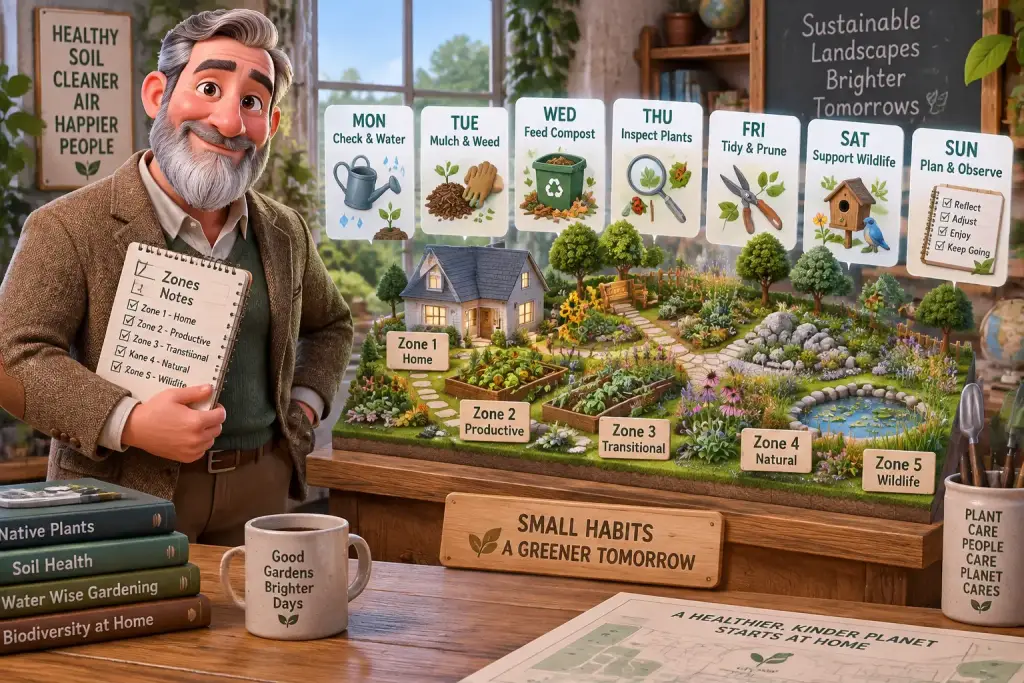
Look at your home garden area as a group of small zones. The lawn is one zone, while tree rings, shrub beds, paths, and compost space are separate zones. Each one can use grass clippings or chopped leaves in a different way. This makes mowing less about making waste and more about moving useful material where it belongs.
First, check if your mower has a mulch plug or a mulch setting. A mulching mower keeps grass inside the mower deck longer, so the blade can cut it into smaller pieces. Small pieces fall between grass blades and break down faster. If your mower does not have a mulch setting, you can still leave short dry clippings on the lawn after a normal cut.
Get the basic tools ready
You do not need a large tool shed for this system. A mower, a hand rake, a leaf rake, gloves, and a simple compost bin are enough for most homes. A leaf blower can help move dry leaves, but a rake gives you better control near flower beds and young plants.
- A mower with a clean mower deck and working mulch plug
- A sharp mower blade, checked every 20 to 25 mowing hours
- A rake for moving leaf piles and loose clippings
- A compost bin or open pile for extra material
- A bucket or small cart for carrying mulch to beds
Keep one small spot for dry leaves, even if you do not make compost. A loose pile behind shrubs or near a fence can hold leaves until you are ready to mulch them. Avoid placing this pile against a house wall, shed, or fence made of wood. Damp plant matter needs airflow and should stay away from buildings.
Here is why that matters: when grass and leaves already have a planned home, bagging becomes the backup choice instead of the normal choice. You also save time because you do not stop halfway through mowing to decide where everything should go.
Choose a Mowing Height That Prevents Heavy Clippings
Set most home lawns at about 3 to 4 inches high, then cut only the top third of the grass blade. This keeps clippings short enough to settle into the lawn, while longer grass shades the soil and slows moisture loss.
Cutting grass too short creates two problems at once. The lawn may turn dry and thin, especially during warm weeks. It also leaves a heavy layer of long clippings that can sit on top of the grass. Those piles look messy, block light, and often make people reach for a bag.
As a rule of thumb, a lawn that is 4 inches tall should not be cut lower than about 2 3/4 inches in one session. If it has grown to 6 inches after rain or a holiday, do not cut it down to 3 inches in one pass. Raise the mower for the first cut, then mow again several days later at your normal height.
Use the one-third cutting rule
The one-third rule is simple. Measure or estimate the grass height before mowing. Then remove no more than one-third of that height. This helps the grass stay strong and keeps each clipping small enough for grass cycling.
- Check the lawn height in two or three areas.
- Set the mower deck before starting the engine.
- Mow when the grass is dry and upright.
- Leave short clippings on the lawn after the first pass.
- Make a second pass only if you see thick rows or piles.
In everyday use, this step takes about five minutes before mowing. It can stop a full bag of wet clippings from going into a trash bin. A simple ruler is useful at first, but you will soon know your lawn height by eye.
On the flip side, very short grass may look neat for a day, but it often needs more water and has more bare spots later. Taller grass is not untidy when it is cut evenly. It is simply better able to handle heat, foot traffic, and short dry periods.
Keep different settings for different areas if your yard has both sunny and shady zones. Grass under trees often grows slower and can stay a little taller. Open sunny grass may need more frequent cuts during fast spring growth. Your backyard zone map can help you note which areas need a separate mowing pattern.
How Does Mulching Grass Clippings Reduce Yard Waste?
Mulching grass clippings reduces yard waste by returning small bits of grass to the soil instead of sending them away in bags. These bits break down fast, add plant food, and usually disappear from view within a few days.
Grass clippings are mostly water, so they are not the same as thick wood chips or bark mulch. When cut into small pieces, they fall through the standing grass and reach the soil. Soil life then breaks them down. This gives the lawn some nitrogen and can reduce the need for extra lawn feed.
Use the mulch plug when grass is dry and you are following the one-third rule. Move at a steady walking speed. If the mower pushes out a visible trail of clippings, slow down or raise the mower deck. A clean mower deck also helps clippings move around under the blade instead of sticking in wet clumps.
Make one extra pass when needed
Do not bag clippings right away when you see a few small piles. First, mow over the area again in a different direction. This chops and spreads the grass without much added time. When we tested this setup after a fast spring week, a second pass cleared most visible rows in less than ten minutes.
Bagging is useful in a few cases. Use the bag when grass is soaked after rain, when it has grown very long, or when disease is clearly present across the lawn. Put diseased grass in local green waste only if your area accepts it. Do not spread it around healthy beds or add it to a cool compost pile.
Thatch is often blamed on grass cycling, but short clippings do not usually cause thatch. Thatch is a tight layer of old stems and roots near the soil surface. It builds when old plant parts break down slowly. Small fresh clippings break down much faster, especially in an active lawn with good soil contact.
The takeaway here: grass cycling works best when mowing happens often enough. It is not a fix for an overgrown wet lawn. A regular cut every 5 to 10 days during fast growth gives the mower small pieces it can handle well.
Use Leaves and Clippings in the Right Garden Zones
Put chopped leaves and spare dry clippings where they can protect soil, not where they can smother plants. Tree rings, shrub beds, compost piles, and bare path edges are good places, while thick layers on lawns and around plant stems are not.
Autumn leaves are one of the largest sources of home garden waste. They can become a useful leaf mulch with very little work. Run a mower over a thin, dry layer of leaves on the lawn. The chopped pieces can stay there if you can still see grass through them. Move thicker amounts into beds or compost.
| Material and condition | Best place to use it | Simple rule |
|---|---|---|
| Short, dry grass clippings | Healthy lawn | Leave them after each normal mow. |
| Long or wet grass clippings | Compost pile | Mix with dry leaves or torn paper. |
| Chopped dry leaves | Shrub beds and tree rings | Spread 2 to 3 inches deep. |
| Whole wet leaves | Leaf pile or compost bin | Do not leave them as a solid lawn layer. |
| Grass with clear disease signs | Local green waste collection | Keep it away from healthy beds. |
Keep mulch about 2 inches away from the base of shrubs, small trees, and perennials. A thick wet ring against the stem can trap moisture and invite rot. Shape mulch like a flat doughnut, not a pile against the trunk. This simple gap also lets you see if a plant needs water.
Use chopped leaves in paths between raised beds or in quiet corners behind shrubs. They slowly settle and can be topped up later. Do not use fresh thick grass clippings as a deep mulch layer. They can pack together, smell sour, and form a wet sheet that blocks air and water.
Instead of guessing where loose plant material should go, match it to the zone’s job. A tidy front area may need only fine leaf mulch under shrubs. A less visible back corner can hold a compost pile. The same approach supports the plant choices in this garden zone planting guide.
Build a Weekly Mowing and Mulching Routine
A weekly check keeps lawn waste low because grass and leaves are handled while they are still thin and dry. Spend five minutes checking growth, moisture, and leaf cover before deciding if the mower, rake, or compost bin is needed.
The best schedule changes with weather. During fast spring growth, mowing may be needed every 5 to 7 days. During dry summer weeks, grass may grow slowly and need a cut only every 10 to 14 days. Do not mow just because it is a certain day. Mow because the grass is close to one-third taller than your chosen height.
Check the forecast before mowing. Dry grass gives cleaner cuts, spreads better under a mulching mower, and does not clog the mower deck as easily. Morning dew can be enough to cause clumps, so late morning or early evening often works better when the lawn has dried.
Follow this short weekly check
- Look for grass that is more than one-third above your target height.
- Check if the lawn surface is dry enough for mulching.
- Pick up sticks, toys, stones, and thick leaf piles.
- Look under the mower deck for stuck grass.
- Rake only the areas where leaves fully cover the grass.
Keep the routine small. A lawn does not need a full clean-up every week. Often, the right task is one normal mow and a quick walk around the tree areas. This saves time and avoids turning every bit of plant material into a job.
Write down what happens after each cut for the first month. Note the mower height, weather, and whether clumps appeared. You may see that one side of the lawn grows faster because it gets more sun or water. That detail lets you adjust the mowing path instead of using the same setting everywhere.
A steady routine also helps other parts of your home garden plan. Our guide to weekly garden habits can help you group mowing, watering checks, and mulch checks into one short visit outside.
As a rule of thumb, bag clippings only when wet grass forms thick piles that cover the lawn. A second light pass often fixes the problem without creating a bag of waste.
What Should You Do When Mulch Clumps or Smells?
Fix mulch clumps by spreading them thin, letting wet material dry, and mixing grass with dry leaves before composting. A sour smell means the pile is too wet or packed too tightly, so it needs more air and dry material.
Clumps on the lawn usually happen for one of three reasons. The grass was wet, the mower deck was blocked, or too much grass was cut at once. Stop the mower and check the underside only after the engine is fully off and safe. Scrape away stuck grass with a plastic tool or brush, not your hands near the blade.
If clippings sit in thick lines, rake them out lightly or mow over them again. Do not leave piles that cover the grass for several days. A thin layer is fine. A heavy wet layer can shade the lawn and leave yellow patches beneath it.
Fix common waste problems early
Wet grass clippings can go into a compost pile, but they need a dry partner. Mix one bucket of grass with two buckets of dry leaves, torn brown paper, or dry plant stems. Turn the pile with a fork every week or two if it starts to smell. This adds air and helps the pile break down evenly.
Whole leaves can also cause trouble when they form a flat mat. Run the mower over them once or twice, or rake them into a loose pile before using them in beds. Chopped leaves stay in place better and allow rain to pass through. Pine needles can be used in small amounts around acid-loving plants, but they should not form a thick blanket over every bed.
Do not add weeds with ripe seed heads to loose mulch around beds. They may spread when you move the material. Put them in a hot compost system only if you know the pile gets hot enough, or use your local green waste service. The same care applies to invasive plants and grass treated with strong weed control products.
On the flip side, do not throw out all imperfect clippings. A pile that is only slightly wet can be spread in a thin layer under established shrubs, then covered with dry leaves. Small corrections keep useful material on site and reduce the number of bags leaving your home.
Check Your Results and Adjust Through the Seasons
Measure success by looking for fewer yard bags, less bare soil, and a lawn that stays green without thick clipping piles. Check these signs every two weeks, then change only one habit at a time so you can see what made the difference.
Start with a simple count. Keep track of how many bags of grass and leaves you put out each month. If you used six bags last autumn and only two this year, your system is working. You can also note how often the compost bin fills and how much leaf mulch is used under shrubs.
Look closely at the lawn after mowing. Short clippings should be hard to see from a few steps away. The grass should stand up instead of being pressed down under rows of wet material. If you see yellow strips, check for heavy piles, a dull mower blade, or a mower deck set too low.
Soil condition is another useful sign. Under trees and shrubs, leaf mulch should slowly become darker and thinner over several months. That means soil life is using it. Add a fresh thin layer when the old layer becomes patchy. Do not keep adding mulch until it becomes a deep pile around plants.
Change the plan with the season. Spring is often about frequent light mowing. Summer may call for a higher mower setting and less mowing during dry periods. Autumn brings leaf mulching and compost work. Winter is a good time to clean the mower deck, sharpen or replace the blade, and review what created the most waste.
The best result is a routine that feels normal, not complicated. When clippings feed the lawn, leaves cover bare soil, and only problem material goes into a bag, your garden zones stay cleaner with less work. Small mowing choices add up over a full year.

Matteo Mariani
Founder & Lead Landscape EditorBorn and based in Italy, Matteo Mariani is the founder and lead editor of Eco Zoned. He helps readers make thoughtful outdoor planning choices with practical advice on lower-impact gardens, functional spaces, and landscape zones for everyday homes.