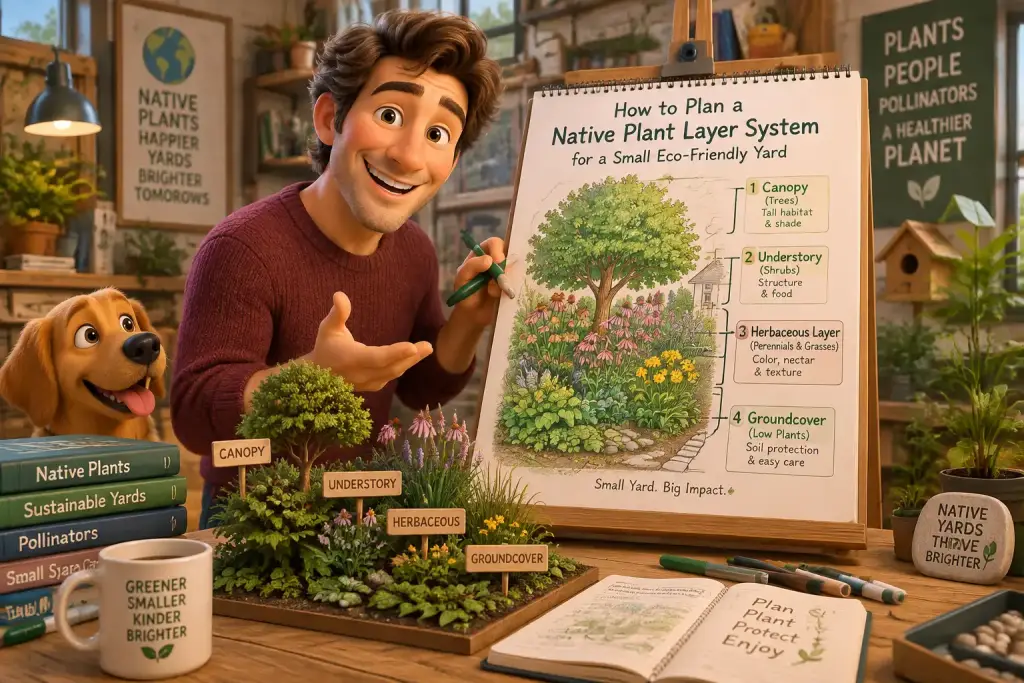








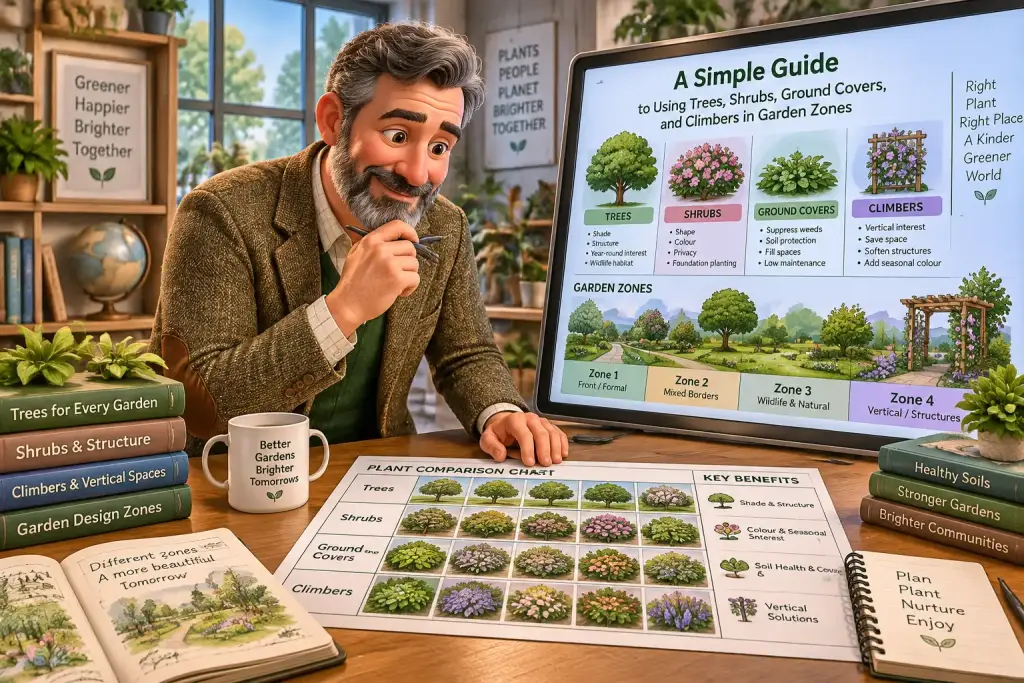
Good Garden Zones use plants with clear jobs instead of placing each plant where there is an empty gap. Trees make shade and shape views, shrubs form edges, ground covers protect soil, and climbers use vertical space. When these layers work together, a home garden can need less watering, offer more cover for wildlife, and feel easier to care for.
- Put trees first because their shade, roots, and size affect every plant below them.
- Use shrubs for borders and screens, ground covers for bare soil, and climbers for walls or fences.
- Check plant growth, water flow, and access paths every season before making major changes.
Table of Contents
Map Garden Zones Before You Buy Plants
Start by marking sun, shade, wet spots, dry spots, paths, and views before buying plants. A simple map helps you put each plant layer in the right place and stops expensive changes after planting.
Walk around your yard three times in one day, once in the morning, around midday, and again in late afternoon. Note which areas get six or more hours of sun, which get three to six hours, and which stay mostly shaded. Also watch where rain runs after a storm. A low area may suit moisture-loving plants, while a hot wall may need tough plants that handle dry soil.
Draw the plan on paper, using rough shapes rather than perfect lines. Mark the house, driveway, patio, lawn, fence, shed, and any existing large trees. Then give each space one main job. A front area may need a clear entrance. A side boundary may need privacy. A back corner may support food growing, wildlife cover, or a quiet seat.
Give each area one main job
Mixed jobs can work, but one main job makes choices easier. A narrow path should stay open and safe. A rain garden should slow and soak water. A sitting area should have shade without dropping too much leaf litter onto chairs and tables. Here is why that matters: plants that suit the job usually need less cutting, watering, and moving later.
- Entrance zone: Keep sight lines open with low shrubs and ground covers.
- Shade zone: Use a small tree or larger shrub where summer shade is wanted.
- Wildlife zone: Group flowering shrubs, seed plants, and dense cover together.
- Boundary zone: Use shrubs or climbers to soften fences and block unwanted views.
- Water zone: Place thirsty plants near downspouts, swales, or rainwater storage.
Measure the space before choosing a tree or hedge. A planting bed that is only 4 feet wide cannot hold a shrub that spreads 8 feet wide without regular hard cutting. Leave at least 2 to 3 feet between plants and a path where people need room to walk. Keep woody plants away from walls, drains, and utility lines according to their final size.
For a wider plan, our guide to garden activity zones can help you separate play, growing, rest, and wildlife spaces before you begin planting.
How Do You Match Trees and Shrubs to Each Zone?
Match trees and shrubs by their mature height, root space, light needs, and daily job in the garden. Put the largest plants first, then use shrubs to frame them, screen views, or create a lower middle layer.
Trees are the biggest long-term choice. A small tree can shade a patio, cool a west-facing wall, or give birds a place to rest. Yet a large tree is not always worth the effort in a small yard. If it will cover solar panels, block a food bed, or grow into power lines, choose a smaller type or place it elsewhere.
Check the plant label for mature height and spread. The spread is often more important than height because it tells you how much ground the plant will take. A tree with a 20-foot spread needs open room around its trunk. Place it far enough from the house that branches will not rub the roof as it grows. Local rules and utility guidance may also set planting limits near wires.
Place the top and middle layers
Use a tree as the top layer, then place shrubs around it without packing them tightly against the trunk. Trees and shrubs need air movement to dry leaves after rain. Good spacing also makes it easier to add mulch, remove weeds, and inspect stems for damage.
- Choose the tree location based on shade, views, and mature spread.
- Mark the expected canopy edge with a hose or string.
- Place shrubs outside the tree trunk area, where they will still receive enough light.
- Leave room for a path, mower access, or a wheelbarrow if needed.
- Add ground covers only after the tree and shrub spaces are clear.
Use shrubs for work that a tree cannot do well. Evergreen shrubs can screen a fence all year. Flowering shrubs can feed pollinators during part of the season. Loose, mixed shrubs can create shelter for small birds. A clipped hedge gives a neat line, but it needs more cutting and may offer fewer flowers and berries.
Instead of guessing, look at the soil under existing plants. If moss grows and the ground stays damp, choose plants that accept shade and moisture. If grass turns brown by midsummer, use drought-tolerant shrubs, add compost, and cover soil with mulch. When we tested this setup in a sunny side yard, placing shrubs 3 feet apart based on their mature width stopped the crowded look that often appears after only two growing seasons.
Native choices can support local insects and birds, but they still need the right site. Our native plant layers guide shows how to combine local plants by height and growing conditions.
How Should Ground Covers and Climbers Fill the Gaps?
Ground covers should cover bare soil, while climbers should use fences, walls, and trellises without harming structures. Choose both by light, moisture, growth speed, and the time you can spend on trimming.
Bare soil dries out quickly and invites weeds. Ground covers act like a living blanket, helping soil hold moisture and reducing splash from heavy rain. Some spread slowly in tidy clumps. Others spread fast through stems or roots. Fast spread can be useful on a bank or large border, but it can become a problem beside small perennials or vegetable beds.
As a rule of thumb, use slow or medium spreaders near paths, patios, and mixed beds. Save strong spreaders for places where they have room to run, such as under established trees or on difficult slopes. Planting 6 to 12 inches apart gives quick cover, but costs more at the start. Wider spacing, such as 12 to 18 inches, costs less but leaves open soil for longer.
Climbers add green cover without taking much ground space. They can soften a plain fence, shade a small sitting area, or create a screen between zones. Some climbers twist around wires or posts. Others use tendrils, or hold themselves to surfaces. Check the growth method before planting. A self-clinging climber may leave marks on weak brick, old wood, or painted walls.
Build support before planting climbers
Put up the trellis, wire frame, or strong posts first. Set a trellis 4 to 6 inches away from a wall so air can move behind leaves. This gap helps the wall dry after rain and gives you room to tie stems safely. Use soft plant ties, not wire, because wire can cut into growing stems.
| Zone need | Best plant layer | Simple setup or check |
|---|---|---|
| Hot patio edge | Small shade tree and low ground cover | Keep tree canopy away from roof and mulch the root area |
| Open fence line | Shrubs and climber | Set trellis 4 to 6 inches from the fence or wall |
| Dry slope | Spreading ground cover | Plant 12 to 18 inches apart and water deeply at first |
| Wet low spot | Moisture-loving shrubs | Check rain flow before planting and avoid blocking drainage |
| Shady tree base | Shade ground cover | Keep mulch and plants several inches away from the trunk |
On the flip side, do not use climbers to hide a structural problem. Repair loose fencing, damaged siding, or blocked gutters first. Keep climbing stems away from vents and roof edges. In everyday use, checking ties and trimming stems takes about five minutes every few weeks during the main growing season.
What Planting Steps Keep Each Zone Working?
Plant in the right order: trees first, shrubs second, then ground covers and climbers. This order protects root space, keeps paths open, and avoids digging up smaller plants when large plants go in later.
Start on a cool day if possible. Water plants in their pots before planting, especially if the soil is dry. Dig a hole about twice as wide as the root ball, but no deeper than the root ball itself. The point where the trunk widens into roots should sit at or slightly above soil level. Planting too deep is a common reason young trees and shrubs fail.
Use a simple planting routine
Place the plant in the hole and turn it so its best side faces the main view. Backfill with the soil you removed rather than filling the hole with rich compost alone. A pocket of very different soil can hold water around roots or keep roots from growing outward. Firm the soil gently with your hands, then water slowly to settle it.
- Water newly planted trees and shrubs deeply once or twice a week during dry weather.
- Use a 2 to 3 inch mulch layer to hold moisture and reduce weeds.
- Keep mulch 3 inches away from trunks and woody stems.
- Label new plants until you know where each one is growing.
- Use a bucket, hose, or drip line to water the root area, not only the leaves.
Rainwater can reduce the need for tap water when it is directed safely into the right planting area. A useful next step is planning rainwater collection zones around beds that can use extra moisture. Do not send roof runoff straight toward a house foundation or a bed that stays wet for days.
New planting often looks sparse. That is normal. Resist the urge to fill every open patch with extra shrubs. Use annual flowers, leaf mulch, or temporary ground covers while permanent plants grow. This keeps the design flexible and helps you see how sun and water change through the year.
Watch for three common slip-ups. First, plants placed too close together compete for water and light. Second, lawns or ground covers planted right against trunks can lead to mower damage and trapped moisture. Third, a climber without a clear support can pull on nearby shrubs or spread across a path. Small changes in the first year are much easier than big repairs in year five.
As a rule of thumb, space plants for their adult width, not the small pot size. This avoids crowding, extra pruning, and weak air flow later.
Check Your Zones Through Each Season
Check each garden zone at least once per season for shade changes, water problems, crowding, and clear access. Keep what works, adjust small problems early, and give new plants one full growing year before judging their final size.
Spring is a good time to inspect winter damage, fresh weeds, and water flow. Summer shows where shade is useful and where soil dries too fast. Autumn reveals leaf drop, blocked drains, and plants that need more room. Winter makes the basic structure easy to see because the paths, evergreen shrubs, fences, and tree shapes stand out.
Take photos from the same place every season. A phone photo can show changes that are hard to notice day by day. Is a shrub blocking a path? Has a tree shaded a food bed for most of the afternoon? Is ground cover leaving bare soil after heavy rain? These answers help you make calm choices based on real use.
Use a five-minute zone check
Walk each area with a short list. Check that water drains away from buildings, paths remain wide enough, and climbers stay on their supports. Look under shrubs for weeds, dry soil, or dead branches. Check tree trunks for mulch piled too high and remove any ties that are rubbing.
Prune with a reason, not only because a branch looks long. Remove dead, damaged, or crossing branches first. Cut back climbers that block windows, gutters, or paths. Thin shrubs only when crowded stems reduce air movement or hide the plant’s natural form. Heavy cutting at the wrong time can remove flowers or stress a young plant.
The takeaway here: a working garden is not one that stays frozen in place. Trees grow, shade moves, and family needs change. A good zoning plan gives you a simple order for decisions. Keep the large layers healthy, protect soil with ground cover or mulch, and use climbers only where their support and future size make sense.
After a year, review every zone and write down one change for the next season. It may be as small as moving a pot into shade, widening a mulch ring, or adding a trellis. Those modest changes keep the garden useful, lower waste, and make care feel manageable.

Matteo Mariani
Founder & Lead Landscape EditorBorn and based in Italy, Matteo Mariani is the founder and lead editor of Eco Zoned. He helps readers make thoughtful outdoor planning choices with practical advice on lower-impact gardens, functional spaces, and landscape zones for everyday homes.