









How to Connect Lawn, Shrubs, Trees, and Water Into a Wildlife Travel Corridor
Link your lawn edge to shrubs, trees, and water with safe cover that helps wildlife move, rest, feed, and hide each day.
Plan backyard habitat zones with native plants, water, shelter, and simple layouts that help local wildlife thrive year round.
Link your lawn edge to shrubs, trees, and water with safe cover that helps wildlife move, rest, feed, and hide each day.

A simple flower plan gives bees food each month, while five minute checks keep your backyard habitat active with very little extra work.
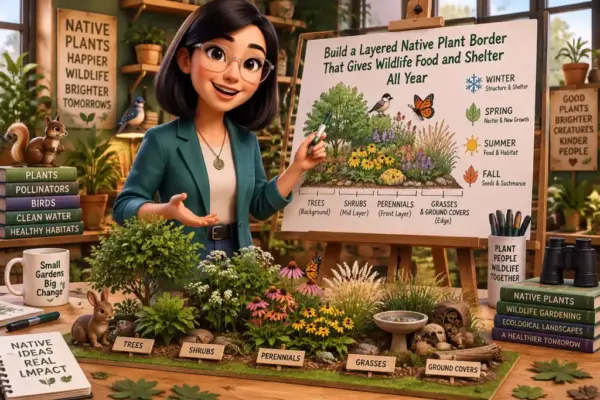
A layered planting routine turns one garden edge into steady food and cover for wildlife, with small weekly checks and little extra work.

Five calm minutes of pond checks each day can protect visiting wildlife. Small slope, plant, and water level changes make a pond safer.

Old yard plans often add bright lights and neat bare ground. A simple dark corner with native plants gives night visitors safer food and cover.
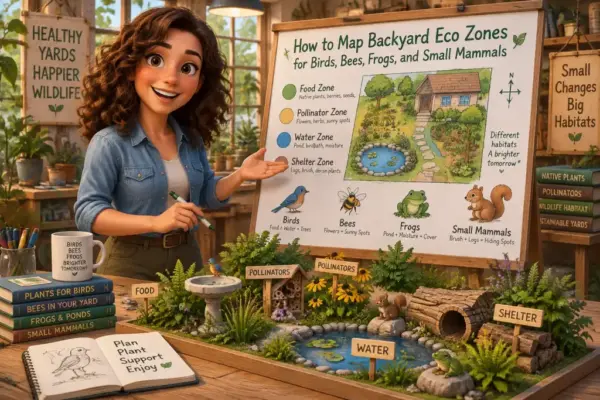
Start by sketching your yard and marking sun, water, and cover. This first map helps wildlife use each area safely.

A small weekly routine turns spare logs and leaves into a safer wildlife corner. Build habitat value with little extra garden work.