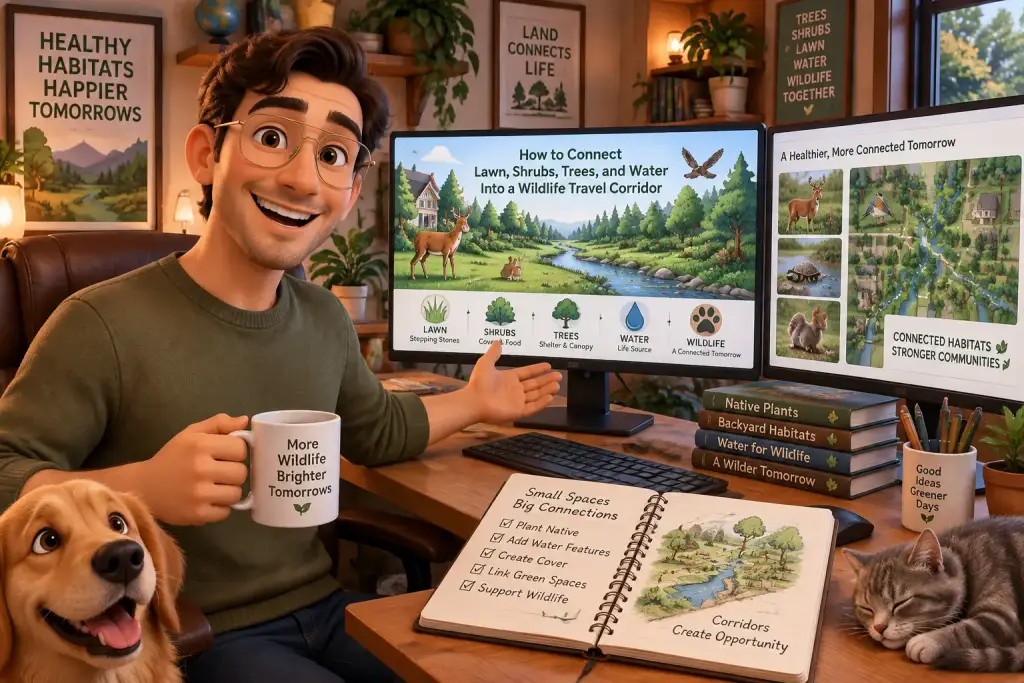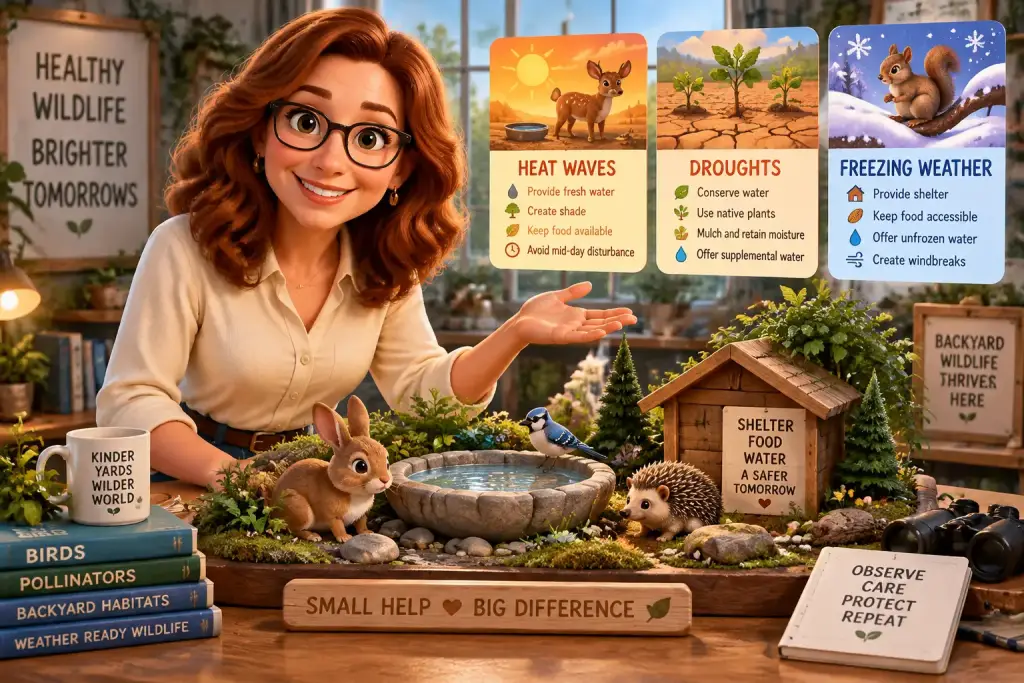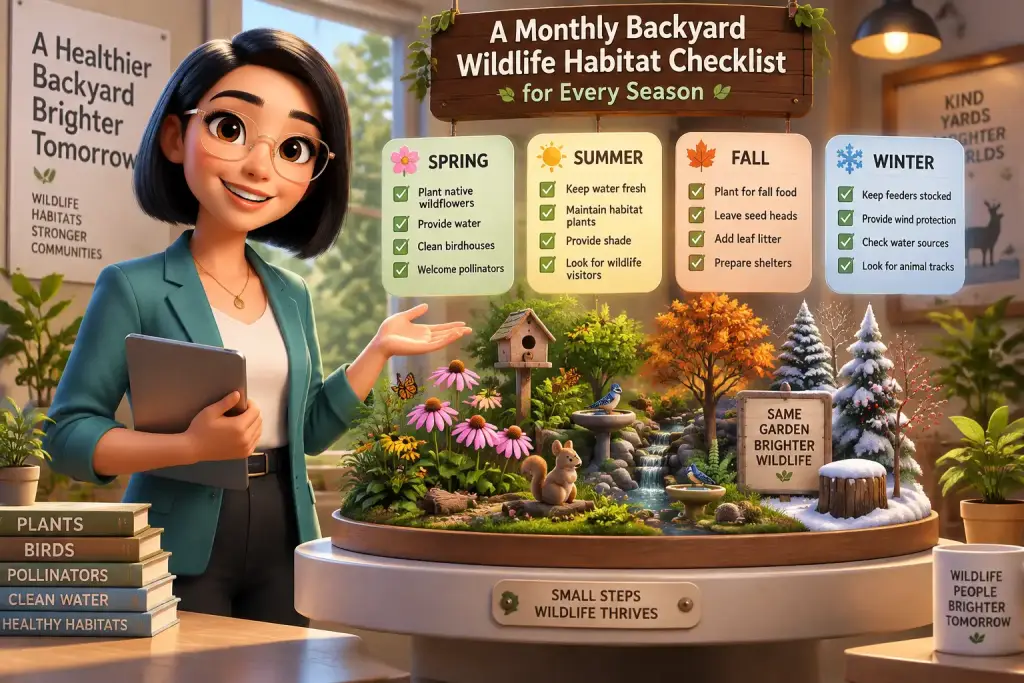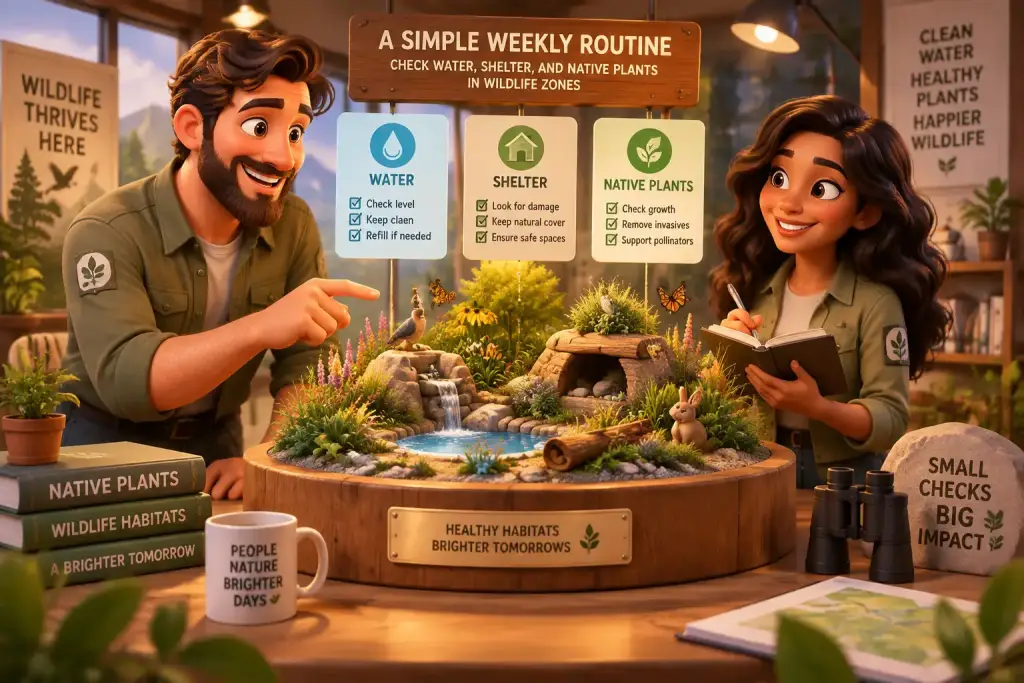







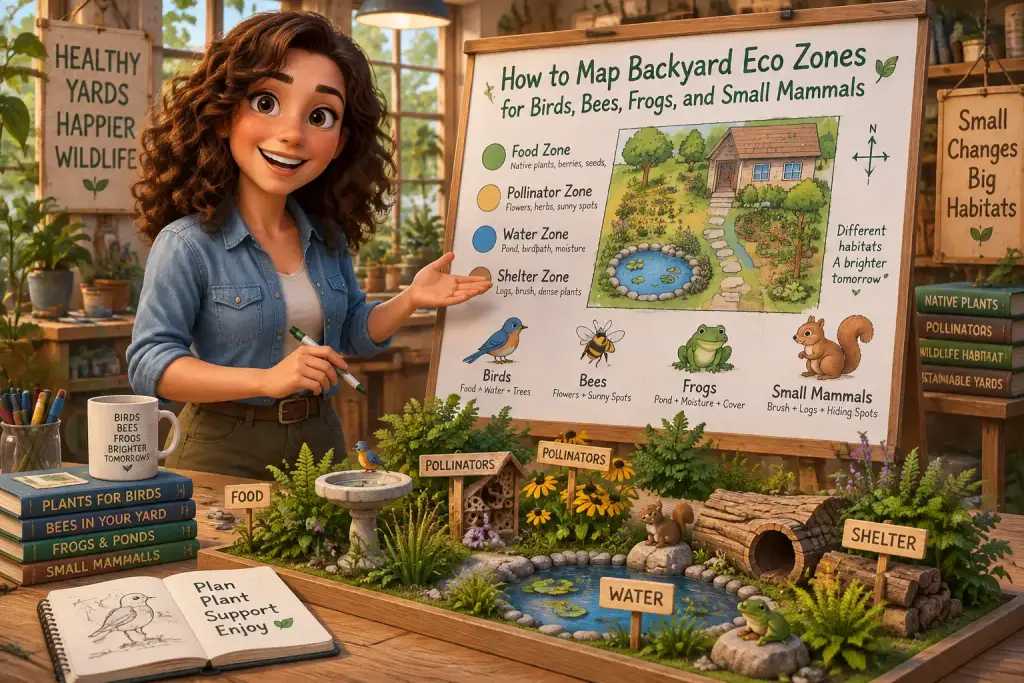
Backyard eco zones work best when you map your yard before planting, digging, or buying habitat items. A simple paper map shows where birds can feed, bees can find sun, frogs can reach water, and small mammals can move under cover without crossing open ground.
- Mark sun, shade, water flow, fences, trees, and quiet corners before choosing plants or habitat items.
- Give each wildlife group a linked zone with food, water, cover, and a safe route between them.
- Check your map every month and adjust one small problem at a time, such as dry soil, bare ground, or blocked cover.
Table of Contents
Map Backyard Eco Zones Before You Build
Start with a rough yard map that marks sun, shade, water, plants, fences, and quiet corners. This first map helps you place each wildlife zone where it already has the right conditions, instead of forcing a habitat into the wrong spot.
Use graph paper, a notebook page, or a phone photo printed on paper. You do not need perfect lines. Walk the yard slowly in the morning, around midday, and again near sunset. Mark where the ground stays sunny for six or more hours, where it stays cool, and where rainwater collects after a shower.
Birds, bees, frogs, and small mammals need different things, but their zones can support one another. A sunny flower bed may feed bees during the day. A nearby shrub can give small birds a place to rest. A damp edge near a pond can give frogs cover, as long as it does not become a place where pets often run.
Mark the fixed parts first
Draw the parts that will not move. Include your house, shed, patio, paths, fence lines, mature trees, downspouts, drains, and existing ponds. Then add useful details such as compost bins, wood piles, dense hedges, and areas where children or pets play.
- Use a yellow mark for full sun.
- Use a blue mark for wet or damp ground.
- Use a green mark for trees, shrubs, and tall grass.
- Use a red mark for busy areas, bright lights, or pet routes.
When we tested this setup in a small yard, the first map showed that the best pond spot was not where we first planned it. Rain already moved toward a quiet back corner, and a hedge gave shade during the hottest part of the day. That saved digging work and gave the pond a better start.
Leave space around each mark. You will add food, water, shelter, and travel routes later. For most people, this first walk takes 20 to 40 minutes, then another 15 minutes to turn notes into a clear map.
How Do You Assign Zones for Each Animal Group?
Give each animal group a main zone, then link those zones with safe cover and food. Birds need height and open views, bees need sunny flowers, frogs need shallow clean water, and small mammals need low shelter.
Start with birds because trees and shrubs often shape the rest of the yard. Put bird feeding and nesting cover near shrubs, small trees, or a hedge. Keep feeders at least 10 feet from dense hiding places where cats may wait. Add a bird bath in a place you can clean often, with a shallow edge and fresh water.
Set a sunny bee zone
Choose a spot with at least six hours of sun. Group flowers in patches instead of placing one flower in each corner. Bees save energy when several plants of the same kind grow together. A patch around 3 by 3 feet is a useful starting size, though larger patches often bring more visits.
Leave a small bare soil strip for ground-nesting bees. Keep it dry and free from thick mulch. A south-facing patch close to flowers is often useful. Avoid sprays in this area, including broad weed killers and bug sprays. Our guide to pesticide-free control can help you deal with weeds without harming visiting insects.
Place frog and mammal cover
Frogs need water, damp soil, shade, and safe exits from the water. A pond with a shallow shelf, stones, or a partly sunken branch lets young frogs climb out. Do not make every pond edge steep. Keep fish out of a small frog pond if possible, since fish may eat eggs and young tadpoles.
Small mammals such as mice, voles, shrews, and hedgehogs need low cover. Make a brush pile beside a hedge, or leave a tucked-away log pile in a calm corner. Keep this cover away from doors and food storage. The goal is a wildlife route, not a place where animals enter your home.
Build the Map With Food, Water, Cover, and Routes
Use four map symbols in every zone: food, water, cover, and a route to the next zone. A zone is more likely to work when an animal can reach these needs without crossing wide, bare, or dangerous ground.
Draw arrows between your areas. A bee route may be a line of flower groups from spring through fall. A frog route may run from a pond to damp leaf litter under shrubs. A small mammal route may follow fence-bottom gaps, tall grass edges, logs, and low shrubs. Birds can fly, but they still use connected trees and shrubs for safer rest stops.
| Map feature | Best setting | Check or tool |
|---|---|---|
| Bee flower patch | Six or more sunny hours, grouped blooms | Sun notes and plant labels |
| Bird shelter | Shrub or tree cover near food and water | Binoculars and a simple sketch |
| Frog pond edge | Shallow shelf, stones, and damp shade | Ruler and clean rainwater |
| Small mammal route | Hedge, log pile, leaf litter, fence gap | Flashlight and trail notes |
Keep the zones close enough for wildlife to use them, but do not pack every feature together. A pond can sit 15 to 30 feet from a shrub border. A sunny bee bed can be farther away if flowers form a clear path between areas. Use your yard size as the guide. Even a 20-foot garden can hold a flower patch, water dish, shrub cover, and one small log pile.
Here is the catch: water needs regular care. Empty and refill shallow dishes every day or two in warm weather. Clean bird baths with a brush when dirt builds up. For a pond, remove only part of fallen leaves at a time so you do not take away all cover for pond life.
Make a separate note for night conditions. Bright security lights can change how moths, frogs, and small mammals use a yard. If your map has a dark corner, protect it and read our guide on a safe night habitat before adding lights or paths nearby.
What Problems Can Stop Wildlife From Using Your Zones?
Wildlife often avoids a mapped zone because it is too exposed, too dry, too noisy, or unsafe to reach. Fix the weakest part first, such as bare ground between cover, a steep pond edge, or flowers that stop blooming too early.
A common slip-up is making one attractive feature with no nearby support. A bird bath in the center of open lawn may look good, but small birds may not feel safe there. Move it closer to a shrub, while leaving enough open space to see approaching cats. A bee hotel without flowers or bare ground also has limited use.
Check these trouble spots
- Look for open gaps wider than 6 to 10 feet between low cover.
- Check pond edges for at least one easy exit.
- Watch where rainwater pools after heavy rain.
- Notice pet paths, mower routes, and bright night lights.
- Check flowers every month for gaps in bloom time.
Frogs may stay away if pond water has soap, lawn chemicals, or sudden hot water from a roof drain. Let roof water pass through a planted area or a simple filter bed before it enters a pond. Do not release pet fish, aquarium plants, or unwanted animals into outdoor water. These can upset the small pond system quickly.
Small mammals may avoid a brush pile if it is placed in a busy corner. Move the pile behind a shrub or beside a fence, then leave it mostly alone. Do not pull apart leaves every week to see what is inside. In practice, wildlife needs calm more than it needs a neat-looking pile.
Bees may visit less when one type of flower is the only food source. Add plants that bloom at different times. Early flowers help queens after winter. Summer flowers feed busy workers. Late flowers can give insects food before cold weather. Choose plants that suit your local area and soil, rather than forcing thirsty plants into dry ground.
Draw your yard at one square equals 1 foot or 1 meter. A simple scale helps you see gaps between water, flowers, shelter, and travel routes.
Check Your Map Through Daily Wildlife Signs
Test your backyard eco zones by watching for regular signs, not by expecting every species at once. Track visits for four to eight weeks, then change one feature at a time so you can see what helped.
Use a small notebook or phone note. Record the date, weather, time, and animal sign. For birds, note feeding, bathing, calling, or nesting material. For bees, count visits to a flower patch for five minutes. For frogs, listen at dusk and look for egg clusters only from a distance. For small mammals, look for tiny paths in grass, moved leaves, or prints in soft soil.
A simple record turns guesses into useful facts. Our wildlife journal method can help you notice changes across the seasons. One warm week may bring many bee visits, while a dry month may show that your pond edge needs more shade or damp leaf cover.
Use a monthly map review
Print your original map or keep a copy in a folder. Once each month, add a note beside every zone. Write “active,” “quiet,” “too dry,” “too exposed,” or “needs food.” This gives you a clear next step without rebuilding the whole yard.
Look for balance, not perfect numbers. A frog pond may seem quiet in daylight but become active after rain. A brush pile may show no clear sign for weeks, then become part of a regular travel route. Birds may use a shrub only when nearby berries ripen. Give each change time.
Once you set this up, make small changes in order. Add cover before adding a new feeder. Fix water safety before adding more plants. Fill bloom gaps before buying more bee homes. This steady method keeps your map useful and helps your yard become a safer shared space for wildlife throughout the year.

Ludovica Serra
Founder & Habitat EditorLudovica Serra, born and based in Roma, Italy, is the founder and lead editor of Eco Zoned. She helps readers create wildlife-friendly garden spaces with practical, clear advice on planting, shelter, water, and everyday habitat care.