







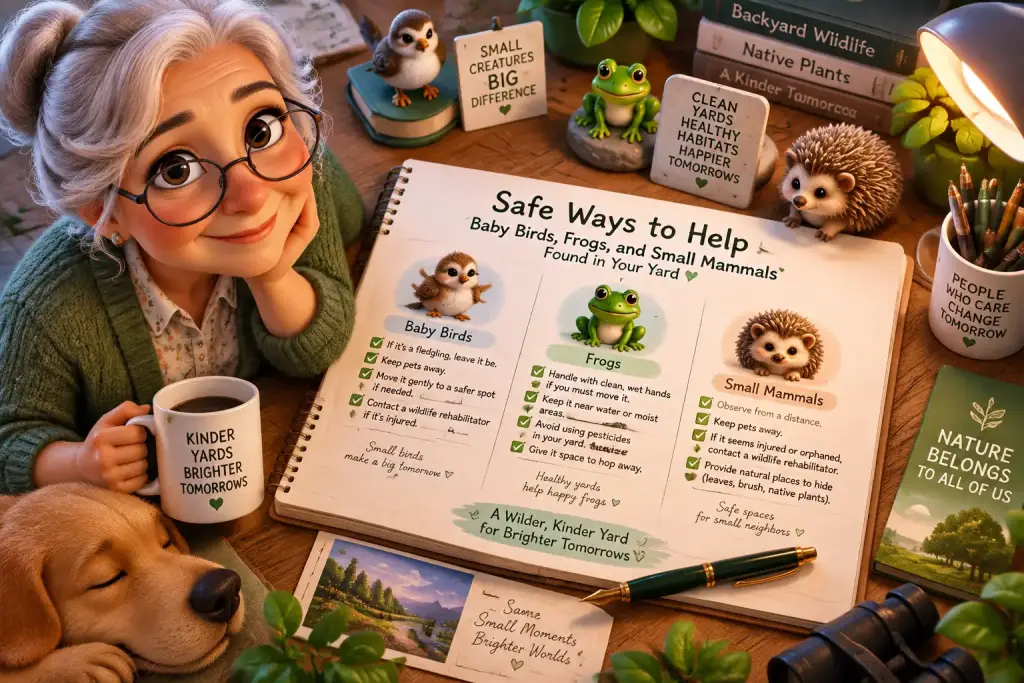
Baby wildlife can look helpless, but the safest help is often calm waiting. A young bird on the lawn, a tiny frog near a drain, or a small mammal under a shrub may still have a parent close by. Your first job is to lower danger without taking the animal away from its normal place.
- Watch from a safe distance for 15 to 30 minutes before touching a young animal.
- Keep pets indoors or on a lead while a baby bird, frog, or mammal is present.
- Contact a licensed wildlife rehabilitator quickly if the animal is hurt, cold, attacked, or clearly weak.
Table of Contents
Use the First Five Minutes to Protect Baby Wildlife
Protect baby wildlife by moving pets away, checking for clear danger, and watching quietly before you touch anything. Fast action matters when there is a cat, road, mower, deep bucket, or direct hot sun nearby.
Start by standing back. A worried parent may stay hidden while you are near, so do not crowd the animal with children, phones, or curious neighbors. Keep dogs inside or on a short lead. Bring cats indoors at once, even if they seem calm. A cat can hurt a young bird or small mammal with a small bite or scratch that is hard to see.
Look for the main risk within about two meters. Is the animal in a driveway? Is it on a path where people walk? Is it next to a pool, window well, drain, or garden net? If there is no direct risk, leave it where it is and begin a quiet watch. If there is danger, move it only a short distance to nearby cover, such as a low shrub, a patch of long grass, or a shaded planter.
Make the area calm first
Simple yard changes can protect a young animal right away:
- Pause mowing, trimming, leaf blowing, and loud garden work.
- Move bird feeders away from the spot if adult birds are gathering there.
- Place a light laundry basket upside down nearby to warn people away, but leave a gap for the parent.
- Cover open buckets, bins, and rain barrels so small animals cannot fall in.
- Keep children at least 10 meters away while you watch.
Here is the catch: do not trap the animal under a basket. The basket is only a visual marker for people. If a baby animal is on a busy path, use two sticks, plant pots, or stones to make a small boundary around the area instead.
When we tested this kind of quiet watch in a shared garden, it took less than five minutes to stop a dog from reaching a young robin. The parent returned after about 12 minutes, once the yard became still. That short wait was safer than putting the bird in a box too soon.
Take one clear photo from a distance if you may need advice later. The photo can help a wildlife rehabilitator judge the animal’s age and condition. Do not keep taking close photos. Stress uses energy, and very young animals need every bit of energy they have.
Is This Baby Animal Really Alone?
A baby animal alone is not always abandoned. Watch from far away for 15 to 30 minutes, because parents often feed or check young animals when people, pets, and noise are gone.
Young wildlife follows different patterns. A fledgling bird may spend several days on the ground while it learns to fly. Its parents can still feed it every few minutes. A baby rabbit may sit alone in a shallow nest because its mother visits only around dawn and dusk. A fawn may stay still for hours while its mother feeds elsewhere.
Do not judge the situation by silence. Baby rabbits and young birds often stay very quiet to avoid being noticed. A froglet may also hide without moving because it is small and easy prey. Give the animal space, then check again from a window, porch, or indoor room.
Signs that waiting is usually best
Leave the animal in place if it is alert, clean, warm, and not bleeding. A young bird with full feathers that hops, flutters, or calls is likely a fledgling. A baby rabbit with fur, open eyes, and ears standing up is often old enough to be outside. A tiny frog that can jump or move away should stay near its damp cover.
Use this simple check before you call for help:
- Watch from a distance for 15 to 30 minutes.
- Check for a nest, den, pond edge, hedge, or adult animal nearby.
- Remove pets and stop yard work.
- Look for injury, flies, wet fur or feathers, or trouble moving.
- Call a licensed wildlife rehabilitator if danger or illness is clear.
That said, waiting does not mean ignoring a real emergency. A cold animal, one lying on its side, or one that cannot use a leg needs help quickly. The same is true after contact with a cat or dog. Even if the animal looks fine, tell the rehabilitator about the contact.
It is also normal for parents to stay out of sight. Do not stand near a nest or den trying to spot them. Our guide to watching wildlife safely explains why quiet distance helps parents return sooner.
Help Young Birds Without Taking Them Home
Help young birds by telling nestlings from fledglings, then returning them to a nearby nest or safe cover when possible. Do not feed them bread, milk, seeds, or water by mouth.
A nestling has little or no feather cover. It may have pink skin, soft down, closed eyes, or weak movement. A nestling belongs in its nest if you can find it. Adult birds do not reject a baby because a person touched it. That old idea causes more harm than the handling itself.
Wear clean gloves if you have them, then gently lift the nestling with both hands. Place it back in the nest. If the nest is damaged or missing, make a small cup from a clean plastic food tub with drainage holes. Line it with dry paper towel, not grass or cloth. Secure the cup in the same tree or shrub, close to where the bird was found.
Watch from indoors or at least 10 meters away for up to two hours in daylight. Parents may return several times to feed the baby. If they do not return, or the bird looks weak, contact a licensed wildlife rehabilitator. Keep the bird warm and quiet only while you wait for direct advice.
Know when a ground bird needs help
A fledgling has feathers over most of its body and usually has a short tail. It may hop badly, flap its wings, and sit beneath a bush. That is normal. Move it only when it is in a dangerous open spot. Shift it a few meters into shade and low cover, not across the yard or into a tree.
Call for help if you see blood, a drooping wing, closed eyes, maggots, breathing trouble, or a bird that cannot stand. Put the bird in a small box with air holes and a soft paper towel base. Close the lid loosely enough for air, keep the box warm and dark, and do not open it again unless a rehabilitator tells you to.
Never drip water into a bird’s beak. It can inhale the water and choke. Do not offer worms, pet food, or seed unless a trained person gives exact instructions. Different birds need very different food, and wrong food can make a weak bird worse. If you feed adult birds, use our guide on safe seasonal bird foods instead of giving food to a baby.
In practice, a cardboard box, paper towel, and a warm room solve the short wait until help arrives. Keep the box away from children, pets, music, and bright windows. The goal is not home care. The goal is safe transport or a safe return to the parent.
Set a phone timer for 20 minutes, then watch from indoors or at least 10 meters away. Parent animals often return only when people leave.
What Should You Do With a Baby Frog?
Leave a baby frog in damp cover near its pond, ditch, or wet garden edge unless it is trapped or injured. Handle it as little as possible, because frog skin is thin and can take in oils and soap.
Froglets are young frogs that have recently changed from tadpoles. They can be very small, sometimes no bigger than your thumbnail. They often appear after rain and may travel through lawns, patios, and garden beds. Seeing several froglets at once is usually a good sign that nearby water and cover are working.
If a froglet is sitting in a dry, sunny place, make a safer path rather than picking it up. Wet the ground lightly with plain water near a shady border. Place a flat piece of untreated wood, a plant pot on its side, or leaf litter nearby for cover. Keep the area free of slug pellets, weed killers, and other garden chemicals.
Only move a frog if it faces a direct danger, such as a pool skimmer, drain, hot paving, or a busy path. Wet clean hands with plain water first, or use clean damp gloves without soap or lotion. Pick it up gently and place it a few meters away in cool, damp shade. Do not carry it to a different pond across town, because local frogs may spread disease between sites.
Small water traps are common yard problems. Check pool covers, window wells, buckets, smooth-sided tubs, and deep planters each morning during wet weather. Add a rough board or branch as an escape ramp. A ramp should reach from the bottom to the edge and stay dry enough for the animal to grip.
Do not keep a wild frog in a jar. It needs the right damp air, shelter, food, and temperature. A frog that is bleeding, unable to move, badly thin, or covered with white patches needs expert advice. Take a photo from a safe distance, then contact a local wildlife group or animal welfare office for the right next step.
Keep Small Mammals Safe Near Nests and Dens
Keep small mammals safe by leaving hidden nests alone, removing pet danger, and checking the animal’s body condition from a distance. A healthy young rabbit, hedgehog, mouse, or squirrel may be alone while its mother looks for food.
Baby rabbits are often found in a shallow grass nest lined with fur. The nest may look poorly made, but it is meant to be hidden. Put grass back over it gently if it has been uncovered. Then keep dogs away and avoid checking it again and again. The mother usually visits for only a few minutes around dawn or dusk.
A rabbit kit needs help if it is cold, wet, bleeding, covered in flies, or clearly smaller than a tennis ball with closed eyes. A young rabbit with open eyes, fur, and ears standing up can usually stay outdoors. If a lawn mower exposed the nest, mark the area with sticks and leave a wide unmown circle around it until the young have gone.
Handle only when danger is clear
Young squirrels sometimes fall from nests during strong wind. If the squirrel is warm, active, and not hurt, place it in an open box fixed low on the tree where it was found. Add a dry cloth only if the weather is cold, and keep pets inside. Watch from far away for a few hours so the mother can retrieve it.
Hedgehogs need a different check. A very small hedgehog found alone in daylight may need help, especially if it is weak or out in cold weather. Never give cow’s milk. Put it in a high-sided box with a towel, warmth under only half the box, and a shallow dish of water. Then call a rehabilitator for advice.
Use gloves when you must handle any small mammal. Wild animals can carry germs, fleas, or ticks. Wash your hands afterward, even if you used gloves. Keep your face away from the animal, and never try to treat wounds yourself with cream, spray, or home medicine.
Deadwood, brush piles, and thick hedge bases give small animals safer places to hide. A planned deadwood corner habitat can also reduce the chance that a hedgehog or young mammal rests in an unsafe shed or driveway.
Set Up a Simple Yard Rescue Kit
A small yard rescue kit helps you act calmly without turning your home into a wildlife care space. Keep basic items ready, then use them only for short-term safety while you contact trained local help.
Put the kit in a dry box near the back door. You do not need costly gear. A ventilated cardboard box, clean gloves, paper towels, and a phone number for a local wildlife rehabilitator cover most urgent situations. Save the contact number in your phone before you need it.
| Item or habit | Best use | Safe rule |
|---|---|---|
| Cardboard box with air holes | Short transport for an injured bird or mammal | Use paper towel, keep dark and quiet |
| Clean gloves | Moving an animal from direct danger | Handle briefly, then wash hands |
| Rough wood ramp | Helping frogs leave pools or deep tubs | Check that it reaches dry ground |
| Pet-free quiet watch | Checking if a parent returns | Watch 15 to 30 minutes from far away |
| Rehabilitator phone number | Injury, cat contact, cold, or weakness | Ask before feeding or giving water |
Keep a small torch in the kit for evening checks, but never shine it straight into an animal’s eyes. A soft towel can cover a box during transport. Avoid loose string, deep bowls of water, wire cages, and heated pads set directly under an animal. These items can cause tangles, chilling, burns, or stress.
Once you set this up, check your yard for danger points every morning during spring and early summer. Look in open sheds before closing doors. Check under tarps, inside empty pots, and around mower wheels. A two-minute check can prevent a serious accident.
Write down the time and exact place where you found the animal. Note if a pet touched it, if there was a storm, or if you saw a nest nearby. These plain details help a rehabilitator make a better choice. They are often more useful than a long guess about what happened.
Build a Yard That Gives Young Wildlife a Better Start
Build a safer yard by adding cover, shallow water exits, pet limits, and chemical-free areas. These small habits reduce emergencies and give young animals more places to rest, hide, and return to parents.
Start with cover at ground level. Leave one quiet corner with leaf litter, native plants, low shrubs, and a few fallen sticks. Young birds can hide there after leaving a nest. Froglets can stay cool in damp leaf litter. Small mammals can move between cover instead of crossing bare lawn where cats and birds of prey can spot them.
Keep at least one shallow water source safe. A low dish with clean water can help adult wildlife, but it must have stones or a rough ramp so tiny animals can climb out. Empty and refill it every day. Do not leave deep water bowls, open rain barrels, or smooth buckets where a young animal could fall in.
Pet habits make the biggest daily difference. Cats should stay indoors, especially during the early morning and evening hours when young animals move. Walk dogs on a lead near hedges, ponds, and long grass. Check the lawn before mowing, and raise the mower height if you are working near a known rabbit nest or frog area.
Skip chemical weed killers, insect sprays, and slug pellets in wildlife areas. Frogs take in water through their skin, and small mammals may eat poisoned insects or bait. Pull weeds by hand, use barriers around plants, and accept a little leaf litter where it supports habitat.
Keep a simple note on your phone about nests, dens, and wet spots during the season. Mark rabbit nests with small sticks. Delay heavy pruning until birds are no longer nesting. Check local rules before removing active nests, and ask a wildlife rehabilitator or local wildlife office when you are unsure.
The best yard help is quiet and steady. Give wildlife room, remove the dangers you can control, and call trained help when an animal is hurt or truly alone. Those habits protect young animals without taking them away from the wild home they need.

Ludovica Serra
Founder & Habitat EditorLudovica Serra, born and based in Roma, Italy, is the founder and lead editor of Eco Zoned. She helps readers create wildlife-friendly garden spaces with practical, clear advice on planting, shelter, water, and everyday habitat care.