








A simple wildlife habitat checklist helps you notice small problems before they become bigger ones. A dry bird bath, blocked hedgehog gap, or empty seed plant can change how safe your backyard feels to wildlife. The good news is that most checks take only five minutes, and you can spread bigger jobs across the year.
- Check clean water, food plants, shelter, and safe travel routes at least once each month.
- Leave some leaf litter, seed heads, and small dead wood in quiet parts of the yard.
- Match bigger jobs to the season, such as pond care in spring and shelter checks before winter.
Table of Contents
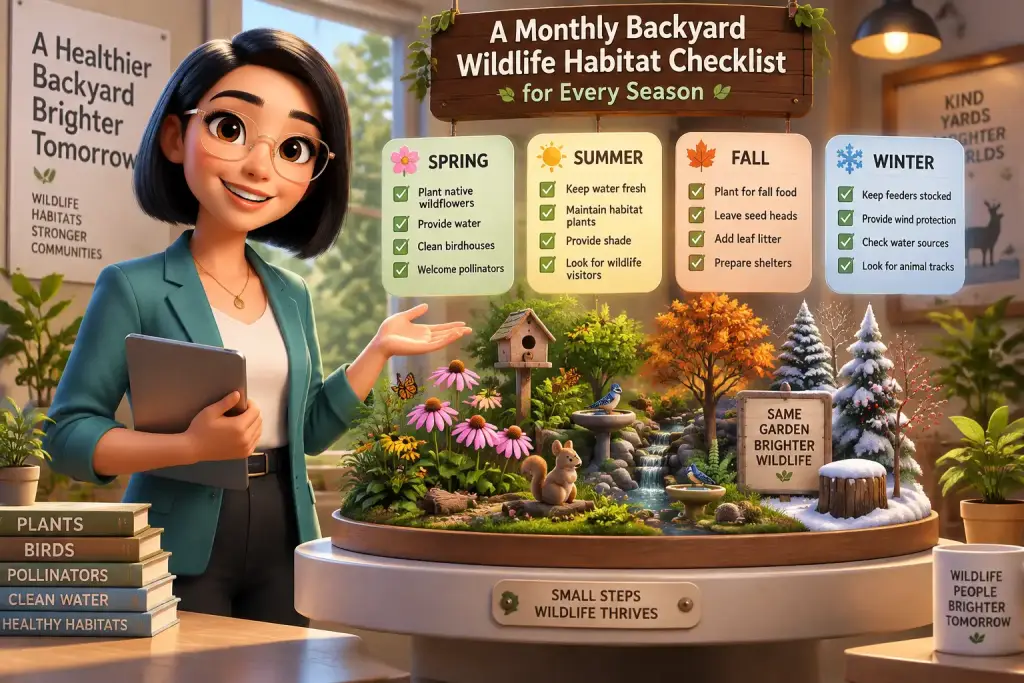
Start Each Month With a Five-Minute Wildlife Habitat Checklist
Start each month by checking water, cover, food, and safe access across your backyard. Walk slowly for five minutes, look at the same spots each time, and fix the easiest problem first before planning bigger garden work.
Look at it this way: wildlife does not need a perfect show garden. It needs regular basics. A blackbird needs a drink. A toad needs a damp hiding place. A bee needs flowers at the right time. A hedgehog needs a clear route under or through a fence.
Use the same walking route
Choose a short route from your back door to the far edge of the yard. Pass your bird bath, flower border, hedge, log pile, compost area, and pond if you have one. This makes the task feel normal, like checking the post or taking out the bins. You will soon spot changes because you are looking at the same places each month.
When we tested this setup in a small backyard, the water check took less than two minutes. The bigger benefit came from seeing patterns. One bird bath dried much faster in a sunny spot. A leaf pile near the shed stayed damp and was used by beetles and woodlice. Those small notes helped us place water and shelter in better areas.
Tick off these fast checks
- Refill bird baths, shallow dishes, and pond edges with clean water.
- Check that wildlife can pass through a 13 cm by 13 cm fence gap.
- Look for fallen branches, loose netting, or deep containers that may trap animals.
- Leave seed heads, leaf litter, and hollow stems where they are safe.
- Check that shrubs and ground cover still give a hidden route across the yard.
Keep a pencil and small notebook near the door. Write the month, the weather, and one thing you saw. You do not need a full wildlife count. A short note like “two bees on the rosemary” or “bird bath empty again” is enough. From there, you can make one clear change instead of trying to do everything at once.
Do not tidy every corner. Bare soil can help some insects, old stems can hold insect eggs, and leaf litter can shelter small creatures. Move only materials that create a real risk, such as plastic string, broken glass, or sharp metal. A slightly untidy edge is often a busy edge.
What Should You Check Every Month for Water and Food?
Check that wildlife has clean shallow water and at least one food source during every month. Refill water often, remove slimy build-up, and make sure flowers, berries, seeds, or insects are available somewhere in the yard.
Water is often the fastest help you can give. A bird bath should be shallow, with a rough surface so birds can grip it. Add a flat stone or a few pebbles if the sides are smooth. Place it where birds can see around them, but keep a shrub or small tree nearby so they can move to cover if needed.
Day to day, warm dry weather can empty a small dish very quickly. Check it every morning during heat and every few days during cooler wet weeks. Rinse the bowl with plain water and use a brush if green slime appears. Do not use soap or bleach. Fresh water helps birds, bees, butterflies, frogs, and small mammals.
Build food across the seasons
Food changes through the year. Spring brings flower nectar and early insects. Summer brings more flowers, caterpillars, and fruit. Autumn brings berries and seeds. Winter can be the hardest time, so dried seed heads, berry shrubs, and a few fallen apples can help.
Native plants are useful because local insects often use them for food and shelter. Aim for a mix instead of one large patch of the same flower. A small border can hold early bulbs, flowering herbs, berry shrubs, and late seed heads. If you need ideas for planting in layers, our guide to a native plant border shows how ground plants, shrubs, and taller plants can work together.
Bird feeders can help, but they need care. Sweep up wet seed under feeders, wash feeders every one or two weeks, and stop using any feeder that has visible mould. Feeders should add to natural food, not replace it. Flowering plants, seed heads, and insect-rich areas give wildlife food without making one small feeding point too crowded.
A pond can offer water and food too, but only if animals can leave it safely. Add a sloping edge, stones, or a sturdy branch that reaches from the water to dry ground. Keep part of the pond clear of thick plant growth. A pond does not need to be large. Even a half-barrel pond can support insects, birds, and visiting frogs when it has safe edges.
How Do Seasonal Jobs Change Through the Year?
Seasonal jobs should match what wildlife needs at that time, not a fixed garden cleaning plan. Spring needs gentle checks, summer needs water care, autumn needs food and cover, and winter needs quiet shelter with little disturbance.
The short answer is simple: do less cutting during nesting and shelter times. A neat garden can remove food and hiding places at the exact moment wildlife needs them. Plan your main cutting and moving jobs in small parts, then watch the area for a few days before you start.
Spring and summer checks
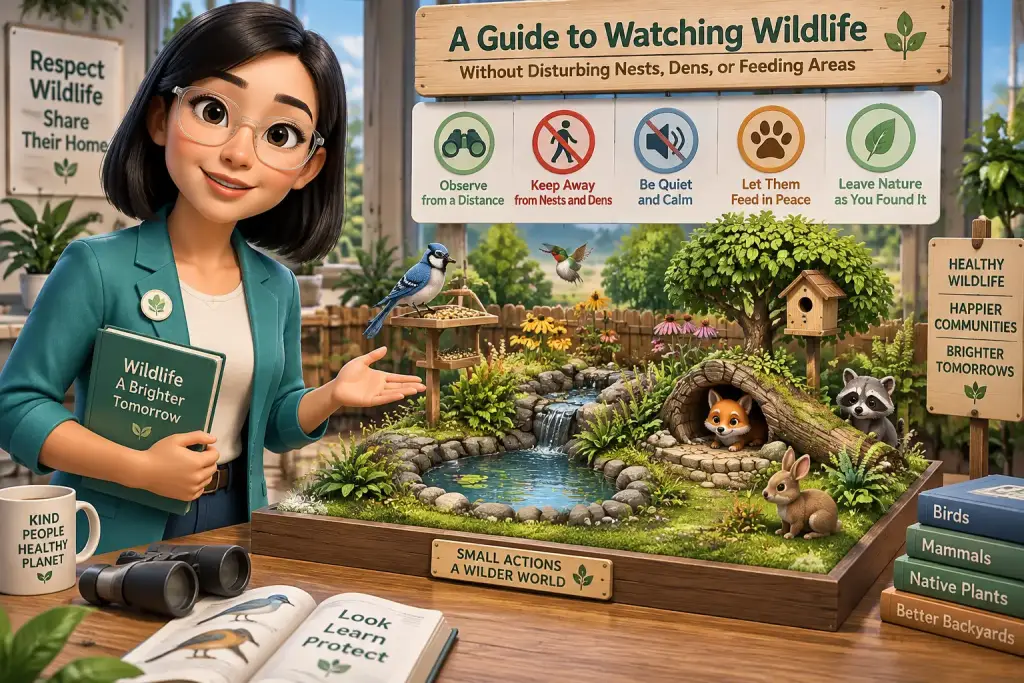
In spring, look for nesting birds before trimming hedges or thick shrubs. Check low branches, climbers, and dense plants. If you see a nest, step back and leave the area alone until young birds have gone. Avoid using weed killers or insect sprays because they can reduce the insects that birds and frogs need for food.
Spring is a good time to add a shallow water dish, plant flowers, and check pond edges. Keep a patch of bare soil in a sunny quiet place for ground-nesting bees. A space as small as 30 cm by 30 cm can be useful. Do not keep digging it over once bees are active.
Summer needs steady water checks. Fill bird baths before work or after breakfast, especially during dry weather. Deadhead some flowers to keep them blooming, but leave others to set seed later. Let part of the lawn grow longer for a few weeks. This can give insects shade and help spiders, beetles, and young frogs move through the grass.
Autumn and winter checks
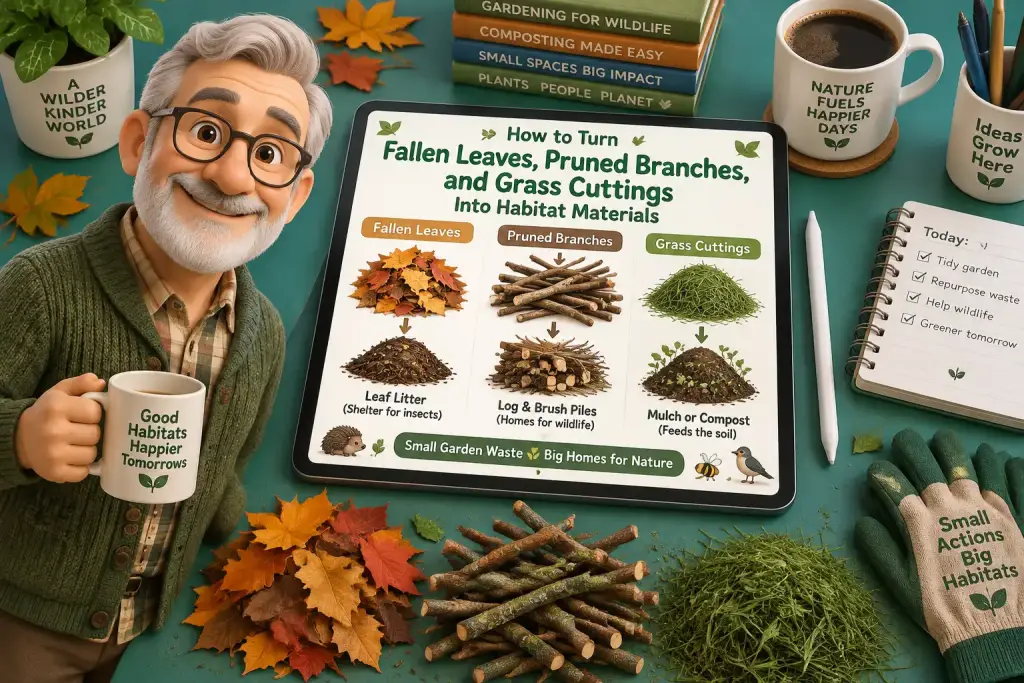
Autumn is the time to leave more behind. Put fallen leaves under shrubs, around a log pile, or in a quiet corner. Make a loose pile that stays dry in the middle. Avoid sealing it inside a plastic bag or pressing it flat. Small animals need air spaces between leaves and twigs.
Before winter, check gaps under sheds, compost bins, and fences. Do not block a space just because it looks untidy. A hedgehog, toad, or mouse may use it as cover. Our guide to safe garden spaces can help you spot common risks such as netting, deep buckets, and steep pond sides.
- Leave seed heads standing until late winter where possible.
- Move only wet or rotten leaves away from paths and doorways.
- Check water during frost and offer a small unfrozen dish when safe.
- Delay major hedge cutting until birds are less likely to nest.
Winter can look quiet, but it is not empty. Birds may use dense shrubs in cold winds. Beetles can rest under bark. Frogs may hide in damp soil or under pots. Keep checking, but keep your hands out of sheltered places unless there is a clear danger.
Store your checklist in a waterproof folder near your garden shoes, then tick off one small job each time you step outside.
Build a Simple Month by Month Field Sheet
A one-page field sheet makes monthly checks easier because it shows the next useful job at a glance. Keep it short, repeat the same core checks, and add only one seasonal task so the list stays easy to use.
Print your sheet or write it on a small clipboard. Put it near your garden gloves, watering can, or back door. A sheet works best when it does not feel like homework. Tick a box, write one sighting, and move on with your day.
| Season | Monthly check | Simple action |
|---|---|---|
| Spring | Check nests, pond edges, and early flowers | Delay hedge cuts and add shallow water |
| Summer | Check bird bath water and dry soil | Refill daily in heat and leave a long grass patch |
| Autumn | Check berries, seed heads, and leaf cover | Make a loose leaf pile near a log pile |
| Winter | Check shelter gaps and frozen water | Keep fence routes open and avoid heavy tidy work |
Add a small notes column beside the main tasks. Write things that change each month, such as “water dish dry by noon” or “cat waits near feeder.” These notes help you solve real problems. For example, moving a feeder two metres away from dense cover may give small birds a clearer view of danger.
Try a simple score if you enjoy tracking progress. Give one point for clean water, one for flowers or seeds, one for cover, and one for a safe route. A score of four does not mean your backyard is perfect. It simply tells you that the main needs are present that month.
Do not worry if your yard is small. A balcony with a safe water dish and flower pots can support insects. A tiny patio can hold a pot of herbs and a low bowl filled with stones for bees to drink from. In a larger yard, spread useful spaces around rather than placing everything in one corner.
Keep Your Backyard Useful Through Small Repeated Habits
Small repeated habits keep a wildlife-friendly backyard working better than one big weekend project. Refill water, leave safe natural mess, watch for hazards, and make one seasonal change each month to give wildlife steady support.
A habitat grows stronger when its parts connect. A bird can move from hedge to shrub. A frog can leave a pond and reach damp cover. An insect can travel from flowers to leaf litter. If your yard has open spaces between these areas, add a few stepping stones such as a pot, low shrub, grass patch, or small pile of sticks.
Think about travel routes from one side of the yard to the other. Fences, bare paving, and very short grass can make a garden harder for small animals to cross. You can improve this without rebuilding the whole space. Leave a narrow planted strip along one fence, place a log beside a shrub, or keep a small gap under the fence. Our guide to a wildlife travel route gives practical ways to join these areas together.
Keep safety checks part of the routine. Cover water butts, store netting in a closed box, and place deep containers upside down when not in use. Check before mowing long grass, moving wood piles, or turning compost. Slow work is safer work. A five-minute pause can protect a nesting bird, sleeping hedgehog, or hidden toad.
Invite children or neighbours to help with simple jobs if that feels right. One person can refill water while another checks the leaf pile. Share sightings, not pressure. Wildlife gardening works best when it becomes a calm habit, not a long list of perfect rules.
Your backyard will change from month to month, and that is a good sign. Some weeks you may see only a few birds. Then rain comes, flowers open, or leaves fall, and the space may suddenly feel full of life. Keep your checklist close, notice what happens, and let small actions build a safer home for wildlife over time.

Ludovica Serra
Founder & Habitat EditorLudovica Serra, born and based in Roma, Italy, is the founder and lead editor of Eco Zoned. She helps readers create wildlife-friendly garden spaces with practical, clear advice on planting, shelter, water, and everyday habitat care.