








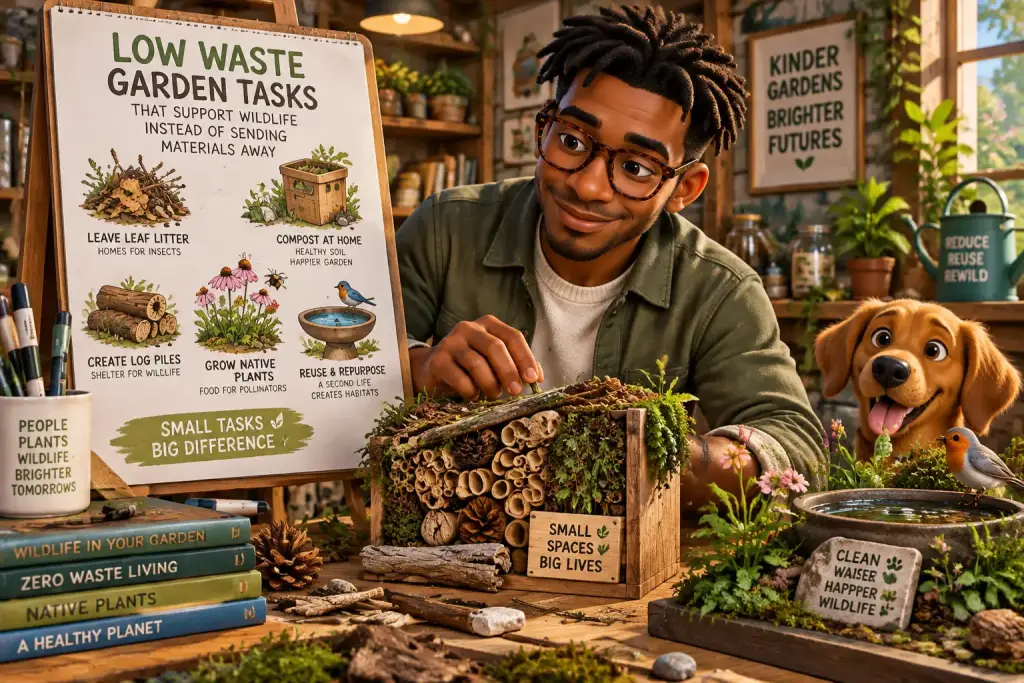
Low waste gardening starts with a simple change: keep useful natural materials in the garden whenever they are safe to use. A leaf, stem, twig, old pot, or small amount of water can become shelter, mulch, food, or a nesting place instead of becoming a bag of waste.
- Leave dry leaves, small sticks, and seed heads in quiet garden corners to create cover for insects and small animals.
- Compost healthy soft plant waste in small layers, then use the finished material as mulch around plants.
- Rinse and reuse pots, trays, and water dishes instead of replacing them after one season.
Table of Contents
What low waste gardening task can you do in five minutes?
Start by leaving one useful material where it falls, then move it only if it blocks a path or harms a plant. Low waste gardening works best when leaves, stems, and water stay close to where wildlife and soil can use them.
Take a quick walk after weeding, pruning, or sweeping a path. Look for dry leaves, thin twigs, fallen petals, and small piles of grass. These are not always mess. A few leaves under a hedge can hold moisture for beetles, worms, and ground-feeding birds. Thin twigs can protect insects from rain and give spiders places to build small webs.
In everyday use, this step takes about five minutes. Instead of filling a yard bag, push leaves into a loose strip under a shrub or behind a border. Keep paths, steps, drains, and lawn edges clear, but let less tidy areas stay natural. A strip only 30 centimetres wide can make a useful cool hiding place.
Make one quiet corner
Choose a spot that is out of the main view, such as behind a shed, under a hedge, or near the back of a flower bed. Add dry leaves first, then a few pencil-thick sticks on top. Leave gaps between materials. Wildlife needs air spaces, not a packed pile that turns wet and flat.
- Move fallen leaves under shrubs instead of raking every bed bare.
- Place small twigs around the base of native plants.
- Leave healthy seed heads standing until late winter.
- Put grass cuttings in a thin layer, not a deep wet heap.
Here is why that matters: tidy gardens can lack cover at ground level. Small animals need safe places during hot days, cold nights, and heavy rain. Keep materials away from house walls, doors, and air vents. A habitat corner should be useful, but it should not trap damp against a building.
What should stay in the garden instead of going into a bin?
Healthy leaves, small prunings, dry stems, and untreated wood can usually stay on site as mulch, compost, or habitat. Remove diseased plants, invasive weeds, and plants covered in seeds that may spread through the garden.
Sorting garden waste is the main habit that stops good materials from leaving your space. Use a tarp, wheelbarrow, or three buckets while you work. One area is for soft green material, one is for dry habitat material, and one is for material that needs safe removal. This small system makes later jobs faster because you do not need to sort a mixed pile.
Sort by health and texture
Soft green waste includes fresh grass cuttings, healthy weeds before they set seed, vegetable leaves, and flower stems. Add these to a compost bin in thin layers. Mix them with dry brown material such as leaves, torn paper without shiny coating, or small dry stems. A good starting mix is roughly two buckets of brown material for one bucket of green material.
Dry, woody material works well in a brush pile. Put thicker branches at the bottom and lighter stems above them. The lower gaps can shelter frogs, beetles, and small mammals. The top layer slows heavy rain and keeps some of the pile dry. For more ideas on using these common materials, see our guide to garden habitat materials.
- Check each plant for signs of disease, mould, or serious pest damage.
- Put healthy soft waste into compost or a thin mulch layer.
- Save dry stems and small branches for a loose habitat pile.
- Bag or follow local rules for invasive plants and badly diseased material.
On the flip side, not every plant scrap belongs in compost. Avoid adding plants with clear fungal disease, such as leaves badly marked by black spot or mildew. Do not add weed roots that can grow again unless your compost gets hot enough to kill them. Home compost piles often stay below that level, especially in small gardens.
Build small habitat piles from common garden waste
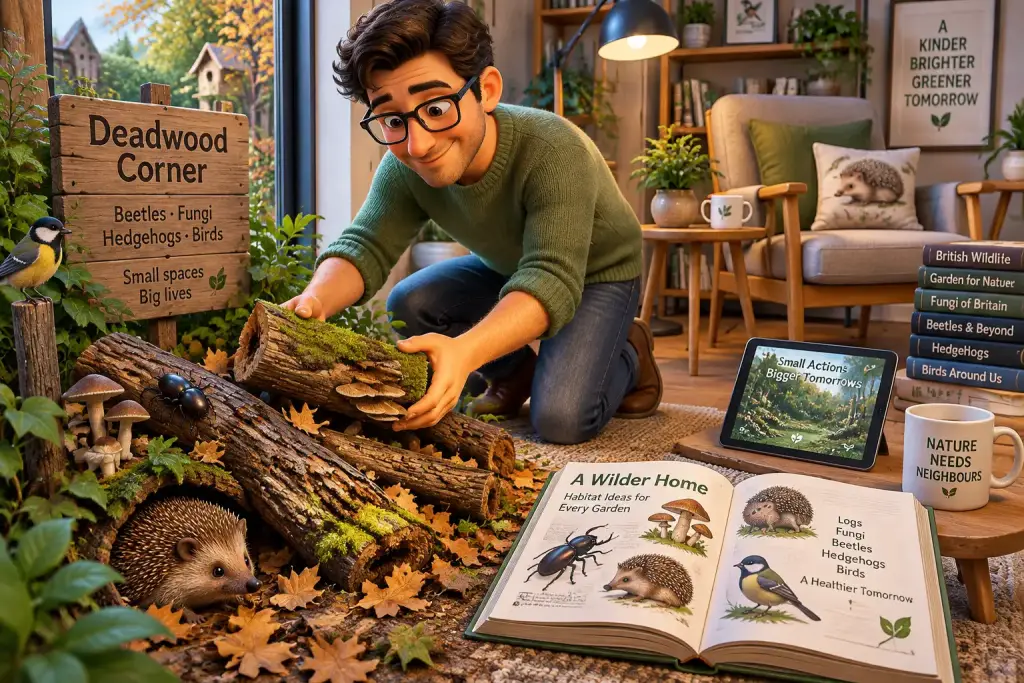
A brush pile, leaf pile, and small log edge can give wildlife cover while cutting the number of bags you send away. Build each pile loosely, keep it away from buildings, and add materials a little at a time as garden jobs create them.
You do not need a large yard for this. A pile about 1 metre wide and 50 centimetres high can help insects and ground animals. Set it behind plants where it will not be stepped on. Use fallen sticks, pruned branches, bark pieces, and dry stems. Avoid treated timber, painted wood, plastic ties, and sharp metal items.
| Material | Low waste use | Wildlife value |
|---|---|---|
| Dry leaves | Leaf mould or loose mulch | Cool cover for beetles and worms |
| Small branches | Brush pile base | Dry gaps for insects and small animals |
| Grass cuttings | Thin compost layers | Feeds soil life after breaking down |
| Hollow stems | Bundle in a dry corner | Rest spaces for small insects |
| Old clay pots | Side shelter under shrubs | Cool hiding place for frogs and beetles |
When we tested a small brush pile beside a hedge, it looked plain at first. Within a few weeks, we found beetles under the lower sticks and birds pulling fine dry stems from the top. The pile did not need buying, cutting, or special tools. It only needed a quiet place and regular small additions.
Keep piles loose rather than packed. Air helps dry material last longer, and gaps let wildlife move through it. Check before moving any pile in spring or autumn, when animals may be using it. As a rule of thumb, add to one side of a pile instead of turning the whole thing over.
How can water and containers create less waste?
Reuse sound pots, trays, and water dishes for several seasons, and clean water containers instead of throwing them away. Fresh water helps wildlife most when it is shallow, stable, and changed often enough to stay clear.
Old clay pots can become small shelters when placed on their side under a shrub. Put a flat stone partly over the opening to make shade, but leave a gap wide enough for beetles or frogs. Cracked pots can also hold drainage stones or support a small plant. Do not use broken pots where sharp edges face paths or play areas.
Keep water useful and safe
A shallow dish can help birds, bees, and other small visitors. Add a few clean stones so insects have a safe place to stand. Place the dish where you can see it, but near a shrub so small birds can reach cover. Keep it away from places where cats often wait.
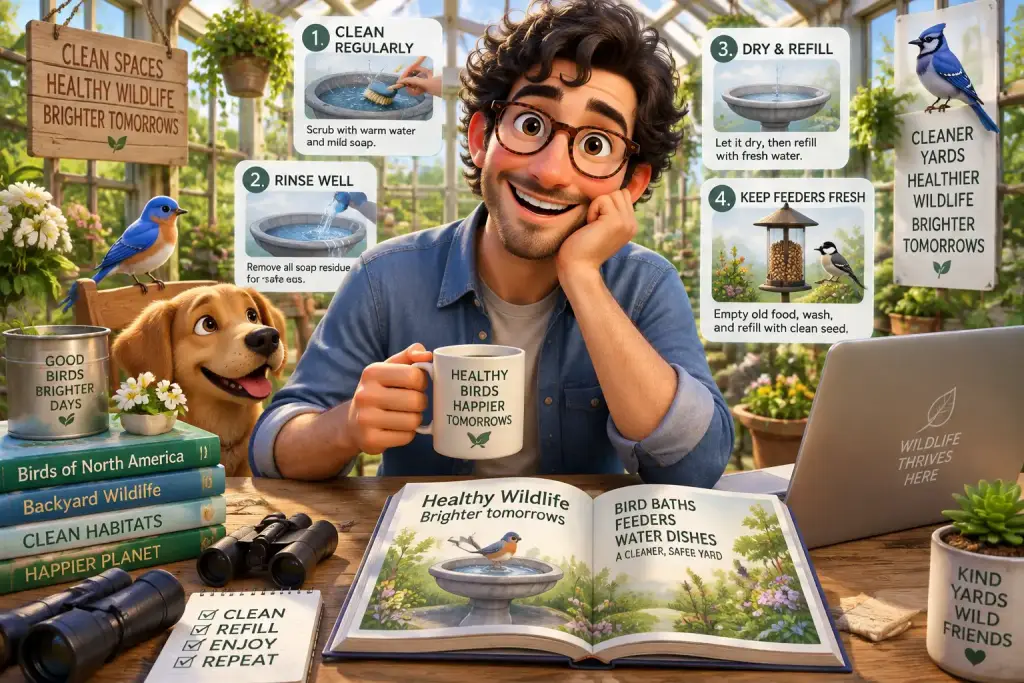
Change the water every one to two days in warm weather. Scrub away slime with a brush and plain water. Avoid strong cleaners, soap, or scented sprays because small amounts can harm wildlife. Our practical guide on clean water dishes explains a simple safe routine for bird baths and feeders.
Instead of buying new plastic pots each season, wash and stack the pots you already own. A soft brush removes old soil well. Let pots dry in the sun before storing them. Reuse only pots that still drain properly. A pot without a drainage hole can hold too much water and damage plant roots.
Rainwater can also cut waste when you collect it in a covered barrel or clean container. Use a lid or fine cover to keep leaves and animals out. Empty small open containers after rain if they are not being used as planned water points. Standing water in random containers can cause problems, while a checked water dish stays useful.
Keep three clear piles while gardening: healthy soft waste for compost, dry stems for habitat, and diseased or invasive plants for safe removal.
Set a weekly routine that keeps materials useful
A short weekly check keeps garden materials useful before they become a large mixed mess. Spend 10 minutes sorting, topping up compost, checking water, and adding small amounts to habitat piles instead of saving every job for one big clean-up.
Choose the same day each week if that helps. Start with paths and door areas, because these need to stay safe. Then check your compost bin. Add dry leaves if the mix looks wet and heavy. Add a small amount of green waste if it looks very dry. Compost should feel damp like a squeezed sponge, not dripping wet.
Next, look at the brush pile and leaf pile. Add new dry material on top or to one side. Do not remove old layers just because they look dark or broken down. That change shows soil life is doing its work. Leaf mould, made from old damp leaves, can become a soft mulch after about six to twelve months.
Keep a simple note on your phone or a paper tag near the shed. Write down when you last cleaned the bird bath, added brown material to compost, or cut back seed heads. Instead of guessing, you can see what needs attention. This also helps you spot patterns, such as a compost pile drying out during a hot month.
The takeaway here: low waste garden care is not about keeping every scrap forever. It is about giving each safe material a useful job first. Keep healthy plant matter close, remove problem plants with care, and leave a few quiet places where wildlife can feed, rest, and hide. Small weekly habits can turn ordinary garden work into a stronger backyard habitat.

Ludovica Serra
Founder & Habitat EditorLudovica Serra, born and based in Roma, Italy, is the founder and lead editor of Eco Zoned. She helps readers create wildlife-friendly garden spaces with practical, clear advice on planting, shelter, water, and everyday habitat care.