









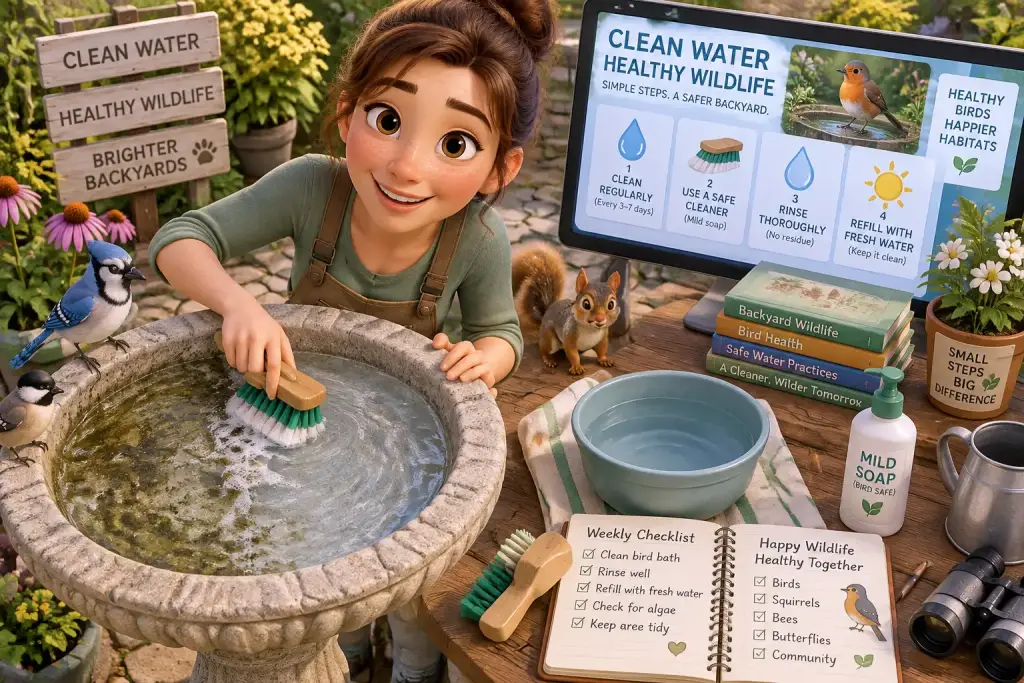
Clean water helps backyard wildlife drink, cool down, and wash without turning one small bowl into a place where germs spread. The safest setup is simple: use shallow water, choose a cleanable basin, keep it away from food, and refresh it on a steady schedule.
- Use a shallow basin with rough stones or sticks so small animals can enter and leave safely.
- Empty, scrub, and refill bird baths and wildlife bowls at least every two to three days.
- Place water away from feeders and avoid deep bowls where droppings, seed, and algae build up.
Table of Contents
Choose a Safe Place for Clean Water
A safe wildlife water point uses shallow, fresh water, stable footing, and a cleaning routine that stops droppings and slime from building up. Put the basin where you can reach it easily, with some shade but a clear view around it, so you notice dirt before it becomes a problem.
Start with a low, wide bowl, plant saucer, bird bath, or shallow tray. Water should be no deeper than 1 to 2 inches for most small birds. A deeper basin can work if you add flat stones, gravel, or a stick that reaches above the water line. These give bees, frogs, lizards, and young birds a way out if they slip in.
Place the water about 8 to 12 feet from dense shrubs. Birds need nearby cover if a hawk or cat appears, but they also need an open view while they drink. Avoid putting the basin directly under a tree. Leaves, fruit, bird droppings, and fallen seed can make the water dirty fast. Keep it well away from bird feeders too. Wet seed and bird waste are a poor mix.
Pick materials that are easy to scrub
Glazed ceramic, metal, heavy plastic, and smooth stone bowls are usually easier to clean than rough concrete. Rough surfaces can hold green algae and dirt in small holes. If you use a concrete bird bath, scrub it more often and rinse it very well.
- Choose a basin that you can lift with one hand when empty.
- Use a bowl with a wide rim for birds to stand on.
- Add three or four flat stones for safe footing.
- Set the bowl on level ground or a solid stand.
- Keep one spare bowl ready for cleaning days.
When we tested this setup in a small garden, the easiest bowl was not the prettiest one. A plain, shallow ceramic plant saucer took less than five minutes to empty, scrub, rinse, and refill. That matters because a water point only stays safe when the job feels easy enough to repeat.
How Do You Set Up a Wildlife Water Bowl Safely?
Set up a wildlife water bowl by washing it first, adding safe exit points, filling it with fresh tap water, and checking that it cannot tip. Keep the water shallow and skip soaps, scented cleaners, pond chemicals, and food scraps that can harm animals or feed germs.
Wash the basin before first use
Rinse a new bowl with hot water and scrub it with a clean brush used only for wildlife water. If the bowl has old dirt, algae, or droppings, use a weak bleach mix of 1 part plain unscented bleach to 9 parts water. Soak or wipe the surface for about 10 minutes, then rinse several times until there is no bleach smell.
Never mix bleach with vinegar, ammonia, or other cleaners. That can make dangerous fumes. Let the bowl dry in the sun if possible before filling it again. Sunlight can help dry the last drops, but sunlight alone does not replace scrubbing.
Build safe depth and movement
Fill the basin with fresh water to a depth that suits its visitors. For small songbirds, 1 inch is often enough. For larger birds such as doves, a little more depth is fine if the sides slope gently. Put pebbles in one edge rather than covering the whole bottom, since loose dirt can collect between too many stones.
A small solar fountain or dripper can help birds notice the water. Moving water may also slow mosquito egg laying. On the flip side, pumps add parts that need cleaning. If a pump has slime inside, it can send dirty water back into the bowl. Use one only if you are willing to take it apart and rinse it every week.
- Set the empty basin on firm, level ground.
- Add two or three flat stones as shallow steps.
- Fill with fresh water from a clean container or tap.
- Check for sharp edges, cracks, and a stable base.
- Watch from indoors for ten minutes to see how wildlife uses it.
Use tap water unless your local water supply has a known issue. Rainwater from a clean barrel can also work, but do not use water collected from a roof that has heavy bird waste, old paint, or dirty gutters. A simple water source is usually safer than a fancy one with hard-to-clean parts.
Keep Clean Water Fresh With a Simple Routine
Fresh water needs regular emptying, scrubbing, and refilling because birds and small animals leave droppings, soil, feathers, and food bits behind. Clean a busy basin every day when it is hot, and at least every two to three days during cooler weather.
Instead of guessing, look at the water each morning. Cloudy water, floating seed, green film, insect bodies, or a bad smell mean it needs attention now. Do not just top up dirty water. Emptying the whole basin removes the waste that can hold bacteria and other germs.
| Check or tool | Best setting | What to do |
|---|---|---|
| Water depth | 1 to 2 inches for small birds | Add flat stones for safe steps and exits. |
| Cleaning schedule | Daily in heat, every 2 to 3 days otherwise | Empty, scrub, rinse, and refill fully. |
| Green algae | Small patch or full film | Move to more shade and scrub the basin. |
| Mosquito larvae | Wriggling insects in still water | Empty water at once and refill fresh. |
| Bird feeder distance | At least 10 feet away | Reduce wet seed and droppings in water. |
Use a brush only for wildlife water
Keep a small stiff brush, a bucket, and clean cloth near the outdoor tap or in a garden box. Label the brush so it never gets used for dishes, pet bowls, or chemical jobs. Wear gloves if you are handling heavy bird droppings, then wash your hands with soap after the job.
Bird baths need more care during dry spells because more animals may visit one source. Add the water task to a seasonal habitat checklist, but do not wait for the monthly check to clean it. The daily look is what catches problems early.
Do not use copper coins, salt, bleach tablets, scented oils, or pool products to keep water clear. These may harm wildlife or change the water in ways you cannot easily judge. A brush, fresh water, and a short routine are safer than a chemical shortcut.
What Signs Show a Wildlife Water Source Is Unsafe?
An unsafe wildlife water source often looks cloudy, green, oily, full of droppings, or crowded with insects. Empty it right away if you see dead animals, sick birds, mosquito larvae, foam, a strong smell, or thick algae on the sides.
Green algae is common in warm weather, especially in bowls that get full sun. A light green mark can be scrubbed away during normal cleaning. Thick, slippery growth means the bowl has been left too long. Move it into light shade, empty it more often, and reduce the amount of water so the basin dries quickly after cleaning.
Act quickly around sick or dead birds
If you see a bird that looks weak, cannot stand well, has swollen eyes, or stays near the bowl without moving normally, remove the water source for a short time. Wear gloves if you need to move a dead bird. Put it in a sealed bag, then follow local wildlife or public health advice for disposal.
Scrub the basin with the weak bleach mix, rinse it well, and let it dry before setting it back out. Clean nearby feeder trays too, because birds move between food and water. If several birds appear sick or die in the same area, take down both feeders and water bowls for at least two weeks. This gives the area time to dry and lowers contact between birds.
Do not crowd several water bowls together. One large group of birds using one small spot can raise the chance of waste building up. Two bowls placed apart can be better than one large bird bath, especially in a small yard. One can be cleaned while the other stays available.
Watch for outside sources of dirt as well. Lawn sprays, weed killers, and insect sprays can drift into open water. Keep wildlife water away from treated areas, and use a pesticide-free garden plan around the basin. Here is why that matters: a clean bowl cannot stay safe if harmful spray reaches it later.
As a rule of thumb, keep a second clean basin ready indoors so you can swap bowls quickly instead of putting off the cleaning job.
Make Water Checks Part of Daily Wildlife Care
A daily water check takes about one minute, while a full clean usually takes five minutes. Build both jobs into a regular outdoor habit, such as opening curtains in the morning, watering plants, or bringing in a pet after its evening walk.
Look first at the water level, then the surface. If the basin is low but clean, refill it. If it has dirt, slime, seeds, or droppings, empty and scrub it. Check the stones too. Small stones can shift, making a deep spot where a bee or young bird may struggle. Press them down or replace them when needed.
Use weather as your cleaning guide
Hot weather calls for more frequent refills because water warms quickly and birds bathe more often. Windy days can fill bowls with leaves and dust. Freezing weather needs a different plan. Offer fresh water during the warmer part of the day, remove ice, and use a shallow dark bowl that can warm a little in sunlight. Do not pour boiling water into a cold ceramic basin because it may crack.
Rain does not always mean the basin is clean. A hard rain may wash soil, leaf bits, and waste into the water. Check it after storms, especially if the bowl sits under a tree or near a roof edge. As a rule of thumb, if you would not want a pet to drink it, wildlife should not drink it either.
The takeaway here: clean water for backyard wildlife is not about buying a complex fountain or building a large pond. It is about steady care. Keep the basin shallow, easy to reach, and simple to scrub. A modest bowl that gets cleaned often is far safer than a beautiful water feature that is left dirty for weeks.

Ludovica Serra
Founder & Habitat EditorLudovica Serra, born and based in Roma, Italy, is the founder and lead editor of Eco Zoned. She helps readers create wildlife-friendly garden spaces with practical, clear advice on planting, shelter, water, and everyday habitat care.