







A native plant border can turn a plain fence line or lawn edge into a working wildlife habitat. The best borders use several plant heights, offer food in every season, and keep some quiet cover near the ground. You do not need a large garden to start. A narrow strip can support bees, butterflies, beetles, birds, and small animals when it is planned with care.
- Plant short flowers, medium shrubs, tall plants, and ground cover in the same border for food and hiding places at different heights.
- Aim for at least three plants that flower or fruit in each season, including late winter and late autumn.
- Leave seed heads, leaf litter, and some dry stems in place until spring to protect insects and feed birds.
Table of Contents
Start a wildlife border in five minutes
Start by choosing one sunny or partly shady edge and marking a small section for your native plant border. Leave existing healthy plants in place where possible, then look for bare soil, short grass, and gaps where new plants can grow without crowding each other.
Walk outside with a tape measure, a few sticks, or even old string. Mark a strip around 1 metre deep and 2 metres long. This small area is enough to test your soil, light, and watering needs. It is also easier to weed and watch than a full border planted all at once.
Here is why that matters: wildlife uses small habitat spaces quickly when they offer food and cover. A patch of flowers may draw pollinators within weeks. A low group of grass and leaf litter can give beetles a cool place to hide on the same day. The goal is not a perfect garden bed. The goal is a living edge with different places to feed, rest, and breed.
Check light, soil, and moisture
Spend five minutes checking the area at three points during the day. Note if it has full sun for six or more hours, part sun for three to five hours, or mostly shade. Push a trowel into the soil after rain. Heavy clay stays wet and sticks together. Sandy soil falls apart and dries fast. These simple notes help you choose plants that can live without constant care.
- Choose sun-loving flowers for open, bright borders.
- Use ferns, sedges, and woodland flowers in shady spots.
- Place moisture-loving plants in low areas that stay damp.
- Keep dry-soil plants on raised ground or near walls.
Do not remove every weed in one hard session. Cut tall weeds at soil level and cover small bare spaces with leaf mould, wood chips, or fallen leaves. Avoid thick plastic sheets. They stop plants and soil animals from moving through the ground. If weed growth is a regular problem, use these pesticide free methods before reaching for sprays.
How do you build plant layers that wildlife can use?
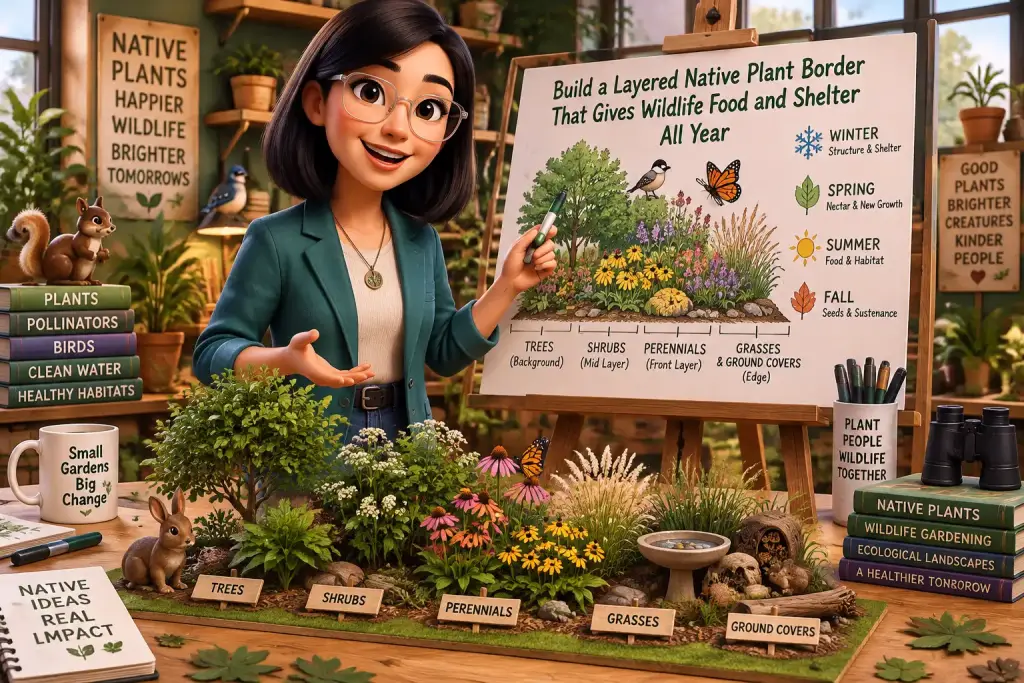
Build plant layers by placing low flowers at the front, medium plants in the middle, taller shrubs or flowers at the back, and loose cover at ground level. This gives wildlife food at several heights and makes the border safer from wind, heat, and predators.
Think of the border as four simple zones. Ground cover protects soil and small insects. Flowers offer nectar and pollen. Taller stems provide perches and seed. Shrubs bring berries, buds, and thicker shelter. You can fit all four zones into a border only 1.5 metres deep if you avoid planting everything in straight rows.
Place plants in groups of three, five, or seven of the same kind. A bee can find a wide patch of one flower more easily than one flower placed far from the next. Birds also spot berry clusters faster when shrubs grow in small groups. On the flip side, do not pack plants too tightly. Leave the width shown on plant labels so air can move and roots can spread.
| Border layer | Good native plant types | Wildlife use |
|---|---|---|
| Ground layer | Wild strawberry, sedges, violets | Cool cover for beetles and food for insects |
| Low flower layer | Yarrow, asters, self-heal | Nectar and pollen for bees and butterflies |
| Middle layer | Goldenrod, milkweed, native grasses | Seeds, stems, and caterpillar food |
| Tall layer | Joe Pye weed, sunflower, meadow rue | Late flowers and bird perches |
| Shrub layer | Dogwood, viburnum, serviceberry | Berries, buds, and winter shelter |
Use local plants where possible
Buy plants grown from local seed when you can. They are more likely to suit local rain, soil, and winter weather. Ask a local native plant group, public garden, or plant sale for help with names. Plant names change by region, so a species that is native in one area may not be native in yours.
When we tested this setup in a small mixed border, the first clear change was at ground level. More small beetles and spiders appeared under the grass clumps and leaves. By late summer, the taller flowers held goldfinches and other seed-eating birds. The border looked less neat than a trimmed flower bed, but it worked much better as habitat.
Plan food from early spring to late winter
Plan for food across all seasons by choosing plants with different flowering, fruiting, and seed times. Aim for three food sources in spring, summer, autumn, and winter, because a single peak of flowers will not support wildlife for the rest of the year.
Spring is often the hardest period for pollinators. Queen bumblebees need food after winter sleep, while early butterflies look for nectar. Use early flowering trees, shrubs, and low flowers near the border. Willow, native currant, violet, and spring bulbs that are safe for your region can help fill this gap.
Summer is usually easier, but variety still matters. Mix flat flower heads, tube-shaped flowers, and small open blooms. Different insects have different mouth parts. A hoverfly may use yarrow while a long-tongued bee may prefer bee balm or foxglove. Choose species suited to your local area and soil, not just plants that look bright in photos.
Keep autumn and winter food in place
Autumn seeds and berries are just as useful as summer flowers. Leave seed heads on asters, coneflowers, grasses, and sunflowers. Add berry shrubs such as dogwood, serviceberry, or viburnum if you have room. These plants also give birds a place to sit while they check for danger.
Instead of cutting everything down in October, wait until spring temperatures stay mild. Dry stems can hold insect eggs and sleeping insects. Seed heads feed birds during cold days. Dead leaves protect soil from hard rain and cold winds. Cut only stems that block paths, fall onto a roof, or carry known plant disease.
- Choose one early flowering plant for spring.
- Add two summer flowers with different flower shapes.
- Plant one late flower for autumn nectar.
- Keep one berry shrub or seed plant for winter food.
The takeaway here: a border should not look empty after summer. A few dry stems, berry branches, and grass seed heads show that the space is still feeding wildlife. They also create winter shape without adding much work.
As a rule of thumb, build one 1 metre by 2 metre section first, then copy the same plant layers along the border after you see what grows well.
What shelter should a native plant border include?
A useful native plant border needs low, thick cover as well as flowers and shrubs. Leave spaces with grass clumps, leaf litter, hollow stems, and small wood pieces, because animals need dry, hidden places to escape heat, rain, and predators.
Start at the soil surface. Leave a 5 to 8 centimetre layer of fallen leaves under shrubs, but keep it away from house walls. Add a few small branches behind taller plants where they will not block paths. This loose material gives beetles, worms, fungi, and small animals places to live. It also breaks down slowly and feeds the soil.
Birds need cover at more than one height. Dense shrubs can protect them while they wait between feeding trips. Tall grasses bend in wind and give insects a place to rest. Dry flower stems may hold small spiders and insect pupae. These are all food for birds, so shelter and food are closely linked.
Make safe hiding places, not tidy piles
Keep wood and leaf piles small, stable, and away from doors or busy play areas. A pile around 60 centimetres wide is enough for a small border. Put it behind a shrub or tall grass so it stays shaded. Do not burn dry stems or branch piles unless you have checked them carefully for sleeping animals.
A separate habitat feature can help if your border has room nearby. Our guide to a deadwood corner shows how logs and branches can support more wildlife without making the main border hard to manage. Keep any log pile low and steady, especially near places used by children.
Water also matters. Set a shallow dish or low bird bath near the border, with a rough stone inside so insects can climb out. Refresh it every day in hot weather. In everyday use, this step takes about five minutes. During heat or freezing weather, small changes can make a real difference, so use these weather safety steps when conditions turn harsh.
Keep the border useful through every season
Keep a native plant border useful by doing small seasonal jobs instead of one large tidy-up. Check water, weeds, bare soil, and plant crowding every week in the growing season, then leave most stems and seeds standing through winter.
Spring is the time to add plants, divide crowded clumps, and pull young weeds before they set seed. Water new plants deeply once or twice a week during dry spells. A slow soak for 20 to 30 minutes is better than a light daily sprinkle because it sends roots lower into the soil.
In summer, watch which flowers attract the most insects. Take a few notes on your phone or garden notebook. You may see bees on one plant and almost none on another. This does not mean the quiet plant has failed. It may feed moths at night, offer leaves to caterpillars, or make seed later in the year.
Autumn is a good time to plant shrubs and many hardy perennials because the soil is still warm. Add leaf mulch around new plants after rain. Winter is for watching. Look for bird tracks, eaten berries, bent grass, and holes under leaves. These signs show that the border is being used even when it seems still.
As a rule of thumb, change only one or two things each season. Add a new shrub, widen one flower group, or create one small leaf pile. Large changes make it hard to see what helped. Small changes let you build a border that suits your own garden and the wildlife already living nearby.
A layered border does not need weekly perfection. It needs steady food, safe cover, and room for natural growth. Keep the best seed heads, protect the soil, and watch what arrives. Over time, that narrow strip can become one of the busiest parts of your backyard eco-zone.

Ludovica Serra
Founder & Habitat EditorLudovica Serra, born and based in Roma, Italy, is the founder and lead editor of Eco Zoned. She helps readers create wildlife-friendly garden spaces with practical, clear advice on planting, shelter, water, and everyday habitat care.