









To clean bird baths, feeders, and water dishes well, use a steady routine instead of waiting for visible grime. Fresh water, dry seed, and clean surfaces help birds and other small wildlife use your yard with less risk from mold, droppings, and dirty standing water.
- Empty and rinse bird baths and water dishes every day when weather is hot or use is heavy.
- Wash feeders every two weeks, and clean them at once when seed is wet, clumped, or moldy.
- Use one part unscented bleach to nine parts water for a deep clean, then rinse very well and dry fully.
Table of Contents
Set up before you clean bird baths
Clean bowls and feeders with fresh water, a brush, and a weak bleach mix when needed. Set aside gloves, two tubs, and a dry place first, so you can work fast without moving dirty tools near clean items.
Start by choosing a calm time of day. Early morning works well because feeders are often less busy, and you can put them back before the main feeding period. Wear rubber gloves if you are handling old seed, bird droppings, or water with green slime. Keep a small bucket or plastic tub for dirty water, since pouring it near the feeding spot can leave germs close to birds.
Most homes need only a few basic tools. Pick tools that are used only for wildlife cleaning, not for kitchen jobs. A stiff nylon brush reaches the rough surface of concrete bird baths. A bottle brush works well inside small water dishes, tube feeder ports, and narrow feeder tubes.
Gather the right cleaning kit
- Rubber gloves and a washable apron or old shirt
- Two plastic tubs or buckets
- A stiff brush and a small bottle brush
- Unscented household bleach, with no added scent or cleaner
- Fresh water, paper towels, and a clean drying rack
- A small scoop for old seed and husks
Here is the catch: soap can leave a film if it is not rinsed away fully. That film may affect birds when they drink or bathe. Plain hot water and brushing are enough for light dirt. Save bleach for deep cleaning, visible slime, bird droppings, or a feeder that held wet seed.
Set up a separate clean area on a patio table, driveway, or flat stone. Do not clean directly beside flowers used by bees, ponds, or vegetable beds. Bleach water can harm plants and small pond life. Tip old water onto bare ground away from the bird area, then rinse that spot with plain water if you used a bleach mix.
How often should bird baths, feeders, and water dishes be cleaned?
Empty bird baths and water dishes every day in hot weather, then scrub them at least twice each week. Clean seed feeders every two weeks, but act sooner after rain, wet seed, mold, heavy droppings, or reports of sick birds nearby.
Frequency changes with weather and use. A shallow dish under full sun can grow slime in one or two days during a warm spell. A feeder under a roof may stay dry for weeks, while one under a tree can collect wet leaves and droppings after a single storm. Check each station during your normal yard walk instead of using one fixed plan for every item.
When we tested this setup during a warm week, daily water changes took less than five minutes for two bowls. The deeper scrub took about fifteen minutes twice a week. That small habit kept the water clear and made it easier to spot cracks, ants, and loose feeder parts before they caused a problem.
| Wildlife item | Normal cleaning schedule | Clean sooner when you see |
|---|---|---|
| Bird bath | Fresh water daily, scrub twice weekly | Green slime, feathers, droppings, cloudy water |
| Ground water dish | Fresh water daily, scrub every two to three days | Mud, insect larvae, soil, animal tracks |
| Tube or hopper feeder | Brush and wash every two weeks | Wet seed, seed clumps, mold, sticky ports |
| Hummingbird feeder | Change nectar every two to three days | Cloudy nectar, black spots, heat above 27 C |
| Suet holder | Wash every one to two weeks | Soft old suet, mold, droppings on the cage |
Heavy use means more cleaning. If several birds crowd one bird bath each morning, fit a second water dish nearby rather than waiting for the first one to get dirty. Place the second dish about three to five metres away. This spreads use and gives shy birds a chance to drink.
Watch local bird health notices too. If you see several birds that look weak, sit puffed up for long periods, or have dirty feathers around the face, remove feeders for a short time and clean them fully. Keep water available if possible, but clean and refill it daily. Your quiet wildlife watching habits can help you notice changes without getting too close.
What is the safest way to wash feeders and water bowls?
Brush off dirt first, wash with hot water, then use a bleach mix of one part unscented bleach to nine parts water for deep cleaning. Soak hard surfaces for ten minutes, rinse several times, and let every item dry fully before refilling.
Do not mix bleach with soap, vinegar, ammonia, or any other cleaner. Use it in an open outdoor area where children and pets cannot reach the tubs. Measure the mix instead of guessing. For example, add one cup of bleach to nine cups of water, or use 100 ml of bleach with 900 ml of water.
Clean bird baths and water dishes step by step
- Pour out old water away from the feeding and drinking area.
- Remove leaves, feathers, mud, and waste with a scoop or paper towel.
- Scrub the bowl with hot water and a stiff brush.
- Apply the bleach mix for ten minutes if there is slime or heavy dirt.
- Rinse with clean water at least three times.
- Air dry in the sun, then refill with fresh water.
Scrub the full bowl, including the rim and any textured bottom where dirt can stay hidden. Bird baths should have shallow edges. Keep water no deeper than about five centimetres in the main bathing area, and add a few flat stones if the sides are slippery. Small birds need firm places to stand while they drink.
Wash feeders without trapping wet seed
Empty every bit of old seed into a sealed waste bag. Do not scatter it on the ground because wet or moldy seed can still make birds ill. Take apart removable trays, ports, perches, and seed tubes. Brush dry husks from corners before washing, because wet husks can stick in tight gaps.
Soak plastic, metal, or glass parts in the bleach mix for ten minutes. Wood feeders need extra care, since wood can hold moisture. Scrub them with hot water first, use a light bleach wipe only when needed, then leave them in a warm dry place for at least a full day. Never refill a feeder that still feels damp inside.
In practice, drying is the step people skip. A feeder can look clean but still grow mold quickly if seed touches wet plastic or wood. Turn tube feeders upside down on a rack, then shake them once before adding seed. Check that every feeding port is open and dry.
Stop the small problems that make wildlife stations dirty fast
Move water away from seed, keep feeders dry, and remove old food before it clumps. These three changes stop most fast dirt buildup, and they also make your cleaning jobs shorter through rainy weeks and busy migration periods.
Bird baths become dirty faster when they sit under a feeder. Seed shells, droppings, and wet seed fall into the water all day. Place the bath at least three metres from seed feeders, with a shrub or small tree nearby for cover. Leave open space around the bowl so birds can see cats or other danger coming.
Ground dishes need a firm base. Put them on a flat paving stone or a simple stand rather than bare soil. This keeps mud out after rain and makes the dish easier to lift. If ants reach sugar water or seed often, clean the area around the feeder and cut back plants touching the pole.
Fix common cleaning slip-ups
- Water turns green quickly: Move the bowl out of full afternoon sun and change water daily.
- Seed gets wet: Add a weather cover or move the feeder under a roof edge with clear flight space.
- Feeder smells sour: Empty it, take it apart, deep clean it, and dry it for one full day.
- Birds avoid the station: Check for bleach smell, poor rinsing, sudden location changes, or a nearby cat.
- Mosquito larvae appear: Empty and scrub the water dish at once, then refill with fresh moving or changed water.
Do not use strong perfume sprays, oil, or insect poison near feeding and water areas. These products can get onto feathers, feet, seed, and drinking water. A clean station does not need a scented finish. It needs fresh water, dry food, and regular checks.
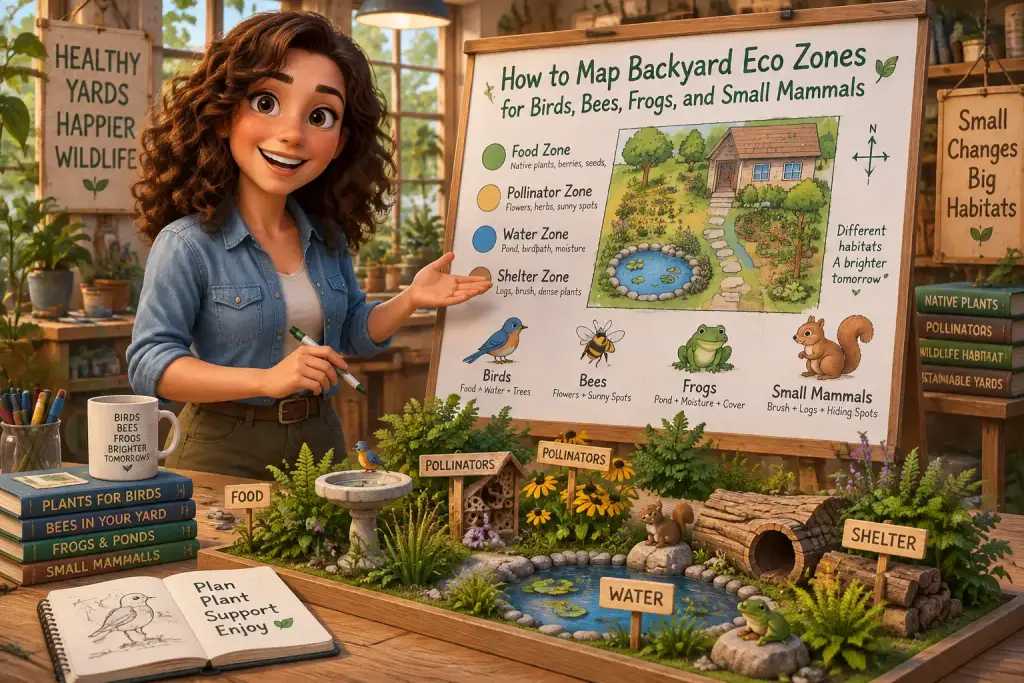
Map each station so you can spot places that need better spacing. Our guide to backyard eco zones can help you separate bird water, bee plants, frog cover, and feeding areas. That layout makes cleaning safer because dirty runoff stays away from other wildlife spaces.
Use one tub only for dirty items and one for final rinsing. This simple rule stops dirty water from getting back onto cleaned bird baths and feeders.
Check that your wildlife cleaning routine is working
A good routine leaves water clear, feeder ports dry, and visiting birds active without crowding around one dirty spot. Check each station daily for five minutes, then write down changes so you can adjust before a small issue becomes a regular problem.
Look at the water before you refill it. Clear water may still have dirt on the bottom, so lift the dish and check the base and rim. Watch for a green film, dark spots, floating seed, cloudy water, or a sour smell. Any of these signs mean it is time to empty and scrub the bowl.
Check feeders from below and from the side. Look for stuck seed at feeding ports, wet patches under the lid, and droppings on perches. Give the feeder a gentle shake. Dry seed should move freely. If it stays in one lump, take the feeder down and clean it before birds keep eating from it.
Keep a short note on your phone or a paper list by the back door. Write the date, what you cleaned, and anything unusual, such as a cracked bowl or wet sunflower seed. After two or three weeks, you will see which station needs more shade, a better cover, or a second dish.
Healthy wildlife care is not about making the yard look perfect. It is about keeping basic needs clean and steady. Once you set this up, daily checks are quick, deep cleaning becomes less messy, and your bird baths, feeders, and water dishes stay ready for the animals that depend on them.

Ludovica Serra
Founder & Habitat EditorLudovica Serra, born and based in Roma, Italy, is the founder and lead editor of Eco Zoned. She helps readers create wildlife-friendly garden spaces with practical, clear advice on planting, shelter, water, and everyday habitat care.