








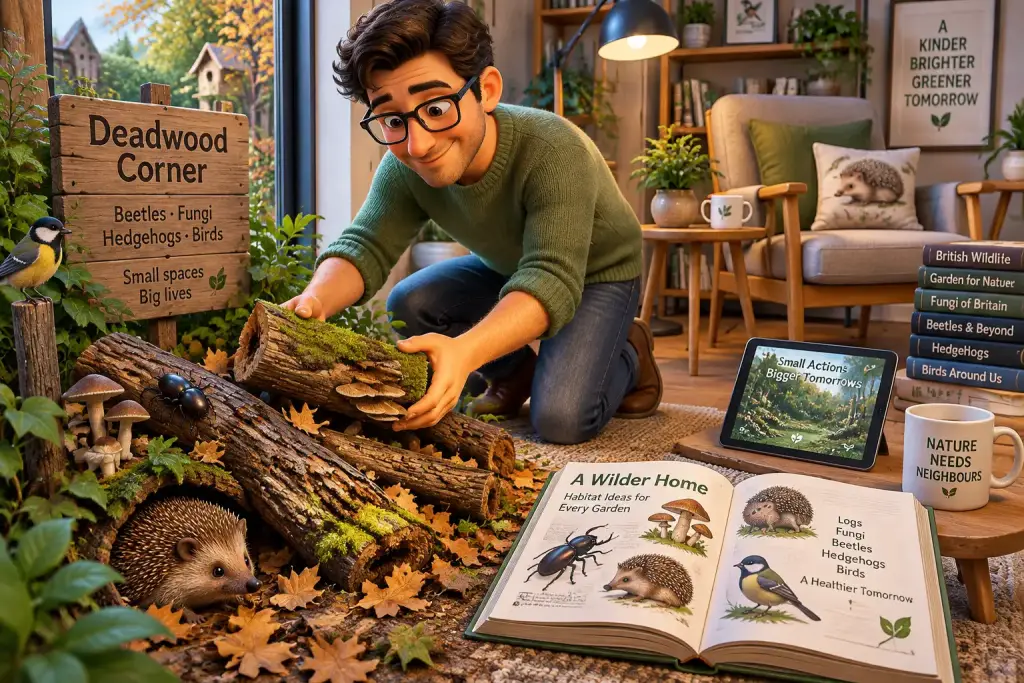
A deadwood habitat is one of the easiest backyard eco-zones to begin today. A few old logs, loose bark, fallen branches, and dry leaves can create food, cover, and nesting space for beetles, fungi, hedgehogs, birds, and other small wildlife. The work starts fast, but the best results come from leaving the corner mostly alone.
- Start with three untreated logs, a leaf layer, and one shaded corner.
- Leave gaps under logs so beetles, frogs, and hedgehogs can move through safely.
- Add fresh fallen wood once or twice a year instead of clearing the pile away.
Table of Contents
Start a Deadwood Habitat in Five Minutes
Start your deadwood habitat by placing three untreated logs on bare soil in a quiet corner. Add a loose layer of leaves around them, leave small gaps between the wood, and avoid making the pile too neat.
You do not need a large garden or special timber. A space about 1 metre wide and 1 metre deep is enough for a useful first pile. Choose wood that has fallen naturally, or use pruned branches that have not been painted, stained, or treated. Oak, beech, birch, apple, willow, and hazel are all useful choices when they are available.
Put the thickest log at the base. Set two smaller logs across it, then place a few sticks nearby instead of packing every gap. These empty spaces matter because ground beetles, woodlice, spiders, and small frogs can move through them. A hedgehog may also use a larger gap beside the pile as a short resting place.
Use what is already on the ground
Look for fallen twigs, bark pieces, old plant stems, and dry leaves before buying anything. Freshly cut branches are still useful, but they will take longer to soften and break down. Older wood with small holes, loose bark, or a soft surface already has more places for insects to hide.
In everyday use, this first step takes about five minutes. The aim is not to build a perfect feature. You are making a small untidy zone where weather, insects, and fungi can do the next part of the work.
- Use untreated logs that are 20 to 60 centimetres long.
- Place logs directly on soil, not on paving or plastic sheeting.
- Add a 5 to 10 centimetre layer of leaves around one side.
- Keep the pile away from busy paths and lawn mower turns.
Where Should a Deadwood Corner Go?
The best deadwood corner sits on soil in a quiet spot with part shade and some shelter from strong wind. Keep it at least 2 metres from doors, play areas, and places where people often walk.
A north or east side of a fence, hedge, shed, or mature shrub often works well. These spots stay cooler and hold moisture longer, which helps fungi, slugs, beetles, and worms. Still, a little morning sun is useful because it warms the upper logs for insects and gives birds a dry place to search for food.
Here is why that matters: different animals use different parts of the pile. Damp lower logs suit larvae, woodlice, and fungi. Drier upper logs can suit beetles, ants, and birds looking for insects. A pile in full hot sun may dry too quickly, while a pile in deep wet shade may stay cold and soggy.
Keep a clear route into the corner. Hedgehogs need a ground-level opening around 13 centimetres wide to pass through fences or under shrubs. Avoid blocking the area with heavy pots, bricks, or tight wire. If your garden has separate wildlife areas, place the log pile near a hedge, pond edge, or flower border rather than in the middle of open lawn.
A simple backyard eco-zone map can help you spot quiet links between cover, water, and food. Wildlife often uses these links after dark, when the garden is calm.
Build Layers That Suit More Wildlife
Build the pile in loose layers so one part stays dry, one part stays damp, and one part has deep cover. Use thick logs at the bottom, smaller branches in the middle, and leaves or bark around the outer edge.
Instead of guessing, think of the deadwood corner as three simple levels. The soil level is for worms, beetles, fungi, and animals moving under cover. The middle is for insects living in cracks and under bark. The top gives birds a place to search for larvae and gives some insects a warmer resting spot.
Make a safe lower shelter
Set two thick logs 10 to 15 centimetres apart at the base. Lay a third log across them, but do not make a closed box. This creates a low tunnel that may be used by a hedgehog, toad, or small mammal. Cover one side with leaves, then leave the other side partly open so animals can enter and leave.
Do not use netting, loose plastic, treated railway sleepers, or sharp metal scraps. Netting can trap small animals, while plastic holds water in the wrong places and reduces air flow. Heavy stones can be useful at the edge of the pile, but never stack them where they may roll into an entrance.
| Habitat part | What to add | Likely visitors |
|---|---|---|
| Lower soil layer | Thick logs with open gaps | Ground beetles, worms, hedgehogs |
| Damp side | Leaves, bark, soft rotting wood | Fungi, woodlice, millipedes |
| Dry upper layer | Thin branches and dry sticks | Beetles, spiders, foraging birds |
| Edge planting | Native grass, fern, or low shrubs | Birds, moths, small mammals |
When we tested this setup in a small back garden, the damp side showed woodlice and tiny beetles within a few weeks. The upper branches stayed active during dry mornings, especially when small birds searched the bark. The change was not dramatic on day one, but it was steady.
How Do Logs Help Beetles, Fungi, Hedgehogs, and Birds?
Logs help wildlife because dead wood slowly becomes food and shelter at the same time. Beetles and fungi break down the wood, hedgehogs use covered ground space, and birds search bark and leaf litter for insects.
Beetles are often the first visitors. Some live under loose bark, while others lay eggs in soft wood or use cracks as shelter. Their larvae feed on decaying plant matter and tiny animals in the wood. This process helps turn hard branches into dark soil over time.
Fungi are also part of a healthy pile. You may see small mushrooms after wet weather, white threads under bark, or soft pale patches on old logs. Leave these in place unless you have a clear safety reason to remove wood near a path. Fungi help break down wood and make nutrients available in the soil.
On the flip side, do not expect hedgehogs to move into every log pile. A hedgehog needs enough room, a safe way into the garden, and cover nearby. A pile can still help by giving it a place to search for beetles, worms, and other food. Never feed hedgehogs bread or milk, as both can cause harm.
Birds may visit more often than you think. Robins, wrens, blackbirds, and tits often pick insects from bark, leaf litter, and the soil beside logs. Keep a shallow water source nearby if possible, but place it where birds can see approaching cats. A safe shallow pond can work well a few metres away, as long as it has easy escape edges.
As a rule of thumb, keep the lower and shadier side of the pile slightly damp with leaves or bark, but leave the top dry for birds and resting insects.
Keep the Pile Safe Through Every Season
Keep a deadwood pile safe by leaving it mostly undisturbed, checking it before moving wood, and adding materials slowly. Avoid turning the pile in spring and winter, when animals may be breeding, resting, or hiding below the leaves.
Spring is a good time to watch rather than rebuild. Birds may take insects from the pile, and beetles become more active as days warm up. If you need to add branches, place them gently on one side. Do not pull apart the centre to see what is inside.
Summer can dry the top layer quickly. Add a small bundle of leaves, bark, or rotting sticks to the shaded side during a long dry spell. You do not need to water the whole pile. A slightly damp lower area is enough, and too much water can remove the dry spaces that some insects use.
Check before you cut or clear
Autumn is often the easiest time to add fallen leaves. Put them around the outside, not tightly over every opening. Leave one clear entrance at ground level. This gives hedgehogs and other animals a way through while still holding warmth in the lower part.
Winter needs the least work. Do not burn old logs from the habitat pile, and do not move branches on a mild winter day just because they look untidy. Small animals may be under the cover. If a log becomes unsafe near a path, shift it a short distance after checking around and beneath it carefully.
- Look for holes, nests, droppings, or signs of movement before touching wood.
- Lift one end slowly, never pull a whole pile apart at once.
- Set moved logs down close by, keeping their old side facing down.
- Leave leaf litter beside the pile after any check.
As a rule of thumb, one short check each month is enough. A deadwood corner improves when it is left to age, not when it is cleaned like a flower bed.
Let the Corner Change Over the Next Three Years
Let the deadwood corner change naturally for at least three years, adding small amounts of new material as old wood softens. The oldest logs may become crumbly, but that is a sign the habitat is working.
During the first year, you may notice woodlice, ants, spiders, slugs, and small beetles. In year two, bark may loosen and fungi may appear more often after rain. By year three, the base can hold darker soil, more insect life, and deeper cover for animals moving along the ground.
Add two or three branches after pruning shrubs or trees, rather than replacing the whole pile. Keep some thicker pieces each time. Thin twigs break down fast, but thick logs can hold cracks and damp areas for years. A pile that has wood at different ages supports more types of wildlife.
Planting around the edge can make the zone feel settled without making it too closed. Native grasses, ferns, foxgloves, hardy geraniums, and low shrubs can give shade and hide the pile from view. If you want more insect food close by, use ideas from this pollinator flower plan and keep flowering plants outside the main log gaps.
The takeaway here: do less, but do it with care. A deadwood corner does not need daily work, costly tools, or a large plot. It needs untreated wood, loose leaves, a safe location, and time. That quiet pile can become one of the hardest working parts of a wildlife-friendly backyard.

Ludovica Serra
Founder & Habitat EditorLudovica Serra, born and based in Roma, Italy, is the founder and lead editor of Eco Zoned. She helps readers create wildlife-friendly garden spaces with practical, clear advice on planting, shelter, water, and everyday habitat care.