







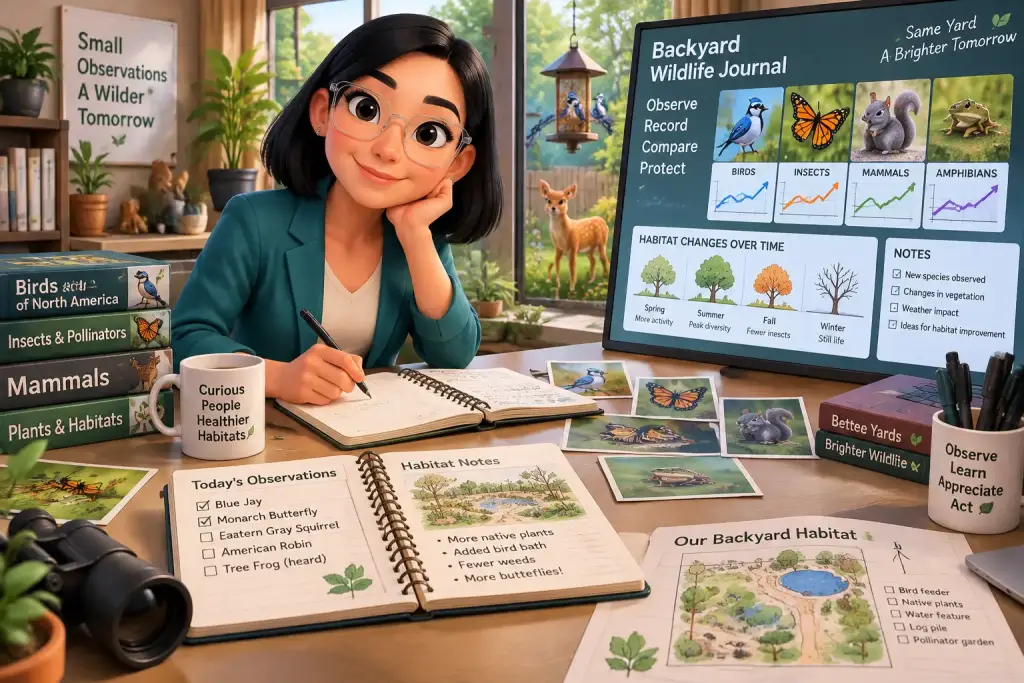
A backyard wildlife journal gives you a clear record of which animals visit, when they appear, and how your garden changes around them. You do not need expert skills or costly gear. A notebook, a phone camera, and five minutes of steady observation can turn random sightings into useful facts for your wildlife habitat.
- Use the same viewing spot, time range, and note fields to make weekly records easier to compare.
- Record species, number seen, weather, food plants, water levels, and signs of shelter in every entry.
- Review one month of notes at a time to spot habitat gaps and test one small change.
Table of Contents
Set Up Your Backyard Wildlife Journal Before You Start
A backyard wildlife journal works best when it has one fixed observation point, a simple date rule, and a small set of repeat fields. Set it up before you look for wildlife, so each record can be compared fairly over weeks, seasons, and years.
Pick a notebook you will actually use. A small paper notebook is good for outdoor notes, while a spreadsheet or notes app is useful for sorting records later. Some people use both. Write quick field notes outside, then copy the main facts into a digital file once a week. Keep the system light, or it will become a task you avoid.
Choose a regular watch time
Start with two short checks each week. Early morning is often useful for birds, while late afternoon can show bees, butterflies, and small mammals. Spend 10 to 15 minutes watching the same part of the garden. This might be a bird bath, native plant border, compost edge, hedge, pond, or feeding area.
Weather affects what you see. A quiet, dry morning may bring small birds to seed heads. A warm sunny hour may bring hoverflies and bees to flowers. Rain can bring worms to the surface and may leave frog signs near damp ground. Write the weather down every time, even if it seems dull. Here is why that matters: a species missing on a cold day may simply be hiding, not gone.
Create repeat fields for every page
Use the same headings for each journal entry. This saves time and makes your notes easier to read later. Your basic page can include:
- Date and start time
- Weather, such as sun, rain, wind, or frost
- Species seen or heard
- Number seen, if you can count safely
- Where the animal was found
- Food, water, shelter, or nesting signs
- One photo number or short sketch note
Do not worry if you cannot name every insect or bird at first. Write “small brown moth near ivy” or “black and white bird at bird bath” instead of making a guess. You can check later with a field guide or a trusted nature app. A careful unknown record is better than a wrong name.
What Should Each Wildlife Entry Include?
Each wildlife entry should show what you saw, where it was, what it was doing, and the conditions at that moment. Short notes with these facts are more useful than long stories because they let you compare one visit with another.
Start with species and numbers. Write “two robins on lawn” rather than only “robins.” If you do not know the exact species, record size, color, sound, and behavior. For example, “one small grey bat flying at 8:40 pm, low over pond” is a strong record. It gives you a time, a place, and a clue about feeding activity.
Record behavior, not only names
Behavior often tells you more about habitat health than a simple sighting. A blackbird pulling worms from moist soil shows that the ground is soft enough to feed in. A bee moving between three flower types suggests a steady food source. A hedgehog passing through without stopping may mean your garden is part of a travel route, but not yet a place with enough cover.
Use plain action words: feeding, drinking, resting, chasing, carrying nesting material, calling, digging, basking, flying through, or hiding. If you see tracks, droppings, feathers, shed skin, or nibbled leaves, note those as signs rather than proof. This avoids claiming an animal was present when you did not see it directly.
Photos can support your journal, but do not let photography stop your observation. Take one wide photo of the area first, then a closer photo only if you can do it without moving closer or causing stress. Keep a simple photo label, such as “April 12, pond edge, frogspawn.” Over time, the images will show changes in water level, plant cover, and bare soil.
When we tested this setup, the best notes took about five minutes to write after each watch. The records became much better once we stopped trying to describe everything. Instead of guessing, we wrote the few facts that could be checked later. That small change made monthly review far easier.
How Do You Record Habitat Changes Without Guessing?
Record habitat changes by measuring the same features in the same places each time, such as water depth, flower cover, bare soil, and shelter. Use simple numbers, fixed photos, and short descriptions so you can see real change without relying on memory.
Choose four to six habitat features that matter in your garden. A small pond may need water depth and plant cover notes. A native border may need flower count, seed heads, and leaf litter notes. A hedge may need a note on gaps, berries, and nesting cover. Keep these features tied to the wildlife you hope to support.
| What to check | Simple tool or setting | What to write down |
|---|---|---|
| Bird bath or pond | Ruler and fixed photo point | Water depth, clean water, algae, animal use |
| Flower border | One square metre sample | Open flowers, pollinator visits, dry soil |
| Hedge or shrub cover | Monthly walk around edge | Gaps, berries, nests, leaf litter, tracks |
| Feeding area | Ten minute watch | Species, food left, signs of crowding |
Use fixed points and small measures
Stand in the same spot for your monthly photo. Place a small stone, plant label, or patio mark nearby as a reminder. Measure pond water from the same edge with a ruler. Count open flowers in one square metre rather than trying to count the whole border. Small repeat checks give more honest results than broad guesses.
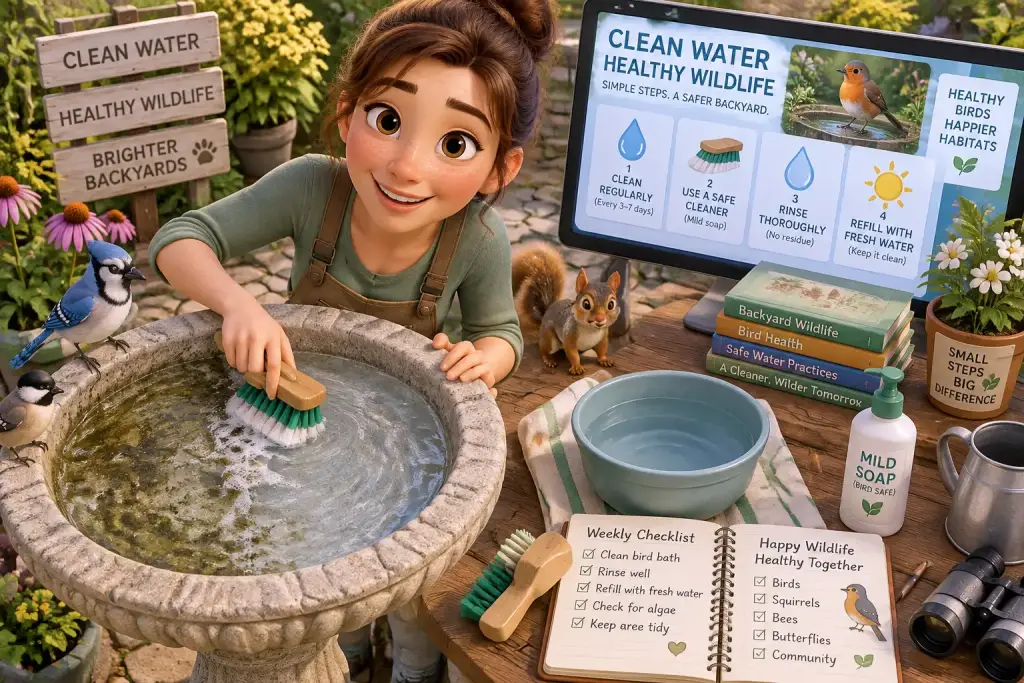
Write down changes caused by your own work too. Note when you add a log pile, stop mowing a patch, plant native flowers, clean a bird bath, or cut back dead stems. Then watch what happens over the next two to eight weeks. If you add water, follow safe cleaning steps from our guide to clean wildlife water so your records show helpful habitat work, not avoidable disease risk.
On the flip side, do not link one wildlife sighting to one change too quickly. A butterfly may visit because of warm weather, not because you planted one new flower. Look for a pattern across several checks. Three or four similar records over a month are stronger than one exciting afternoon.
As a rule of thumb, take one photo from the same place each month. A fixed photo often shows plant growth, dry ground, and lost shelter faster than written notes alone.
How Can You Spot Useful Patterns in Your Notes?
Useful patterns appear when you compare entries by season, weather, and habitat feature instead of reading each note alone. Review your journal once a month and look for repeated visits, missing resources, and changes that happen after a garden task.
Set aside 20 minutes at the end of each month. Mark species that appeared more than once. Then mark species that stopped appearing. Look at your weather notes before deciding there is a problem. A dry month may reduce worm feeding on lawns. A hard frost may pause insect activity. This is normal, and your journal helps separate normal seasonal shifts from a real habitat gap.
Ask three simple review questions
- Which species used the garden most often this month?
- Which area had the most feeding, shelter, or water use?
- What resource was missing when visits dropped?
Suppose you record six bee visits in May, then only one in June. Your notes may show that early flowers finished, while later flowers had not opened yet. That suggests a food gap. Planting a mix with different flowering times may help. Our guide to a layered native border can help you plan food and cover through more of the year.
Watch for links between different parts of the garden. A frog may use the pond but hide under dense plants nearby. A bird may drink at a shallow dish, then fly into a hedge. A hedgehog may pass through a gap under a fence to reach another garden. These links matter because wildlife needs routes, not isolated features.
As a rule of thumb, make only one or two changes after each monthly review. If you change everything at once, you will not know what helped. Add a shallow water dish, leave a leaf pile, or plant a small group of late flowers. Record the date, then check the area in the same way for the next month.
Keep Your Records Useful Through Every Season
Keep records useful by following the same short routine through spring, summer, autumn, and winter, even when sightings are fewer. A quiet page still shows weather, water, plant cover, and shelter conditions that affect wildlife later.
Spring notes often focus on nesting signs, frogspawn, fresh leaves, and early flowers. Avoid checking nests closely or touching young animals. Watch from a distance and write only what you can see without causing stress. Summer records may show the highest insect activity, dry soil, low pond water, and competition around food or shade.
Autumn is a good time to record berries, seed heads, fallen leaves, fungi, and thicker cover. Resist the urge to tidy every corner. A small leaf pile, dead stems, and a log edge can support insects and offer shelter. Winter brings fewer visible insects, but it can show which birds use seed, water, dense shrubs, and evergreen cover.
Fix the small slip-ups early
The most common slip-up is writing notes only after an exciting sighting. This creates a journal full of highlights but no clear baseline. Put two repeating checks in your calendar instead. In everyday use, this step takes about five minutes, and it gives your rare sightings a useful background.
Another problem is changing the watch area each time. You may see more species near a compost pile than near a lawn, but the two places cannot be compared as one record. Give each area a simple name, such as “pond corner” or “west hedge,” and keep those names the same.
The takeaway here: your journal does not need perfect species lists to work. It needs steady notes that show what your garden offered wildlife at a given time. After a full year, you will have a practical record of food, water, cover, travel routes, and seasonal visitors. That record can guide small habitat choices with far more confidence than memory alone.

Ludovica Serra
Founder & Habitat EditorLudovica Serra, born and based in Roma, Italy, is the founder and lead editor of Eco Zoned. She helps readers create wildlife-friendly garden spaces with practical, clear advice on planting, shelter, water, and everyday habitat care.