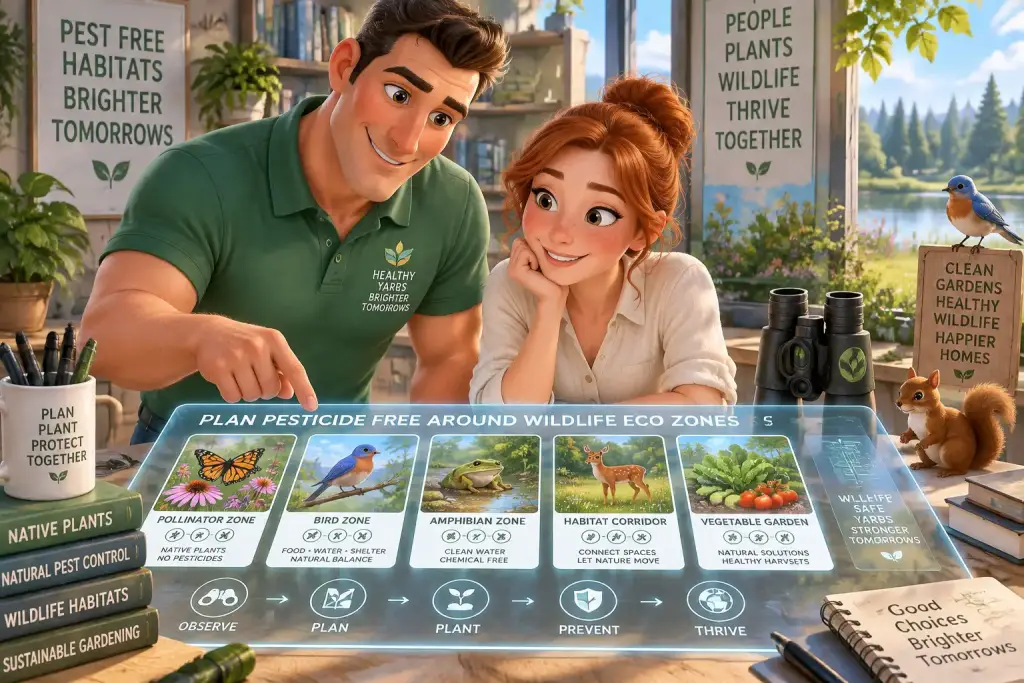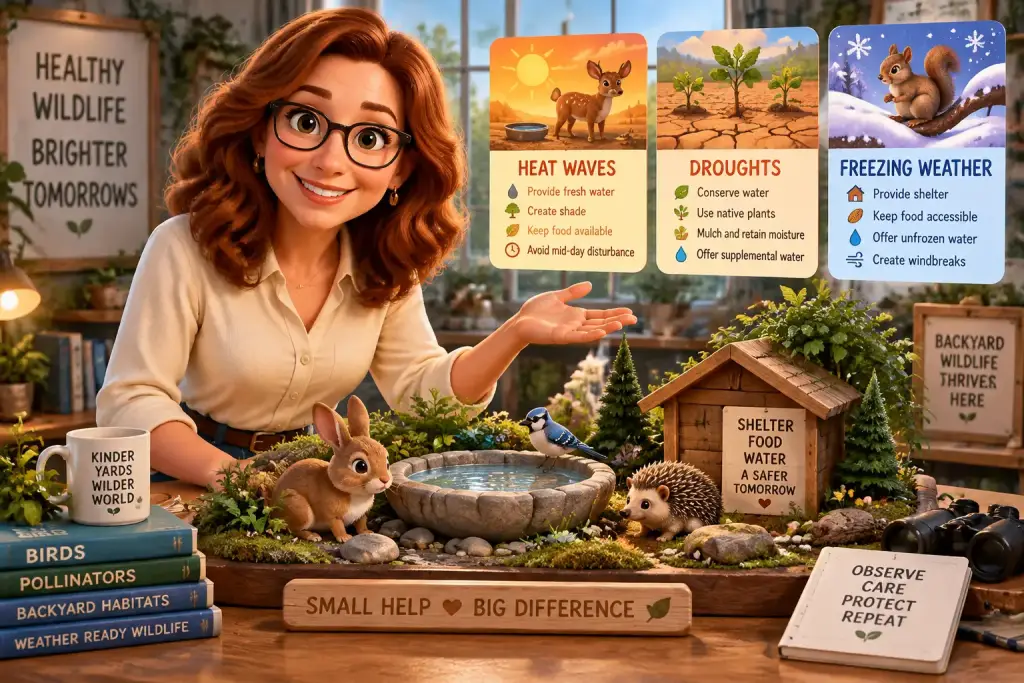







A safer backyard starts at ground level, not with costly new features. Hedgehogs, toads, and ground nesting birds need clear paths, safe water, quiet cover, and fewer hidden traps. A short walk around your garden can show where an animal may get stuck, fall in, or lose its nest. Fix those risks first, then add shelter and plants over time.
- Check fences, drains, ponds, netting, and stored items at ground level before changing your garden.
- Keep one quiet, messy corner with dry leaves, logs, and native plants for shelter and food.
- Pause mowing and digging when you see nests, young animals, or fresh signs of wildlife use.
Table of Contents
Start a safer backyard with a ground level check
Walk slowly around the whole garden and look at it from the height of a hedgehog or toad. Remove anything that can trap, cut, poison, or block a small animal before you add new wildlife features.
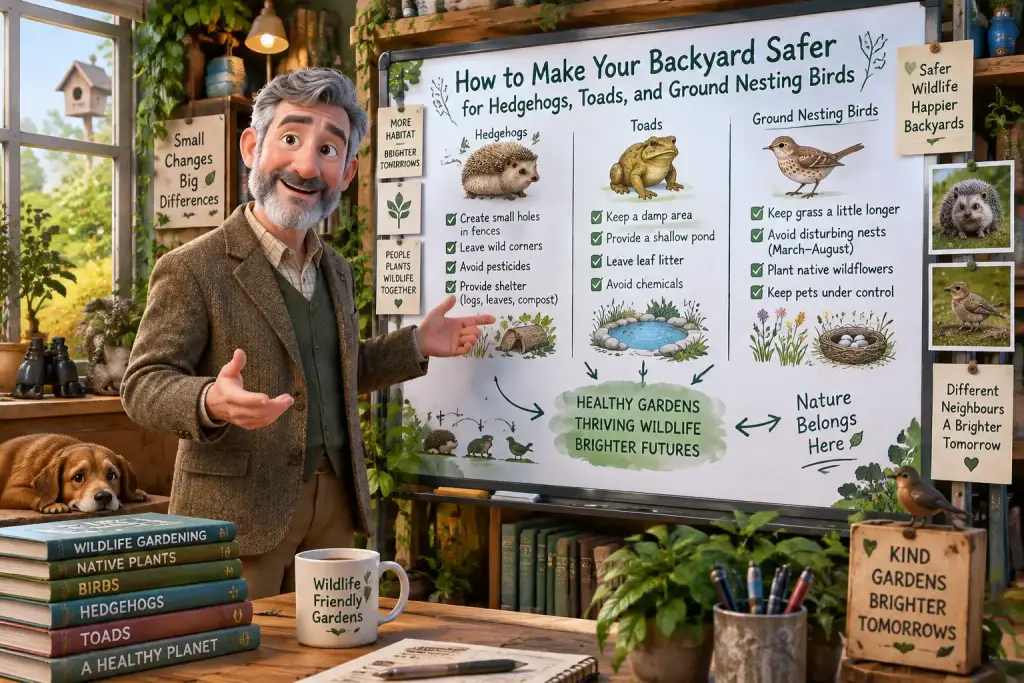
Start at the edges. Check every fence, gate, wall, and shed base for gaps that are too tight, sharp wire, loose netting, or piles of stored items. Hedgehogs can travel a long way at night while looking for food and mates. A small opening, about 13 cm wide and 13 cm high, can let them pass between gardens. Place it low in a fence where people and pets are unlikely to disturb it.
Then look for danger points. Deep buckets, empty plant pots, open drains, smooth sided ponds, and steep steps can become traps. Toads also move mostly after dark, often when the ground is damp. They may hide under boards, pots, leaf piles, or thick plants during the day. A garden that seems tidy to us can be hard for them to cross.
Use a simple first walk list
Instead of guessing, carry your phone or a notebook and mark each risk as you find it. Take photos of places you cannot fix on the same day. This makes the work feel smaller and helps you notice if a repair has worked.
- Look under shrubs, decking, pots, and stored wood before moving anything.
- Check that all netting is raised, removed, or pulled tight against the ground.
- Turn buckets and empty pots upside down when they are not in use.
- Cover open drain holes with a firm grate that still lets water pass through.
- Keep harmful garden chemicals out of reach and use them only when truly needed.
When we tested this setup in a small garden, the first check took about 25 minutes. We found two empty tubs, a loose fruit net, and a narrow gap behind a shed where a toad could have become stuck. The fixes took less time than the check itself. That is often the case.
Do not aim for a perfect garden. Aim for one where an animal can enter, rest, drink, and leave without help from you. Here is why that matters: wildlife safety is mostly about removing small everyday risks before they cause harm.
Make water, ponds, and drains easy to leave
Every water source needs at least one rough, shallow way out. A hedgehog, toad, or young bird may fall into water, but it should be able to climb out without facing a smooth vertical edge.
A pond can help wildlife, especially in dry weeks, yet it needs safe sides. Add a ramp made from a rough plank, stones set close together, or a strip of firm soil. The ramp should begin below the water line and reach dry ground. Avoid slick plastic or a board that floats away. Test it with your hand to make sure it stays firm.
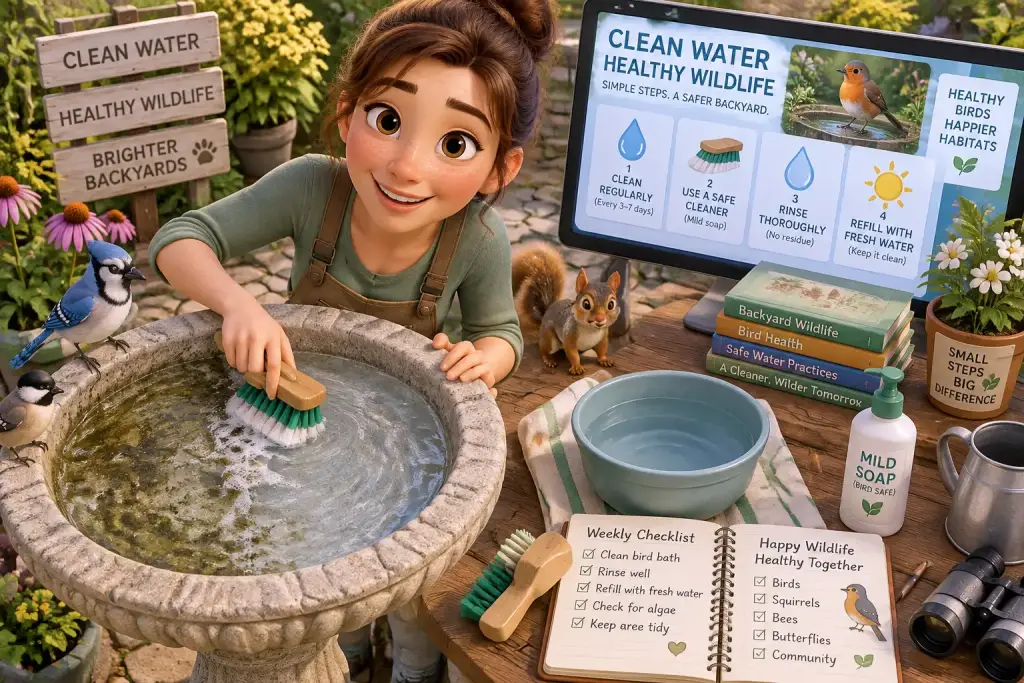
For a small water dish, choose a shallow bowl with a rough inside surface. Put a few clean stones in one side so insects and small animals have a foothold. Change the water often, especially during warm weather. Dirty water can spread illness between birds, so follow the same care routine used for clean bird water in the rest of your garden.
Build a safe pond exit
A pond exit does not need to look fancy. It only needs grip, a gentle slope, and a clear end point on land. Keep plants near the edge, but do not let thick stems block the ramp.
- Choose a pond edge away from a busy path or dog area.
- Set a rough plank or flat stones at a gentle angle.
- Place the lower end 5 to 10 cm under the water surface.
- Secure the upper end on dry soil or a stable flat stone.
- Check after rain, wind, or pond cleaning to make sure it has not moved.
Deep rain barrels need a tight lid. If you use one for garden water, make sure the lid cannot be pushed aside by a cat, child, or animal. Open buckets and watering cans should be emptied after use. On the flip side, a shallow muddy patch beside a pond can be useful for toads, as long as it does not lead into a deep container.
A planned pond area can give wildlife food, water, and cover at once. Our guide to a small pond zone shows how shallow edges support this goal without taking over the whole yard.
How can you protect ground nesting birds?
Protect ground nesting birds by leaving likely nest spots quiet and untouched from spring through summer. Check long grass, low shrubs, leaf piles, and bare soil before mowing, pruning, digging, or moving garden items.
Some birds place nests on the ground or very low down. The nest may look like a small dip lined with dry grass, leaves, or feathers. Eggs can blend into soil and dead leaves, so they are easy to miss. A parent bird may move away when you come close, but that does not mean the nest is empty.
Mark a wide no-work area when you find a nest or see birds repeatedly flying to one point. Use two sticks, a plant label, or a loose ring of small stones several feet away. Do not put a marker right beside the nest because it may draw attention to it. Keep pets and children away from that part of the garden until the young have left.
Do not touch eggs, move a nest, or try to raise young birds yourself. Local rules about nests and birds can differ by place, and active nests are often protected. If a nest seems damaged or a young bird looks hurt, contact a local licensed wildlife rescue group for advice. Watching from a distance is usually the safest first step.
Plan mowing around bird activity
Long grass is not wasted space. It can hold insects for birds, damp shade for toads, and cover for hedgehogs. Mow in sections instead of cutting every part of the lawn on one day. Leave a strip near hedges, walls, or wild corners through the main nesting season.
Before using a mower or trimmer, walk the area first. Start from the middle and work outward if you must cut grass. This gives small animals a better chance to move away. Avoid cutting at dusk, when hedgehogs may start to come out. The takeaway here: a slower mowing plan protects more than a neat, fast cut.
Set up dry shelter and clear travel paths
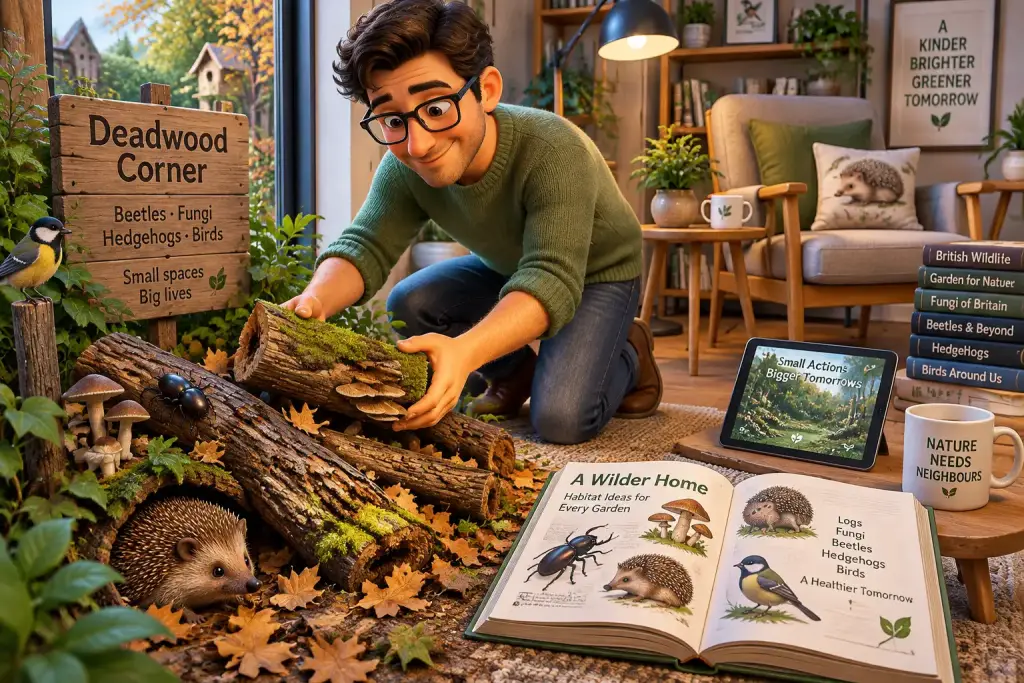
Give wildlife one dry, quiet corner with leaves, logs, low plants, and open ground nearby. Keep this area away from bright lights, frequent foot traffic, and places where pets often run.
Hedgehogs need cover for day rest and winter sleep. Toads need cool, damp places where they can hide from sun and dry wind. Ground nesting birds need low cover nearby, but they also need a clear view of danger. One mixed border can meet parts of all three needs when it has different layers.
Start with a small space, even a patch about 1 metre by 1 metre. Add a loose pile of dry leaves under a shrub, then place a few untreated logs beside it. Do not pack the pile tightly. Small gaps are useful. Leave an open route from this shelter to a hedge, fence gap, or pond edge, so animals do not have to cross a bare patio.
Native plants often bring insects, seeds, and cover. Let some stems stand over winter when possible. Cut them back in late winter or early spring only after checking for resting animals. Fallen leaves and small branches can stay in a wildlife corner rather than going into a bin. These low waste garden tasks can save work while making better shelter.
Keep the shelter safe, not sealed
A shelter should have more than one way in and out. Do not use treated wood, sharp metal, broken glass, or plastic bags in a habitat pile. These materials can hurt animals or hold water in harmful ways. Use natural items from your own garden where possible.
Check the pile from the outside, not by pulling it apart. If you need to move logs or leaves, do it slowly and only on a mild day. Lift one piece at a time and pause. A hedgehog may be sleeping deep in the pile, especially in colder months.
Keep outdoor lights pointed down and switch them off when they are not needed. Strong night light can change how animals move and feed. Motion lights should be set for a short time and aimed away from the wildlife corner. A dark route is often safer than a bright one.
As a rule of thumb, walk the garden just before dark once a week. Hedgehogs and toads are more likely to be active then, so risks are easier to spot.
Which garden jobs create the most risk?
Mowing, strimming, netting, digging, burning piles, and chemical use cause the most avoidable harm in a wildlife garden. Slow down before these jobs, inspect the area first, and choose a lower risk method when one is available.
Garden work can change a safe spot in minutes. A leaf pile may hold a toad. A compost heap may hold a hedgehog. A low shrub may hide a nest. Make it a habit to check with your eyes and hands before cutting, lifting, or digging. In everyday use, this step takes about five minutes for a small yard.
| Garden job | Safer setting or tool | Quick fix |
|---|---|---|
| Mowing long grass | Walk through first, mow in small sections | Leave a 1 metre edge near hedges |
| Using netting | Keep netting tight or at least 30 cm above ground | Remove loose netting after harvest |
| Emptying a pond | Use a rough exit ramp and shallow holding tub | Check for toads before draining |
| Moving leaf piles | Lift by hand, one layer at a time | Wait until mild weather if possible |
| Using weed control | Pull weeds by hand in small areas | Keep sprays away from water and shelter |
Netting needs special care. Loose fruit netting can catch birds and small mammals. Use a firm frame that holds it away from plants and the ground, or remove it once fruit picking is over. Check it every day while it is in use. If you cannot check it daily, choose another way to protect crops.
Skip burning garden waste piles without first moving the material by hand. Small animals may hide inside. Avoid putting poison down for slugs, rats, or other pests where wildlife may eat it directly or eat a poisoned animal. As a rule of thumb, solve the cause first. Seal food bins, clear fallen bird seed, and protect crops with barriers rather than poison.
Keep compost useful but careful. Turn it slowly with a fork and check each section before moving it. Never put a fork straight into a heap without looking. A simple pause can prevent a serious injury.
How do you know your garden is safer each week?
You know your garden is safer when water exits stay clear, access holes stay open, shelter stays dry, and no new traps appear. A short weekly check, plus a careful look before each garden job, is enough for most homes.
Choose one day each week for a five to ten minute safety walk. Look at pond ramps, buckets, netting, fence gaps, compost areas, and the wildlife corner. After heavy rain or strong wind, repeat the check because water levels and loose materials can change fast. Small repairs are easier when you make them right away.
Watch for signs without trying to get too close. You may see small tracks in soft soil, droppings, nibbled fallen fruit, moved leaves, or birds carrying nest material. A trail camera can be useful if it does not use a bright night light and is aimed only at your own garden. You do not need proof of every visitor for the work to help.
Keep a simple note on your phone with three headings: risk found, fix made, wildlife seen. After one month, look back. You may notice that a pond ramp shifts after rain, a fence gap fills with leaves, or a food dish attracts unwanted animals. Those notes help you improve the setup based on real use.
Fix common slip ups early
If you find a trapped animal, keep calm and reduce noise. Do not pull it from netting or force it to move if you might cause harm. Put pets indoors, keep people back, and call a local wildlife rescue group if the animal seems hurt, weak, wet, or unable to leave on its own.
If no wildlife appears, do not add more food straight away. Check the basics first. Is there a clear entry hole? Is the shelter too exposed? Is a light, dog, or busy path close by? Is the pond edge too steep? Quiet cover and safe movement matter more than a large amount of food.
A wildlife friendly garden changes with the seasons. Leaves fall, plants grow, fences shift, and new tools arrive. Keep looking from ground level, make small changes, and leave some parts of the yard a little wild. That steady care gives hedgehogs, toads, and ground nesting birds a better chance to live safely beside you.

Ludovica Serra
Founder & Habitat EditorLudovica Serra, born and based in Roma, Italy, is the founder and lead editor of Eco Zoned. She helps readers create wildlife-friendly garden spaces with practical, clear advice on planting, shelter, water, and everyday habitat care.