







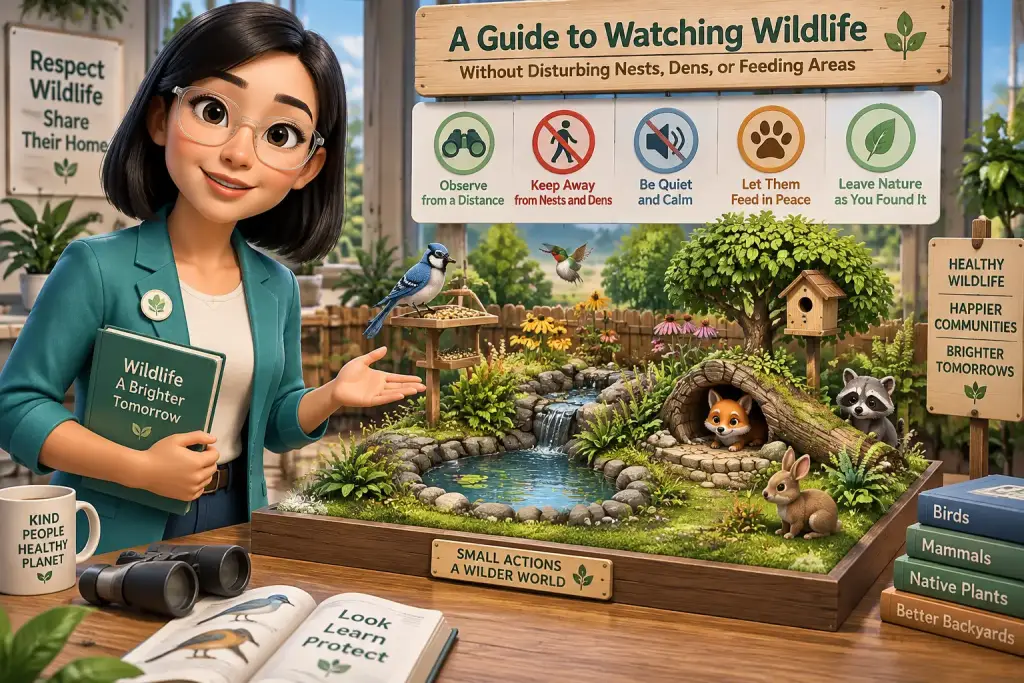
Wildlife watching works best when you act like part of the background. A quiet plan helps you see more birds, frogs, squirrels, and small mammals without pushing them away from nests, dens, water, or feeding areas.
- Watch from a fixed edge, not from inside thick plants, brush piles, nest trees, or den paths.
- Move back at once if an animal stops feeding, gives alarm calls, freezes, hides, or watches you closely.
- Use binoculars, trail cameras, and short visits to see more while leaving wildlife calm.
Table of Contents
- Set Up Wildlife Watching From the Edge
- How Far Away Should You Watch Nests and Dens?
- Use a Quiet Routine at Nests, Dens, and Cover
- How Do You Watch Feeding Areas Without Changing Behavior?
- Spot the Warning Signs and Fix Common Slip-Ups
- Use Simple Tools That Keep Your Distance
- Check That Your Yard Stays Calm After You Leave
Set Up Wildlife Watching From the Edge
Start wildlife watching from a clear edge of your yard, not from the middle of a habitat patch. Pick one spot where you can look into the area without walking through leaf litter, tall grass, brush, or low branches.
Animals use small paths more than most people notice. A rabbit may use the same gap under a shrub every morning. A chipmunk may follow one line along a stone border. Ground-feeding birds may return to one open patch near cover. When you step into those places, you leave scent, bend plants, and make noise. The best view is often several steps farther back.
Choose a fixed viewing point
Use a patio chair, a window, a deck corner, or a spot beside a fence. Aim for a place that gives you a clear view of part of the habitat. You do not need to see every inch of the yard. Watching one safe area well is better than moving around and checking every hiding place.
Mark the spot in a simple way. Set a chair there, place a small flat stone near the path, or use the same window each time. Once you set this up, animals may grow used to your quiet shape at that distance. They should never need to grow used to you standing beside their nest or den.
Check the wind before you settle in. If the wind blows from you toward the habitat, your scent can reach animals before you see them. Move to the other side of the yard if you can. If that is not possible, shorten the visit and stay farther away. Scent matters most around fox dens, rabbit cover, brush piles, and feeding places used by mammals.
Keep a low-impact route
Walk to your viewing point on hard ground, short lawn, mulch paths, or existing stepping stones. Avoid making a new route through native plants. Soft soil shows tracks, and crushed leaves can remove cover used by insects and small animals. A calm approach starts before you raise your binoculars.
- Use the same route each time.
- Wear quiet shoes with firm soles.
- Keep dogs indoors or on a short leash away from habitat areas.
- Turn phone sounds off before you walk outside.
- Carry tools before you enter the viewing area, so you do not return several times.
When we tested a fixed chair near a back window for two weeks, daily setup took less than five minutes. Birds returned to the same ground-feeding patch faster because no one crossed the lawn near their cover.
How Far Away Should You Watch Nests and Dens?
Stay far enough away that the animal keeps normal behavior, such as feeding, resting, grooming, or caring for young. There is no single safe distance, so the animal’s reaction should set the limit.
A small bird at an open feeder may accept a person 15 feet away behind glass. A nesting bird can react badly at a much greater distance. A fox, skunk, rabbit, or raccoon near a den may smell you before it sees you. Start far back, then use binoculars or a camera zoom instead of moving closer.
Use 50 feet as a careful starting point for a nest, den entrance, or young animals you spot from a distance. Increase that distance when the animal looks at you often, stops moving, calls out, or leaves the area. Some species need much more room. Local parks and wildlife areas may also post their own distance rules, and those rules come first.
Read the animal before moving
Watch for 30 to 60 seconds before you change position. If the animal continues its normal task, stay where you are. If it freezes, faces you with a stiff body, hides, or gives alarm calls, back away slowly. Do not wait for it to run. A wild animal that runs has already spent energy it may need for feeding, warmth, or care of young.
Birds give useful signs near nests. An adult that circles, scolds, flicks its tail, or keeps carrying food without landing may be trying to pull you away. Leave the area right then. Do not search for the nest to confirm what you saw. The safest nest is often the one you never locate closely.
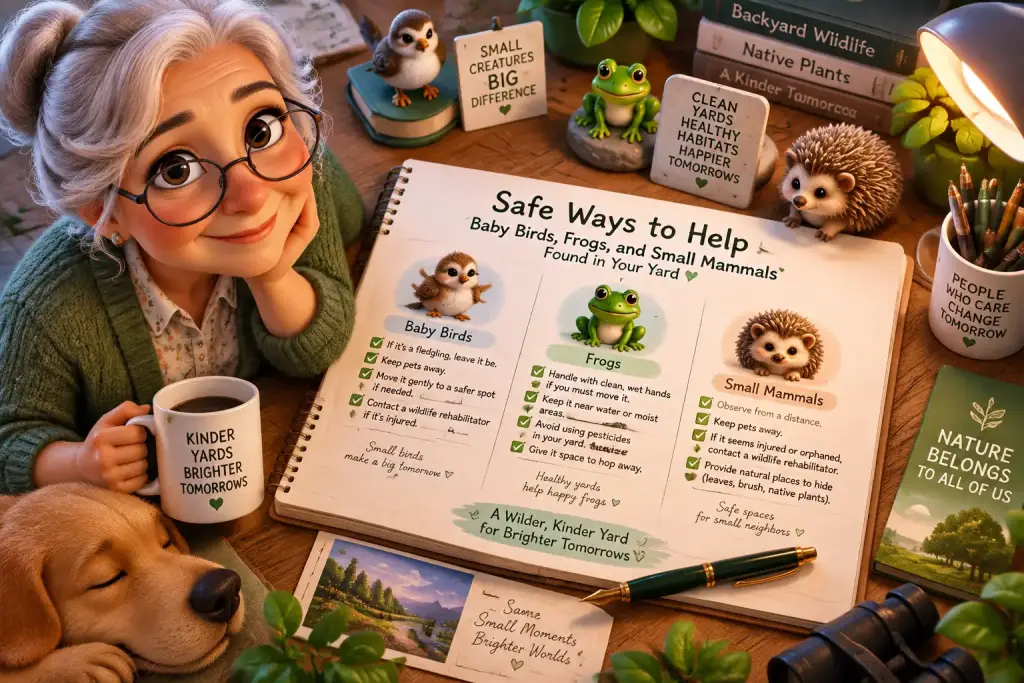
Young animals need special care. A fawn resting alone, a young rabbit in grass, or a baby bird on the ground may have a parent nearby. Watching from a distance is safer than picking it up. Our guide to helping baby wildlife explains when a situation needs action and when it needs space.
Use a Quiet Routine at Nests, Dens, and Cover
Keep each visit short, quiet, and planned. Approach once, observe from your fixed point, then leave by the same route without checking under shrubs, logs, or nest branches.
Long visits can be harder on wildlife than brief checks. This is especially true during nesting season, cold weather, dry weather, or when parents are carrying food. Five calm minutes from a safe distance can tell you more than 30 minutes spent moving around. Here is the catch: a good photo is never worth making an animal leave its young or meal.
Step 1: Pause before entering
Stop at the edge of your viewing area. Listen for alarm calls, wing flaps, rustling, or a sudden quiet patch. Look at the ground for fresh tracks, droppings, feathers, or turned leaves. These signs can show that an animal is close even when you cannot see it.
If you hear repeated bird calls or see a mammal crossing the same route, wait. Let it pass before you move. Do not stand in its path. An animal that must change direction because of you may avoid that area later.
Step 2: Watch without calling or baiting
Keep your voice low, and do not use bird calls, animal sounds, whistles, or phone recordings. Calls can pull birds away from feeding, confuse territorial animals, or bring predators toward small wildlife. Avoid scented sprays, strong soap, perfume, and fresh food scraps near observation areas.
Food can also change behavior fast. Do not place food near a nest, den, or known feeding trail to bring wildlife closer. Feeders can be useful when kept clean and placed in an open, safe area, but they should not become a tool for crowding animals. Give wildlife a choice to come and go.
Step 3: Leave before activity changes
End the visit while the area still feels calm. Pack up slowly, turn away from the habitat, and use your planned route out. Do not take a last close look under a bush or behind a woodpile. That one extra check causes many of the problems people hope to avoid.
Write a few notes after you go indoors. Record the time, weather, animal, and behavior. A simple notebook helps you spot patterns without needing to visit more often. You may notice that robins feed after rain, frogs call after sunset, or squirrels use a certain tree when the yard is quiet.
How Do You Watch Feeding Areas Without Changing Behavior?
Watch feeding areas from cover or behind glass, and never stand between an animal and its escape route. Keep food, water, and shelter in their normal places so wildlife can feed without feeling trapped or watched closely.
Feeding spots include seed heads, fallen fruit, native plant beds, shallow water, insect-rich mulch, and bird feeders. These places can attract several species at once. That makes them easy to watch, but it also means animals may leave if people, pets, or loud tools stay nearby. Give each feeding zone a clear open side and a nearby place where animals can hide.
| Situation | Best low-impact choice | Sign to back away |
|---|---|---|
| Bird feeder activity | Watch through a window or from 15 feet away | Birds stop feeding or give sharp alarm calls |
| Ground-feeding birds | Stay on a path and leave an open exit route | Birds freeze, cluster tightly, or fly into cover |
| Rabbit or squirrel feeding | Use binoculars from 50 feet or more when possible | The animal stands upright and watches you often |
| Frog or insect feeding near water | Stay still at the pond edge and avoid flash | Frogs stop calling or move into deep cover |
| Trail camera check | Check it every 7 to 14 days from a clear route | Fresh disturbance appears near the camera site |
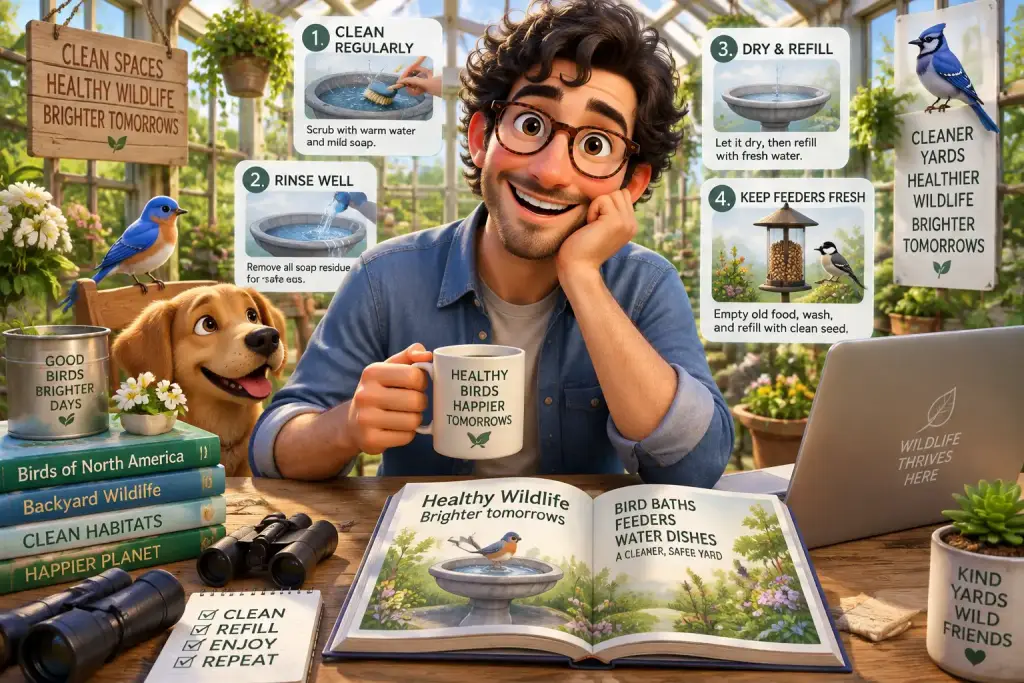
Place feeders where you can refill them without walking through thick cover. Keep them away from dense nest shrubs and at a distance from windows that may cause bird strikes. Clean feeders when empty and remove wet or spoiled seed. A clean feeding station supports wildlife better than a busy feeding station.
Water needs the same care. Refill a bird bath or shallow dish at a regular time when activity is low. Move slowly and avoid splashing. If frogs, birds, or insects are using the water, wait until they leave on their own. A small water area should feel predictable, not like a place where a person appears at random.
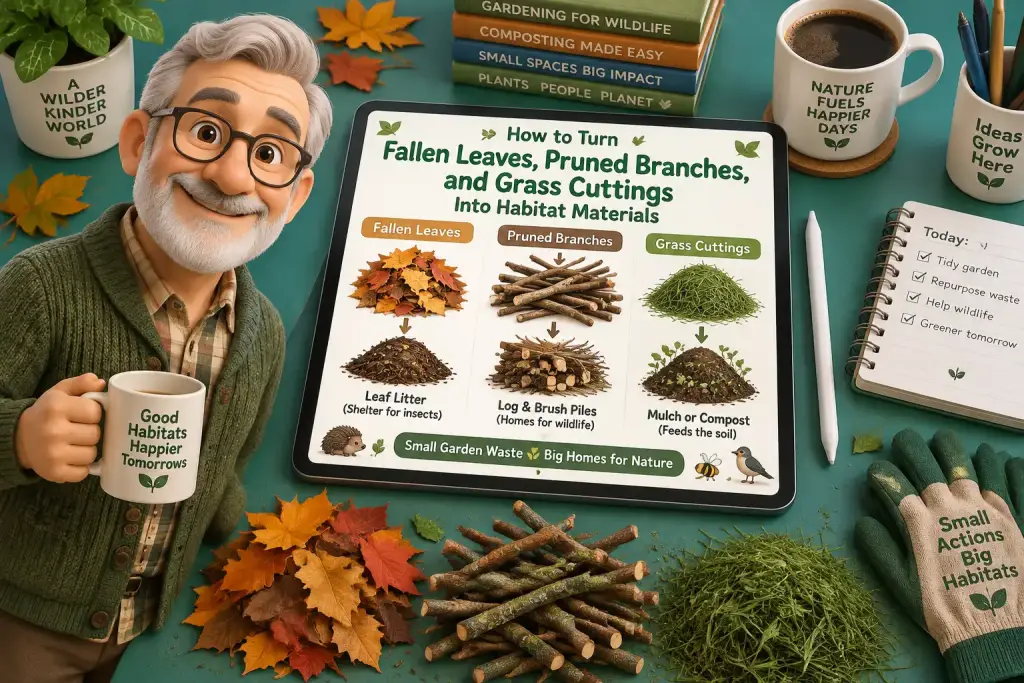
Yard work can affect feeding places too. Leave some seed heads, leaf litter, and fallen twigs where they do not create a safety issue. Our low-waste garden tasks guide shows how to handle natural yard material without removing useful food and cover.
Stand downwind when possible, then keep your visit short. Wildlife often smells people before it sees them, especially near dens and feeding spots.
Spot the Warning Signs and Fix Common Slip-Ups
Stop and move away when wildlife freezes, gives alarm calls, hides, or changes its normal path. These signs mean your distance, noise, scent, or timing is too close for that animal.
Most slip-ups are simple. A person wants a clearer view, takes two steps closer, and then stays after the bird or mammal reacts. Fixing the issue is also simple. Move back, lower your body if needed, and end the visit. Do not try to make up for the mistake by following the animal to see where it went.
Problem: You found a nest by accident
Leave without touching the nest, eggs, plant stems, or nearby branches. Do not clear leaves to take a photo. Make a mental note of the general area, then choose another path for the next few weeks. If the nest is near a path you must use, give it the widest space you can and walk through quickly and quietly.
Do not keep returning to check eggs or young. Adult birds may wait nearby until you leave. A camera with a long lens used from a legal, safe distance can be less disturbing than close visits, but it still needs care. Never use flash at night around a nest, den, or roosting spot.
Problem: A trail camera seems to change activity
Move the camera farther from the main path. Place it on a tree, post, or stake beside the route, not directly in front of an entrance. Turn off bright indicator lights if your model allows it. Use a camera with no-glow infrared light when possible, especially near mammals active after dark.
Check the camera less often. Every day can be too much if you must walk through cover to reach it. In practice, a check every 7 to 14 days is enough for most backyard observation. Use the same approach route each time, and stop using the camera if you see fresh digging, broken plants, or repeated avoidance.
Problem: Pets keep chasing wildlife
Bring cats indoors, especially near dawn, dusk, and nesting season. Keep dogs on a leash near brush piles, pond edges, tall grass, and native planting beds. Even a friendly pet can make wildlife leave food, young, or shelter behind.
Set up a pet-free zone around your best habitat area. A low fence, dense planting border, or simple gate can help people and pets stay on the right side. The goal is not to make the whole yard off-limits. It is to give wildlife one part of the yard that stays calm.
Use Simple Tools That Keep Your Distance
Use tools that let you see farther away, rather than tools that pull wildlife closer. Binoculars, a quiet trail camera, a window seat, and a simple notebook are usually enough for respectful backyard watching.
Binoculars with 8x magnification work well for many yards. They are easier to hold steady than stronger models, and they give a wide view. Keep the strap around your neck or wrist, then raise them slowly. Fast arm movements can make birds and mammals alert even from a safe distance.
A phone camera can record notes, but use it with care. Turn off flash and sound effects. Do not step closer just because the zoom looks weak. A slightly distant photo that leaves an animal calm is a good record. A close photo that makes an animal flee is not.
Trail cameras can show activity you would miss, such as raccoons at night or a rabbit using a brush edge before sunrise. Set one beside a route, not at a nest entrance or den opening. Avoid placing cameras where you need to cross a feeding area to reach them. Use fresh batteries, check the view once, and then leave the site alone.
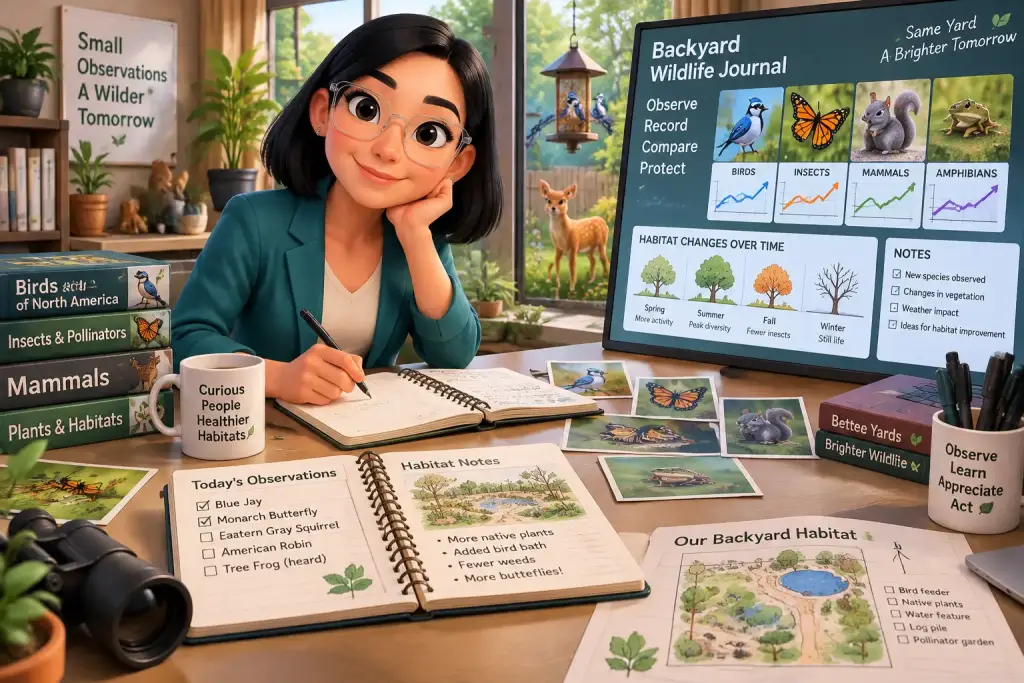
A paper log is still one of the best tools. Note the date, time, weather, species, location, and behavior. Use plain words such as “fed for three minutes” or “looked up twice, then kept feeding.” Over time, these notes show if your presence is changing behavior. They can also help you plan a better viewing schedule.
Keep habitat checks separate from wildlife watches when possible. A short weekly check of water, shelter, and plants can happen at a quiet time. This weekly habitat routine can help you do needed care without turning every visit into a close wildlife check.
Check That Your Yard Stays Calm After You Leave
Your wildlife watching plan is working when animals return to normal feeding, travel, and resting soon after you leave. Check from a distance over several days, then change your route or timing if activity drops.
Look for steady signs, not one perfect moment. Birds may return to a feeder within minutes. A rabbit may use a path again later that evening. Frogs may call after the yard becomes quiet. If normal activity continues at the same times, your distance and routine are likely working well.
Use a simple weekly check. Pick the same three times each week, such as early morning, late afternoon, and one evening after dark. Watch for five to ten minutes from your fixed spot. Write down what you see, but also write down what you do not see. A sudden drop in activity can point to a new source of noise, a loose pet, yard work, or a camera placed too close.
Measure calm, not closeness
Good wildlife watching is not measured by how near you get. It is measured by how little your presence changes the place. A calm bird that keeps feeding, a squirrel that uses its normal branch, or a frog that continues calling tells you more than a close view ever could.
Change one thing at a time if wildlife starts avoiding an area. First, increase your distance. Next, move your viewing time. Then check for new smells, lights, people, or pets near the habitat. This slow process makes it easier to see which change helped.
Seasonal changes are normal. Nesting birds may become harder to see when young leave the nest. Mammals may shift feeding times during heat, cold, or heavy rain. Do not assume every absence means a problem. Keep the habitat clean, quiet, and full of natural cover, then let wildlife decide when to use it.
The best backyard eco-zone gives animals control over their own space. Watch from the edge, leave routes open, and walk away while the habitat still feels peaceful. That is how you become a welcome observer instead of another thing wildlife must avoid.

Ludovica Serra
Founder & Habitat EditorLudovica Serra, born and based in Roma, Italy, is the founder and lead editor of Eco Zoned. She helps readers create wildlife-friendly garden spaces with practical, clear advice on planting, shelter, water, and everyday habitat care.