








Backyard wildlife needs extra help when weather becomes very hot, dry, icy, or snowy. A few simple changes can protect backyard wildlife without turning your yard into a complicated project. The best plan starts before a heat wave or hard freeze arrives, then uses short daily checks to keep water, shade, food plants, and hiding places safe.
- Keep shallow, clean water available, with stones or rough edges so small animals can climb out.
- Build shade and wind cover before severe weather begins, using native plants, brush piles, and safe shelter areas.
- Check water, shelter, and animal activity each day during heat, drought, frost, or snow.
Table of Contents
- Set up backyard wildlife cover before harsh weather arrives
- How do you give wildlife safe water during heat waves?
- Build shade and cooler ground for summer heat
- What should you change during a drought?
- Protect wildlife when freezing weather begins
- Fix weather shelter slip-ups before they harm animals
- Check your wildlife zone each day for real results
Set up backyard wildlife cover before harsh weather arrives
Prepare backyard wildlife shelter before extreme weather begins, because birds, insects, frogs, and small mammals need safe places right away. Build several small cover areas instead of relying on one birdhouse, one shrub, or one water dish.
Start by looking at your yard during different times of day. Notice where the morning sun falls, where the late afternoon sun becomes strongest, and where cold wind moves through in winter. A spot that feels pleasant to you may be too exposed for a small bird or toad. Wildlife often needs shade in summer and wind cover in winter, sometimes only a few feet apart.
Keep different kinds of cover available. Dense native shrubs give birds a place to rest away from heat and wind. Low plants, leaf piles, and short logs can give beetles, frogs, lizards, and small mammals a cooler or warmer space near the ground. A brush pile made from fallen branches offers useful gaps for insects and nesting animals. Do not make it too neat. Small spaces between sticks are part of what makes it useful.
Choose three simple shelter zones
Set up one high zone, one middle zone, and one ground zone. This helps animals that use different heights in the yard. A mature tree or tall shrub can form the high zone. Medium shrubs, tall grasses, or a trellis with native climbing plants can form the middle zone. Logs, stones, dried leaves, and low plants can form the ground zone.
- Place the shelter zone away from busy doors, play areas, and pet paths.
- Keep one side open enough for animals to enter and leave quickly.
- Leave deeper cover on the side facing strong wind or hot afternoon sun.
- Check that rainwater does not flood the lowest hiding spaces.
In practice, you do not need to buy special items for every shelter area. A few pruned branches, a clay pot on its side, and leaf litter can help ground animals. Use only untreated wood. Avoid painted pallets, fresh lawn chemicals, glue-covered materials, or sharp metal. These can hurt animals or make the area unsafe when wet.
When we tested a small brush pile behind a dense shrub, it stayed cooler than bare ground by late afternoon. We also saw more small birds using the nearby shrub after a hot week. The pile did not need to look perfect. It just needed dry gaps, shade, and a quiet location.
How do you give wildlife safe water during heat waves?
Give wildlife shallow, clean water in shaded spots, then refresh it often during hot weather. Use more than one water source when possible, because crowded or hot water can spread disease and become unsafe fast.
Heat waves can dry up puddles, ponds, and damp soil. Birds may pant with open beaks. Squirrels, butterflies, bees, and other animals may also search for water during the day. Water helps, but deep containers create a drowning risk for small animals. The safest setup has a shallow edge, a rough surface, and an easy way out.
Build a safe water station
Use a shallow bowl, plant saucer, low birdbath, or pie dish. Fill it with about 1 to 2 inches of water. Add clean stones, a small branch, or a piece of rough terracotta so insects and young animals can climb out. Put the dish near cover, but not so close that a cat can hide beside it.
- Place water in bright shade, not full afternoon sun.
- Refresh water every day during very hot weather.
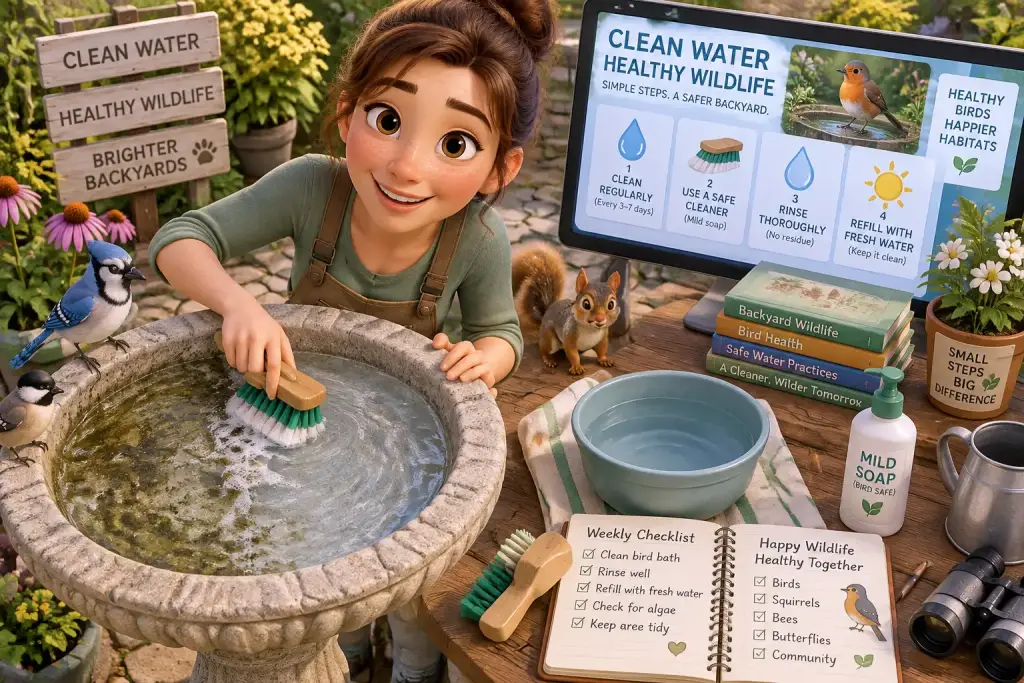
- Scrub the container with a brush every two to three days.
- Use plain water only, with no sugar, salt, bleach, or ice cubes.
- Keep bird feeders several feet away from water dishes.
Water that looks clear can still hold droppings and dirt. Empty it, rinse it, and use a dedicated scrub brush. A clean bowl takes about five minutes to maintain. Our guide to safe wildlife water explains how to reduce disease risks when several birds use the same spot.
Do not spray animals with a hose, even when they look hot. The sudden water can scare them, disturb nests, or soak feathers that need to stay in good shape. Instead, wet a patch of bare soil near the water dish for butterflies and bees. This small damp area can provide minerals while staying much safer than a deep puddle.
Keep an eye on the water temperature. A dark bowl in direct sun can become surprisingly warm by midday. Move it under a shrub, a patio umbrella, or the shade of a small tree. If shade changes during the day, use two water spots. One may stay cool when the other becomes too warm.
Build shade and cooler ground for summer heat
Create shade at different heights so wildlife can escape direct sun without leaving your yard. Plants, logs, mulch, and shallow water all work better together than one open birdbath sitting in full heat.
Birds usually need shade above ground, while insects and amphibians often need cooler soil close to the surface. Start with plants because they cool the ground while also giving food and cover. Native shrubs are especially useful when they produce berries, seeds, flowers, or insect life. Choose plants suited to your local climate so they can handle dry spells with less extra watering.
Group pots and planted areas together rather than leaving bare soil between them. Grouped plants shade each other and help soil lose water more slowly. A layer of fallen leaves or untreated wood chips can also reduce soil heat. Keep mulch a few inches away from tree trunks and the base of shrubs, since piled mulch can trap too much moisture against stems.
Make a cool ground patch
Choose a quiet area that gets morning sun but afternoon shade. Lay down a thin layer of leaf litter, then add a few small branches and flat stones. Leave small gaps underneath. Beetles, spiders, toads, and lizards may use these spaces when nearby grass or bare soil becomes too hot.
Do not water the whole yard every day just to make it green. That wastes water during drought and can make some areas muddy. Water plants slowly at their roots in the early morning instead. A deep soak once or twice a week is often better than a light daily spray, though local soil and plant needs will differ.
Birds may bathe more during hot weather. Put a shallow bathing dish near a shrub, then clean it often. Keep it out of the path of windows. A startled bird can fly into glass when it leaves water fast. Window decals, outside screens, or a few close branches can help birds see the glass better.
Here is the catch: thick cover is good, but it should not become a hidden place for roaming cats. Keep low shelter away from fences that cats use as travel paths. If you have outdoor pets, keep them indoors during the hottest part of the day and near dawn or dusk, when wildlife is often most active.
Place two small water stations in different parts of the yard. If one becomes hot, dirty, frozen, or crowded, wildlife still has another safer option.
What should you change during a drought?
During drought, save water for wildlife by protecting shade, keeping one clean drinking area, and avoiding yard work that destroys cover. Do not try to keep every plant green, because healthy shelter zones matter more than a perfect lawn.
Drought changes the whole food chain in a small yard. Flowers may stop producing nectar. Soil may become too hard for worms and beetles. Native plants can look rough for a while, but established plants often recover better than turf grass or thirsty annual flowers. Give priority to young trees, native shrubs, and plants that hold shade over wildlife areas.
Use rainwater from a clean barrel if local rules allow it. Cover the barrel and use a fine screen so mosquitoes, leaves, and small animals do not enter. Never leave a deep open container where an animal could fall in. A simple watering can lets you carry small amounts to plants and shallow wildlife dishes without wasting much water.
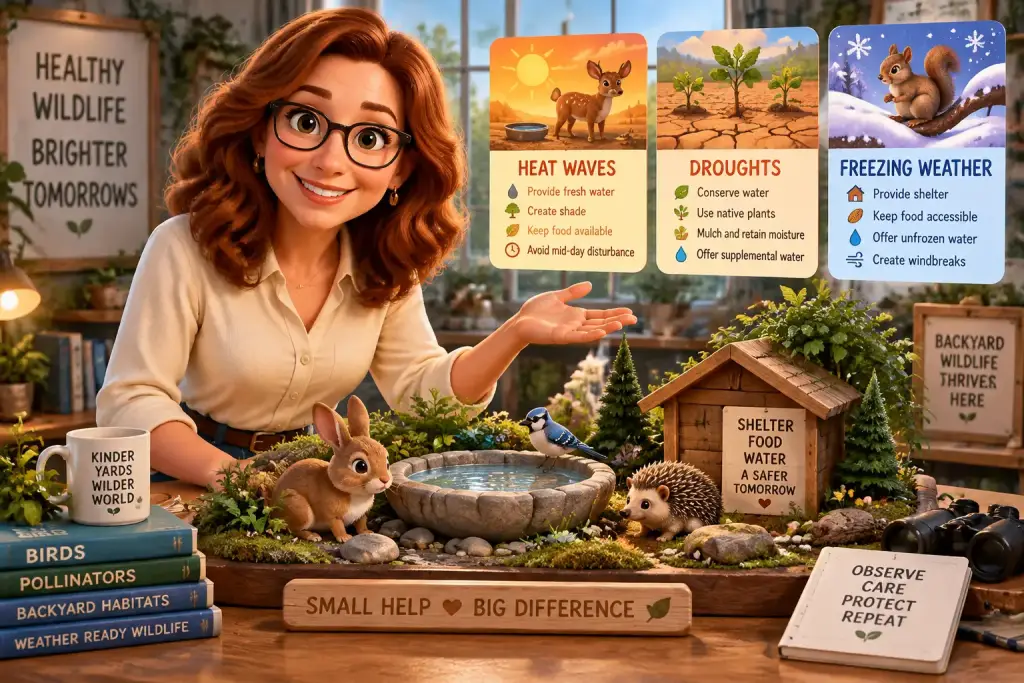
| Weather problem | Best quick action | Check each day |
|---|---|---|
| Heat wave | Set out shallow shaded water with stones | Water level and bowl temperature |
| Drought | Water native shelter plants at their roots | Dry soil, wilted young plants, clean water |
| Hard frost | Add wind cover and thaw drinking water | Ice, blocked shelter entrances, wet bedding |
| Snow or ice | Clear a small feeding and water area | Safe paths, seed spoilage, frozen dishes |
Pause heavy pruning during drought unless a branch is dangerous. Pruning can remove shade and reduce nesting cover when animals already have fewer safe places. Leave seed heads on suitable plants. Goldfinches and other small birds may feed on dry seeds when insects and berries are scarce.
Avoid pesticide sprays, weed killers, and lawn treatments during dry periods. Chemicals can become stronger near low water sources, and thirsty animals may drink from treated puddles. Pull weeds by hand where possible. If you must treat a serious plant problem, use the smallest safe method and keep it away from water, flowers, and wildlife shelter.
Check our monthly habitat checklist before changing your drought routine. It can help you notice seasonal nesting, seed plants, and fallen leaves that should stay in place. Small changes made at the right time often help more than large changes made after conditions become severe.
Protect wildlife when freezing weather begins
Help wildlife in freezing weather by keeping drinking water partly open, blocking harsh wind, and leaving dry natural cover in place. Do not seal animals into shelters or bring healthy wild animals indoors without advice from a licensed wildlife rehabilitator.
Cold weather is not always the biggest problem. Wet feathers, frozen water, strong wind, and sudden loss of cover can be more dangerous. Birds fluff their feathers to hold warm air near their bodies. Small mammals use leaf piles, brush piles, burrows, and dense shrubs to stay out of wind. Your job is to make these natural places safer, not to handle the animals.
Keep a shallow water dish available if you can check it often. Break thin ice and refill with cool water, not boiling water. A small heated birdbath made for outdoor use can help, but use one with a protected cord and follow the maker’s safety rules. Check cords for damage and keep plugs dry.
Keep shelter dry, not sealed shut
Brush piles and nest boxes should block wind while still allowing air to move. Damp, closed spaces can grow mold and become unsafe. If rain or snow blows into one side of a brush pile, add branches on that side. Leave other openings clear so animals can escape if a predator gets close.
Leave fallen leaves under shrubs until spring conditions are steady. Leaf litter can hold insects and give cover to overwintering butterflies, moths, beetles, and other small life. Do not rake every corner of the yard after the first frost. Instead, keep paths clear for people and leave quieter edges natural.
Offer bird food only if you can keep feeders clean and filled on a regular schedule. Black oil sunflower seed works for several common seed-eating birds, while suet can provide fat in cold periods. Place feeders where cats cannot wait below them. Clean trays and seed ports if seed becomes wet, clumped, or covered with droppings.
Do not use salt near water dishes, bird feeding areas, or ground shelter. Rock salt can harm paws and may pollute soil and water. Use sand, gravel, or pet-safe methods on your own walking areas when possible. Keep de-icing materials stored where animals cannot reach them.
Fix weather shelter slip-ups before they harm animals
Correct simple habitat problems quickly, especially deep water, moldy food, exposed shelter, and hidden pet risks. Most backyard wildlife trouble comes from good ideas set up in the wrong spot or left unchecked too long.
A common problem is placing every helpful item in one area. A feeder, birdbath, brush pile, and flowering plants may look tidy together, but this can create crowding. Disease can spread more easily when birds gather in one small space. Spread water, food plants, and shelter around the yard so animals can choose quieter places.
Another issue is using a deep bucket or smooth-sided tub for water. Small mammals, frogs, and insects may not climb out. Add a sturdy ramp right away, but a shallow dish is still safer. Check water after storms, because leaves can cover stones and remove the easy exit.
Feeders also cause problems when old seed stays wet. Remove clumps before they grow mold. Take feeders down for cleaning if you see sick-looking birds, such as birds sitting still for long periods, birds with swollen eyes, or birds unable to fly well. Contact a local wildlife group if you find several sick or dead birds in one area.
- Move water out of direct afternoon sun.
- Replace cracked plastic dishes that hold dirt in small gaps.
- Keep shelter away from pesticide-treated grass.
- Remove netting, loose string, and plastic mesh from wildlife areas.
- Check brush piles after strong wind so branches do not trap an animal.
Do not assume every animal resting in shade needs rescue. A rabbit, bird, or squirrel may pause during intense heat. Watch from a distance first. Signs of real trouble can include bleeding, clear injury, being unable to stand, or a young animal left in a clearly dangerous place. Wild animals can bite or carry disease, so call a licensed local rehabilitator rather than trying to treat them yourself.
That said, quick action matters when an animal is caught in netting, glue traps, or plastic rings. Keep pets away and contact local wildlife help. Avoid pulling tangled material off wings or legs yourself if it could cause further injury. Prevention is much easier, so remove these hazards from the yard before bad weather pushes animals into tighter spaces.
Check your wildlife zone each day for real results
Verify that your weather plan works by checking water, shade, cover, and animal behavior each day. A useful backyard wildlife habitat should show steady activity without crowded water, spoiled food, or animals struggling in exposed areas.
Keep checks short and calm. Stand back for two or three minutes before walking into the habitat area. You may notice birds using shade, bees visiting damp soil, or small animals moving under shrubs. Wildlife will often avoid an area if people arrive loudly or too often, so observe from a window or a quiet path when you can.
Use a simple note on your phone or a paper chart. Record the weather, the water level, and any change you see. Write down dates when a water dish freezes, when a shrub loses leaves, or when birds begin using a new shelter spot. After one season, these notes can show which parts of your yard need more shade, better drainage, or a second water dish.
Use a five-minute daily check
Start with water. Empty dirty water, remove leaves, and make sure stones are still above the surface. Look at shelter next. Check that the brush pile has not fallen, that leaf litter remains dry underneath, and that pets cannot reach the area easily.
Then look for changes in animal behavior. During heat, birds may gather in dense shade or visit water more often. During freezing weather, birds may feed early and then disappear into cover. These are often normal patterns. Repeated panic flights, animals trapped in containers, or several sick birds near one water source are signs to act.
Once you set this up, seasonal care becomes easier. You are not trying to control every part of nature. You are making a few safer choices when weather puts extra pressure on small animals. Keep water shallow, cover varied, and your daily check simple.
Good habitat care is often quiet work. A clean dish, a shaded shrub, and leaves left under a hedge may not look dramatic. Still, those small choices can give backyard wildlife a better chance to rest, drink, and wait out the next heat wave, drought, frost, or snowstorm.

Ludovica Serra
Founder & Habitat EditorLudovica Serra, born and based in Roma, Italy, is the founder and lead editor of Eco Zoned. She helps readers create wildlife-friendly garden spaces with practical, clear advice on planting, shelter, water, and everyday habitat care.