








A wildlife corridor turns separate parts of a backyard into one safer travel route. Instead of asking birds, frogs, pollinators, and small animals to cross wide open ground, you give them connected cover, food, resting spots, and water from one side of the yard to the other.
- Keep planted cover in connected patches, with gaps of 6 feet or less where possible.
- Use layered native plants, from low ground cover to shrubs and small trees, beside a safe water source.
- Check the route each week for bare gaps, bright night lights, pet risks, and dry water areas.
Table of Contents
Map Your Wildlife Corridor Before You Plant
Start by drawing one simple route that links lawn edges, shrubs, trees, and water without long bare gaps. A good route follows existing cover, stays away from busy paths, and gives wildlife a place to hide every few feet.
Walk around your yard at different times of day before buying plants. Look for places where birds already land, where insects gather, and where rainwater stays after a storm. A fence line, side yard, hedge, or back boundary often makes the best starting point because it already gives some shelter from people and pets.
Use paper, a phone photo, or a simple yard sketch. Mark the lawn, large trees, existing shrub beds, shed, patio, bird feeder, and water source. Then draw a loose curved line between the best covered areas. The route does not need to be straight. In fact, a curved route with small planted pockets often feels safer for wildlife than one long open strip.
Choose a low-risk route
Keep the main route away from places with heavy foot traffic. Avoid sending wildlife beside a driveway, a dog run, or a bright security light. If the yard has only one open space, use wider plant beds at each end so animals have a safe place to pause before crossing.
For most people, the easiest plan is to connect three zones. Start with a tree or tall shrub area, run the route through a mixed shrub bed, then finish at a shallow water area. The lawn can stay in the plan, but it should work as an open edge beside cover, not as a large empty barrier.
- Mark sunny and shady spots before choosing plants.
- Keep at least one side of the route free from regular mowing.
- Use existing fence lines and hedge edges as travel guides.
- Leave clear access for your own walking and garden care.
When we tested this setup along a 35-foot fence line, birds began using the new shrub edge before the plants reached full size. The first changes were small. Sparrows landed lower in the young shrubs, and butterflies used the warm edge between the bed and the lawn.
How Wide Should a Wildlife Corridor Be?
A backyard wildlife corridor should be as wide as your space allows, but even a 3 to 6-foot planted strip can help. Aim for wider patches of 8 to 12 feet at resting spots, near water, and where wildlife must cross open lawn.
Width matters because animals need cover from more than one direction. A thin single row of plants may look green, yet a cat, hawk, or person can easily see through it. A deeper bed with low plants, shrubs, and a small tree gives birds and small animals more ways to move away from danger.
Use the lawn as a soft edge, not the middle of the route. Keep grass shorter near paths you use, but allow a narrow strip of taller grass or low native plants along the corridor. This creates a change from open lawn to cover. Beetles, ground-feeding birds, and frogs often use this change area because it has sun, shade, seeds, and leaf litter.
Set useful spacing between cover
Try to keep the space between planted pockets under 6 feet. A bird can cross more than that, of course, but small animals may avoid wide open ground. If you cannot plant a full bed, add a large pot, brush pile, small log, or low shrub as a short stop between bigger areas.
- Make the main planted strip at least 3 feet wide.
- Widen corners and water areas to 8 feet or more.
- Place shrubs about 3 to 6 feet apart, based on their mature width.
- Leave small openings so you can weed and check plants.
- Use mulch, leaves, or ground cover under shrubs instead of bare soil.
Here is the catch: plants need room to grow into cover. A new shrub bed can look too open in its first year. Fill temporary gaps with native annual flowers, fallen branches, or grouped pots. Avoid plastic decor that can trap insects or become hot in direct sun.
Keep pesticides out of the route whenever possible. Insects are food for birds, frogs, bats, and other wildlife. A pesticide free plan helps protect the food chain while you deal with weeds and plant pests by hand, mulch, and careful plant spacing.
Build the Lawn, Shrub, Tree, and Water Chain
Build the corridor in layers, starting at the lawn edge and moving upward through low plants, shrubs, trees, and water. Each layer should touch or sit close to the next, so wildlife can travel without facing long open gaps.
Do not feel you need a full yard rebuild. Work in sections. Plant one corner first, then extend the route during the next planting season. Native plants suited to your local soil and weather are usually easier to keep alive after their first year, and they often offer better food for local insects.
Step 1: Soften the lawn edge
Stop mowing a 2 to 3-foot strip beside the planned route. Add low plants such as sedges, native grasses, clover, ground cover, or small flowering plants that suit your area. Leave some fallen leaves under this edge in autumn. Leaf litter holds moisture and gives beetles and other small insects a place to shelter.
Step 2: Add shrubs for cover
Place shrubs in groups of three or more when space allows. Groups block sight lines better than single plants spread across the yard. Choose a mix of berry, flower, and dense-leaf shrubs, but check that each plant is safe and not invasive in your area.
Set shrubs so their mature branches will overlap lightly. Water deeply once or twice each week during dry weather in the first growing season. A 2 to 3-inch layer of natural mulch helps hold water in the soil. Keep mulch a few inches away from stems so they do not stay wet.
Step 3: Connect upward to trees
Use small trees, existing trees, or tall shrubs as upper travel points. Birds use branches as lookout spots before flying down to water or food. Plant trees away from power lines and buildings, and plan for their full adult size rather than their nursery size.
A tree does not need to stand directly over the shrub bed. Branches, nearby tall shrubs, and a close hedge can still form a useful link. Add a small branch pile under one edge of the tree, where it stays dry and out of your normal walking area. This offers cover for insects and small animals.
Step 4: Finish at safe water
Use a shallow dish, birdbath, small pond edge, or low water bowl with a rough surface. Add flat stones that rise above the water so insects can drink without falling in. Change and clean shallow water often, especially in warm weather, to reduce mosquito growth and keep the water usable.
Place water within sight of cover, but not buried inside thick shrubs where a predator could hide. A gap of about 3 to 6 feet between water and dense cover often works well. Birds can see around them while still having a quick route back into shrubs.
Which Problems Break a Wildlife Travel Corridor?
Wide bare spaces, bright lights, unsafe water, loose pets, and chemical sprays can break a wildlife travel corridor fast. Fix the biggest gap first, then check each part of the route for cover, shade, water access, and signs of danger.
A corridor is not only a row of plants. It is a working route that wildlife must feel safe using. A healthy looking bed can still fail if it ends beside a busy patio, an exposed birdbath, or a lawn treated with weed killer. Watch what happens at dawn, late afternoon, and after rain, because use often changes through the day.
| Problem | Quick check | Simple fix |
|---|---|---|
| Open lawn gap | More than 6 feet without cover | Add a shrub group, tall grass, or large planter |
| Unsafe water | Deep sides or smooth bowl edge | Add flat stones and keep water shallow |
| Bright night light | Light shines on shrubs or water | Use a shield, timer, or warmer low light |
| Dry young plants | Wilted leaves and hard soil | Water deeply and add 2 to 3 inches of mulch |
| Pet pressure | Pets enter the cover zone often | Use a low fence and keep pets supervised |
Bright light is a frequent problem people miss. Light near water can change insect activity and make night travel harder for moths and bats. Use motion lights only where needed, point them down, and choose the lowest setting that still helps people walk safely. Our guide to a safe night habitat can help you reduce light pressure around the route.
Here is the catch: too much tidying can remove useful shelter. You do not need to leave the whole yard messy. Keep paths clear, trim plants away from walls, and remove sick wood where needed. Still, leave a few dry leaves, seed heads, and small natural piles under shrubs, where they can support insects and ground life.
Watch for invasive plants before they spread through the corridor. Fast-growing plants may seem useful because they fill gaps quickly, yet they can push out better food plants. Pull young invasive seedlings early, before they form deep roots or seeds. Replace them with a local plant that offers similar height and cover.
Build your first route along one fence, hedge, or lawn edge. It is easier to water, watch, and improve than several small scattered planting areas.
How Can You Check That the Corridor Works?
Check the corridor for ten minutes each week and record what moves through it. Signs that it works include birds using shrub edges, insects visiting flowers, animal tracks near water, and fewer long pauses before wildlife crosses the lawn.
Use simple notes rather than trying to identify every species. Write down the date, weather, time, and what you saw. You might note “two small birds moved from hedge to birdbath” or “bees used low flowers at noon.” These notes show patterns over time and help you decide where the next plant or water dish should go.
Run a weekly corridor check
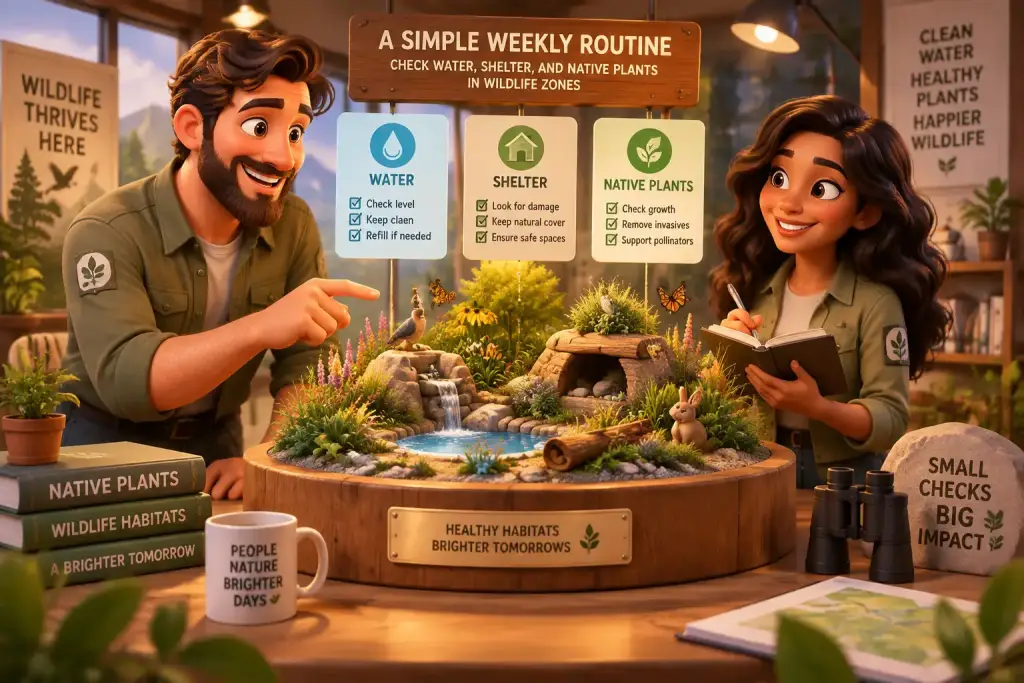
Walk the route quietly at the same time each week. Look at soil moisture, broken branches, empty water, bare ground, and signs of pets digging in the bed. In everyday use, this step takes about five minutes for a small backyard route. After a storm or heat wave, take an extra look because young plants and shallow water can change quickly.
- Refill shallow water and rinse away dirt.
- Check mulch depth and add more if soil is exposed.
- Look for new bare gaps between plants.
- Remove litter, netting, or string that could trap animals.
- Note which plants get the most visits.
Take a photo from the same spot every month. This makes plant growth easier to see than memory alone. Shrubs that looked too far apart in spring may touch by late summer. A tree branch may also create new shade, which can change where flowers grow best.
A backyard wildlife journal is useful when you want clear proof of change. Use this wildlife journal method to track visitors, plant changes, weather, and small repairs without turning the task into a large project.
Give the route time. Some insects may appear within days of adding flowers and water, while shrubs may need one or two growing seasons to form thick cover. Keep filling gaps, protect young plants during dry periods, and let the lawn, shrubs, trees, and water work together as one living path.

Ludovica Serra
Founder & Habitat EditorLudovica Serra, born and based in Roma, Italy, is the founder and lead editor of Eco Zoned. She helps readers create wildlife-friendly garden spaces with practical, clear advice on planting, shelter, water, and everyday habitat care.