









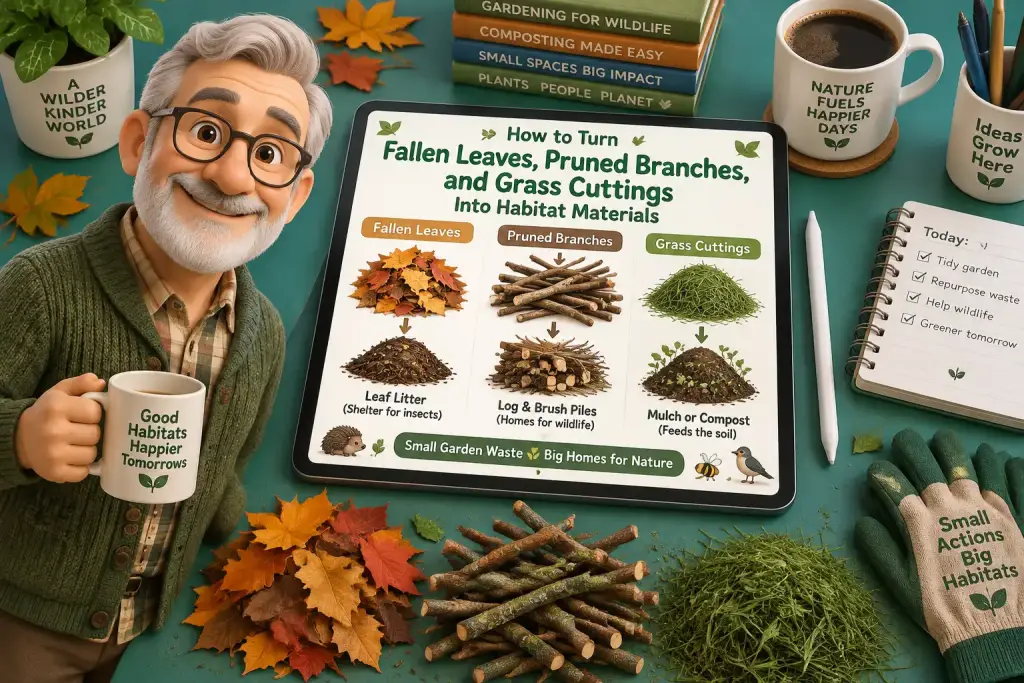
Habitat materials are already waiting in most backyards after mowing, pruning, or autumn leaf fall. Instead of sending every leaf and branch away, sort the clean plant waste into simple piles that give insects, birds, frogs, and small mammals food, cover, and safer resting places.
- Keep dry leaves loose in a shallow pile so insects, frogs, and ground beetles can enter safely.
- Stack untreated branches in a stable loose pile with larger logs at the base and smaller twigs on top.
- Use grass cuttings in thin layers or a covered compost area, never as a deep wet pile beside wildlife shelter.
Table of Contents
- Start by sorting safe habitat materials
- How do you choose the best place for wildlife piles?
- Build a loose leaf shelter for insects and frogs
- Turn pruned branches into a stable deadwood pile
- Can grass cuttings become safe wildlife cover?
- Fix wet piles, pests, and other common slip-ups
- Check your habitat materials through the seasons
Start by sorting safe habitat materials
Start with dry leaves, untreated branches, and grass cuttings that have not been sprayed with weed killer or insect spray. Separate these materials before building anything, because clean, dry plant waste is safer for wildlife and easier to place well.
Use three containers, buckets, or clear spots on the ground. Make one area for leaves, one for branches, and one for grass. This takes very little space. A few old garden trugs work well, but a tarp on the lawn is enough for a small garden.
Check each material before you add it to a habitat area. Leaves with white powder, black spots, or heavy pest damage are better placed in a hot compost system, if you use one. Do not put diseased plant parts into a shelter pile where they may spread problems to nearby plants.
Keep out plastic labels, plant ties, wire, netting, treated wood, painted timber, and pet waste. These items can trap or harm wildlife. Also avoid clippings from lawns treated with herbicide, moss killer, or lawn feed in recent weeks. If you are unsure what was used, leave that material out of the habitat pile.
For most people, the best first setup is small. Choose a quiet edge of the garden, behind shrubs, beside a fence, or near a hedge. Pick ground that does not flood after rain. A spot with morning sun and some afternoon shade often stays dry enough while still warming up on cool days.
When we tested this setup in a small backyard, sorting took less than ten minutes after each gardening job. It also stopped us from making one big mixed heap that turned wet and hard to manage. Small sorted piles are easier to repair, move, or add to through the year.
How do you choose the best place for wildlife piles?
Place wildlife piles in a quiet corner with cover nearby, dry ground, and little foot traffic. Keep them away from busy paths, outdoor play areas, and places where pets often dig, chase, or rest.
Look for an edge rather than the middle of the lawn. Hedge bottoms, shrub borders, fence lines, and the back of flower beds work well because animals can move in and out under cover. A bare open lawn may feel too exposed for frogs, beetles, mice, and small birds.
Leave a clear path around the pile for your own checks, but do not tidy every side too closely. Low plants, long grass, and ground cover near the pile help wildlife approach without being seen by predators. Keep one side open enough to add fresh leaves or branches without pulling the whole structure apart.
Check light, water, and safety
Choose a spot that gets some sun but does not bake all day. Deep shade can keep leaf piles wet for too long, while full hot sun can dry them too fast. A mixed spot is usually better, especially where a shrub gives shade during the hottest part of the afternoon.
Keep habitat materials at least 2 metres from buildings, sheds with stored fuel, barbecue areas, and fire pits. This is a sensible fire safety step, especially in dry weather. Do not place a branch pile against a wooden wall, where damp can build up and where pests may enter a structure.
- Use a sheltered garden edge with plants nearby.
- Choose ground that drains after heavy rain.
- Keep piles away from chemical storage and compost bins that get very hot.
- Leave room to check the pile without stepping on it.
If your garden is very small, use one compact pile rather than several scattered piles. A space about 1 metre wide can still support a leaf layer, a few thick branches, and a small dry pocket. The goal is not a perfect shape. It is a safe place with gaps, shade, and cover.
Build a loose leaf shelter for insects and frogs
Build a leaf shelter by placing dry fallen leaves in a loose pile 15 to 30 centimetres deep under shrubs or beside a log. Keep air gaps in the pile, because packed wet leaves can turn slimy and give wildlife less usable cover.
Rake leaves gently rather than using a loud blower. Leaf blowers can disturb resting insects and may pull small animals from cover. Collect leaves from paths or short grass, then carry them by hand or use a rake to move them in a soft layer.
Make the base stable
Put two or three small branches or pieces of untreated wood on the ground first. This stops the leaf layer from sitting flat against damp soil. The raised spaces also give beetles, woodlice, spiders, and frogs a place to hide when rain comes.
Add leaves in handfuls. Do not press them down with your feet. A loose pile lets air move through, and it gives small creatures several entry points. Oak, beech, maple, and other broad leaves all work, though thick waxy leaves may break down more slowly.
Cover only part of the pile
Lay a few twigs across the top so strong wind does not blow the leaves away. Do not cover the whole pile with plastic, fabric, or a heavy board. Rain should reach some of the leaves, but the inner part should still stay drier than the outer layer.
Top up the pile during leaf fall, but leave the lower layers alone. Those older layers may hold insect eggs, pupae, worms, and other small life. A good leaf pile changes slowly through the seasons. You do not need to turn it like compost.
Keep the pile away from your main vegetable beds if slugs are a repeated problem there. This does not mean leaf piles cause every slug issue. It simply gives you more control over where damp cover sits. Put leaf shelter near native shrubs, a pond edge, or a quiet border instead.
Build every habitat pile with one dry inner area, because small animals need a place that stays sheltered after rain and cold nights.
Turn pruned branches into a stable deadwood pile
Turn pruned branches into a low, loose deadwood pile with thick pieces at the bottom and smaller twigs above. This structure gives beetles, fungi, birds, hedgehogs, and other wildlife protected gaps while keeping the pile less likely to collapse.
Use branches from untreated trees and shrubs. Apple, willow, hazel, birch, and other common garden wood are all useful. Keep pieces with rough bark, side shoots, and natural bends. These uneven shapes create more hiding spaces than smooth cut sticks.
Start with three to six thicker branches, each about 5 to 15 centimetres wide if you have them. Lay them in different directions rather than making a neat stack. Leave gaps between the pieces. Then add medium branches and smaller twigs across the top.
| Material | Best setup | Helpful tool or check |
|---|---|---|
| Dry fallen leaves | Loose pile, 15 to 30 centimetres deep | Rake, check for spray use |
| Thick branches | Low base with gaps on dry soil | Gloves, test that logs do not roll |
| Small twigs | Light top layer to hold leaves | Hand pruners, keep openings clear |
| Grass cuttings | Thin layer or covered compost area | Fork, check for heat and wet clumps |
Do not make a branch pile taller than you can safely reach from the ground. Around 60 to 90 centimetres high is enough for most gardens. A lower pile is easier to check and less likely to fall during wind or when an animal moves inside.
Keep one side a little denser and one side more open. The dense side gives darker cover. The open side lets small birds search for insects and gives you a place to add new prunings. Our guide to a deadwood corner habitat can help if you want to grow this into a larger long-term feature.
Can grass cuttings become safe wildlife cover?
Grass cuttings can help wildlife when used in thin, dry layers, but thick fresh piles often become hot, wet, and airless. Use small amounts as mulch or compost feed, and keep deep grass heaps away from animal shelter areas.
Fresh grass has a lot of water and nitrogen. When it is piled thickly, it can heat up as it breaks down. That is useful in a managed compost bin, but it is not a good condition for a frog shelter, leaf pile, or hedgehog resting place.
Use the thin-layer rule
Spread grass in layers no more than 2 to 5 centimetres deep. Let each layer dry for a day or two if weather allows. You can place a thin dry layer beneath branches, but keep the main dry core made from leaves, twigs, bark, or old hollow stems.
Mix small amounts of grass with dry leaves in a compost area. Aim for roughly two handfuls of dry leaves for each handful of fresh grass. This helps stop the material turning into a heavy green mat. Turn compost only if you are managing it for compost, not if it has become a quiet wildlife shelter.
Longer grass cut later in summer can be especially useful as a light cover around, not inside, a branch pile. Place it loosely around the outer edge. This makes a softer approach route for insects and small animals while keeping the center dry.
Never add lawn clippings that may carry weed killer, insect spray, or strong lawn chemicals. If you are moving toward a safer garden routine, our guide to pesticide free control explains how to reduce chemical use around wildlife areas.
In everyday use, this step takes about five minutes after mowing. Spread a small layer where it can dry, add the rest to compost, and leave your wildlife piles mostly made from leaves and wood. That simple split avoids the most common grass cutting problem.
Fix wet piles, pests, and other common slip-ups
Fix a wet habitat pile by lifting part of it, adding dry twigs or leaves underneath, and rebuilding it loosely. Most problems come from piles that are too packed, too close to wet ground, or filled with too much fresh grass.
A pile that smells sour, feels warm, or looks like a dark wet mat needs more air. Wear gloves and gently pull it apart with a garden fork. Put dry sticks at the bottom, add dry leaves in loose handfuls, and move fresh grass to a compost bin or spread it thinly elsewhere.
Do not assume every insect is a pest. Beetles, woodlice, millipedes, spiders, and worms are normal visitors. They break down plant matter and become food for birds, frogs, and other animals. Avoid spraying the pile. Sprays can harm the very wildlife you are trying to support.
Rats may be drawn to food waste, bird seed, or a pile beside an open compost bin, not simply to branches and leaves. Keep cooked food, pet food, and greasy scraps out of habitat piles. Use a secure compost system for kitchen scraps, and avoid placing bird feeders directly over the shelter.
Check branch stacks after storms. Push gently on the outer pieces with a stick or gloved hand. If anything rolls, lower the pile and place the heaviest wood at the base. Never reach into a dark pile without looking first, since a bird, hedgehog, frog, or other animal may be resting inside.
Garden lights can also affect a quiet shelter area. Keep bright motion lights pointed away from the pile, especially during spring and summer. If you are planning a darker garden area, see our guide to a safe night habitat for simple lighting choices around nocturnal wildlife.
Check your habitat materials through the seasons
Check habitat materials from the outside every few weeks, then add small amounts as needed. A working pile should stay loose, have dry inner gaps, and show signs of small life without needing regular digging or major cleanup.
Look for simple signs. You may see holes in leaves, small tracks in soft soil, beetles under bark, birds picking through twigs, or frogs resting near damp edges. You may not see wildlife every day. Most animals use cover when people are not nearby.
In spring, avoid moving piles because insects may be waking up and birds may collect nesting material. Add new leaves or twigs to one edge only. In summer, check that the pile has not dried into a brittle mass. A light watering of the outer leaf layer is fine during a long dry spell, but keep the center mostly dry.
Autumn is the main time to build up leaf cover. Add fresh dry leaves over old layers, then place a few twigs on top. Winter is the time to disturb the pile least. Small mammals, amphibians, and insects may use it for cold weather shelter.
Take a photo once a month from the same spot. This is an easy way to see whether the pile is sinking, spreading, or becoming too wet. It also helps you notice which materials last longest in your garden. Branches may stay useful for years, while leaves need fresh topping up each autumn.
Keep the system simple. One loose leaf pile, one low branch stack, and careful use of grass cuttings can change an empty garden edge into a useful eco-zone. Once you set this up, the garden work you already do starts making shelter instead of waste.

Ludovica Serra
Founder & Habitat EditorLudovica Serra, born and based in Roma, Italy, is the founder and lead editor of Eco Zoned. She helps readers create wildlife-friendly garden spaces with practical, clear advice on planting, shelter, water, and everyday habitat care.